Horseback Riding For The Fist Time? Here Is What To Expect On Your First Ride
You’ve finally booked your first horseback ride, but you’re wondering: what do I actually do once I’m in the saddle? Beyond the initial rush of nerves, beginner horse riding lessons are a unique blend of adrenaline and technique. Here is exactly what to expect when you step into the stirrups for the first time.
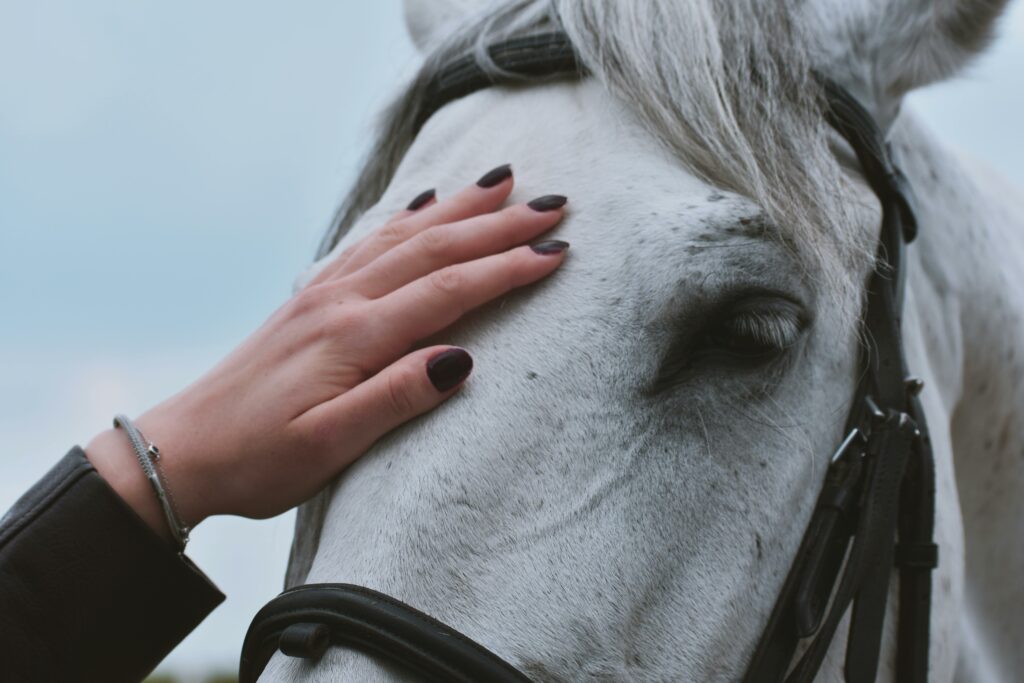
- Heart Rate Synchronization: Studies have shown that when humans and horses interact, their heart rates can synchronize. A horse’s large heart creates 5x the electromagnetic field of a human. That can influence and stabilize a human’s heart rhythm, leading to relaxation and reduced anxiety.
- Hormonal “Feedback Loops”: Interacting with horses through grooming, petting, or standing nearby can trigger the release of oxytocin (the “bonding hormone”) in both the human and the horse. This process also lowers cortisol (the stress hormone) and increases endorphins, which are natural mood boosters.
- Immediate Biofeedback: Because horses are highly intuitive, they act as “emotional mirrors”. They reflect a person’s internal state; for instance, if a rider is anxious, the horse may become restless, providing immediate feedback that encourages the individual to practice self-regulation
- Connection & awe : Despite their size, horses are known for their gentle nature and ability to form strong bonds with humans. Many people feel a sense of connection with the horse, even on their first ride. Expect to spend the first 15-20 minutes brushing and preparing the horse for the saddle.
- Empowerment: Riding a horse, even for a short distance, can give people a sense of empowerment. Overcoming the initial fear or nervousness, and learning to control such a powerful animal can be a confidence-boosting experience.
- Freedom: There’s a sense of freedom that comes with riding a horse. The feeling of wind in your face as you ride, and the rhythmic motion of the horse can be incredibly liberating.
Essential Gear: What to Wear
Before you even touch a horse, safety starts with what you wear. Many stables have strict rules to prevent accidents, and almost all of them will provide you with everything you need to saddle the horsed will let you borrow a helmet.
1. The Equestrian Helmet
This is non-negotiable. An equestrian-specific helmet is designed with impact absorption technology specifically for falls from a height. Unlike bike helmets, these cover the back of the head more extensively. Let’s be honest: using a helmet that’s seen someone else’s workout sweat isn’t for everyone. If you’re like me and prefer your own fresh gear, here is how to find the perfect starter kit.
- Look for an ASTM/SEI certified helmet that fits snugly. If you’re a casual beginner, a ventilated model like the one I have by Troxel, or this one by Ovation provides affordable protection.
2. Riding Pants (Breeches or Jodhpurs)
Regular trousers have an inside seam that can chafe your legs raw against the saddle, but you’ll most likely be fine for your first few rides. But in case you want to go all in, you have two options however, I suggest you don’t spend too much on your breeches because they get dirty very quickly.
- Breeches: These are form-fitting, stretchy, and have no inside seam. They often feature grip panels to help you stay secure in the saddle.
- Chaps: Often used by men in leather or suede but they go over your pants and in my opinion are the best
3. Proper Riding Boots
Sneakers are dangerous because they can slide all the way through the stirrup, potentially trapping your foot if you fall. You need something with a bit of a heel, and depending on the season you have options.
- Feature: You need a boot with a closed toe and a one-inch heel to act as a “stopper” in the stirrup.
- Types: Tall boots offer calf protection, while paddock boots (short boots) are more versatile. If wearing short boots, pair them with half chaps to prevent the saddle from pinching your skin.
Mounting: Getting Into the Saddle
Mounting is the first real hurdle. Most stables will use a mounting block—a small set of steps—to make it easier on your joints and the horse’s back.
- Approach from the Left: Most horses are trained to be handled and mounted from the “near side” (the left).
- Gather the Reins: Hold both reins in your left hand. Take up the slack so the horse doesn’t walk off, but don’t pull so hard that he backs up.
- The Foot Placement: Stand on the block facing the horse’s shoulder. Place the ball of your left foot into the stirrup.
- The Swing: Grab a handful of mane (it doesn’t hurt them!) with your left hand for stability. Use your right hand on the pommel (the front of the saddle). Bounce once on your right leg to gain momentum, then smoothly swing it over the horse’s back.
- Sit Softly: Lower yourself gently. Imagine sitting on an egg; you don’t want to “plop” down and startle the horse.
Steering: Communicating with Your Horse
Steering isn’t just about pulling on the reins – it’s a “dialogue” between your whole body and the horse.
- Eyes First: Look where you want to go. If you turn your head and eyes, your body weight subtly shifts, which the horse can feel through the saddle.
- The “Open Door” Method: To turn right, “open” your right hand away from the horse’s neck (like opening a door) and apply gentle pressure with your outside (left) leg to push the horse into the turn.
- Soft Hands: Never yank. Use gentle, rhythmic “squeezes” on the reins rather than constant pulling.
- Leg Pressure: To move forward, give a gentle squeeze with both calves. To stop, sit up tall, push your weight into your heels, and close your fingers on the reins while saying “whoa”.
Dismounting: Getting Back to Earth
Dismounting is essentially the reverse of mounting, but with one critical safety rule: remove both feet from the stirrups first.
- The Halt: Ensure the horse is at a complete standstill.
- Feet Out: Drop both stirrups. This ensures that if the horse bolts while you are halfway down, you won’t get dragged.
- The Hug: Lean forward slightly, as if giving the horse a hug. Hold the reins and a bit of mane in your left hand.
- The Swing: Swing your right leg back and over the horse’s rump, taking care not to kick him or her.
- The Landing: Slide down with your belly or side against the horse. Land with both feet at once, keeping your knees bent to absorb the impact.
Why Horses Are Used In Therapy
While many book a lesson for the adrenaline rush, the long-term benefits of equine interaction are rooted in fascinating science. It’s not just ‘horse magic’, it’s a complex interplay of heart-rate synchronization and neurobiological feedback. This evidence-based connection is exactly why Equine-Assisted Therapy has become a gold standard for treating everything from physical mobility issues to emotional trauma.
- Emotional Regulation & PTSD: For individuals with trauma or PTSD, horses provide a safe, non-judgmental environment. Since horses communicate non-verbally, they help survivors reconnect with their bodies and process emotions without the pressure of “talking it out”.
- Physical Rehabilitation (Hippotherapy): The rhythmic, three-dimensional movement of a walking horse mimics the gait of a human pelvis. This unique neuromuscular stimulation is used in Hippotherapy to improve balance, coordination, and core strength in patients with cerebral palsy or stroke recovery.
- Cognitive & Social Growth: Activities like grooming and leading a horse require focus and teamwork, which can significantly benefit those with ADHD or Autism Spectrum Disorder. Successfully directing a 500kg animal provides a profound boost to self-esteem and a sense of mastery.
Summary Checklist for Beginners
- Helmet check: Is the chin strap secure?
- Girth check: Is the saddle tight enough to not slip?
- Posture check: Can you draw a straight line from your ear to your shoulder to your hip to your heel?
- Heels down: This is the golden rule for balance and safety!
Local Farms for Horseback Riding and Trail Rides
Battlefield Park Polo Club – Gainseville, Va
Calleva Farm – Poolesville, MD
FoxFire Farm – Brandywine, MD
Tamarack Stables – Lorton, VA
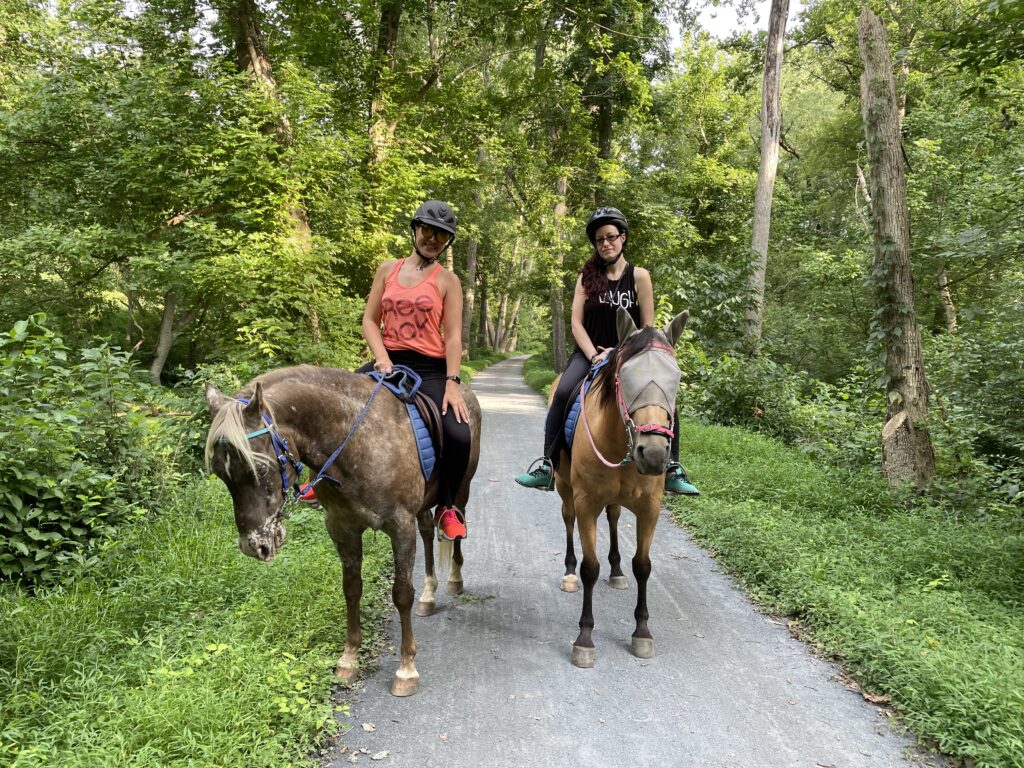
If you would like to try horseback riding for the first time, but you have no one to go with, I would be happy to go with you. I’ve done this for so many of my friends, and it’s honestly one of the best feelings to see the look on their faces when they get to experience something so wonderful for the first time. I wrote about my first time riding a horse here – it’s a very personal story and if you read it you’ll understand why I love horses so much.
Enjoy the ride!