Why Yoga and Trekking the Himalayas Belong Together
Trekking places a lot of physical demands on your body, and especially on your lungs, legs, and nervous system. Using Pranayama (breath control) before and after hiking helps prime your respiratory system for exertion, improves oxygen efficiency (especially at higher altitudes), and accelerates recovery afterward.
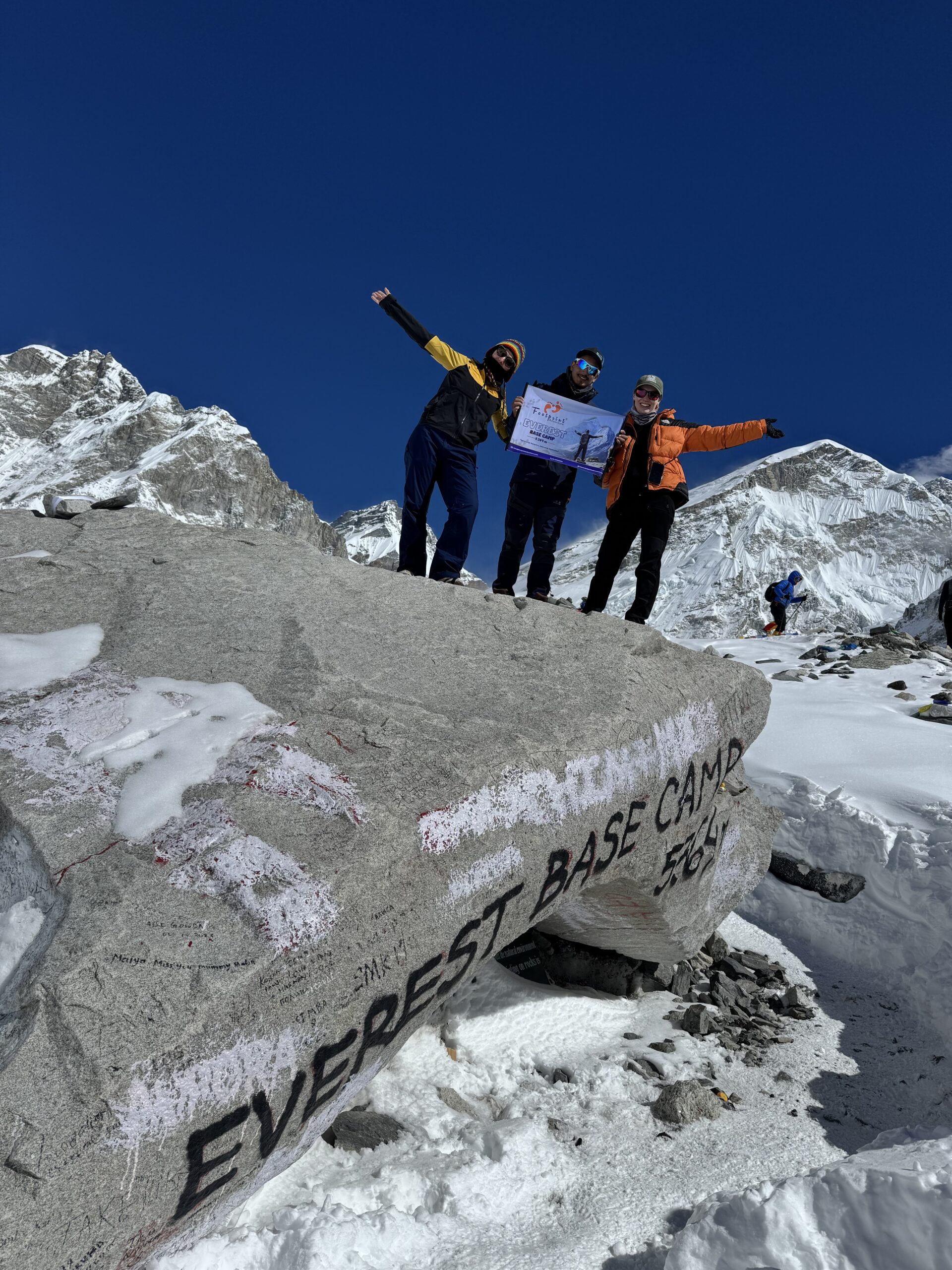
For me, returning to Nepal to lead yoga on the journey to Everest Base Camp was about bringing together two things that have shaped so much of my life: movement and exploration. The Himalayas are often described as a test of grit: thin air, steep ascents, heavy packs, and hours of relentless movement. Yet beneath the physical challenge lies a vast contemplative landscape. When you combine high-altitude trekking with conscious movement, targeted breathwork, and meditation, you shift your experience from merely enduring the terrain to moving in complete harmony with it.
Integrating a mindful daily routine helps you acclimatize more smoothly, prevents common trail injuries, and transforms an exhausting physical trek into a deeply grounding pilgrimage.
Yoga off the Mat, Where Nature is the Teacher
At high altitudes – typically above 2,500 meters (8,200 feet) atmospheric pressure drops, reducing the amount of oxygen available with each breath. Your heart rate rises, your muscles fatigue faster, and your nervous system leans heavily into a sympathetic “fight-or-flight” response.
- Joint decompression and muscular release: Long ascents shorten hip flexors and strain calves; steep descents hammer knees and load the lower back. Targeted asanas restore mobility and alignment before stiffness sets in.
- Oxygen efficiency: Pranayama trains your body to maximize lung volume, breathe with the diaphragm rather than the upper chest, and retain vital moisture in cold, dry mountain air.
- Mental resilience: The hardest moments on the trail, such as crossing a high pass before dawn, are mental battles. Meditation cultivates a steady inner witness that keeps panic and sensory overwhelm at bay.
Structuring your yoga and mindfulness around the natural rhythm of the trekking day ensures you stay fresh and energized without adding exhaustion. During our EBC trek we modified, and adapted our practice due to weather conditions, and since it was just two of us we often ended up doing yin on our beds as soon as we got to the teahouse.
| Time of Day | Practice Focus | Core Goal | Duration |
| Morning (Pre-Trek) | Dynamic asana, meditation & activating pranayama | Wake up joints, warm core, prime lung capacity | 15–20 min |
| On the Trail | Rhythmic cadence & micro-pauses | Preserve energy, steady heart rate, remain present | Continuous |
| Late Afternoon (Post-Trek) | Passive stretching, yin & parasympathetic breathwork | Release spine and hips, flush lactic acid, drop cortisol | 20–25 min |
| Evening (Pre-Sleep) | Gentle meditation, Yoga Nidra & resting breath | Ground the mind, deepen sleep despite thin air | 10–15 min |
Trail Yoga: Asanas for Before and After the Hike
You do not need a studio or even a yoga mat. A clean tea-house rug, a trekking pole, or a flat dry boulder will do. Suman, our porter from Footprint Adventure was more than willing to carry mats for us, and they were absolutely appreciated on cold lodge floors, or to protect from the wet grass outside.
Morning Dynamic Warm-Up (Before Setting Off)
Keep morning movement active and flowing to lubricate joints and warm connective tissue before bearing weight. Below are just a few examples, but Surya Namaskar A & B(Sun Salutations) work just as well to wake up the spine and prepare the body.
- Standing Cat-Cow (Hands on Knees or Poles): Inhale to open the chest and extend the thoracic spine; exhale to round the back, pulling the navel inward. Mobilizes the back before lifting a heavy pack.
- Ankle & Calf Rotations: Roll ankles through their full range of motion, then perform gentle heel raises and drops on a rock ledge to wake up the Achilles tendons.
- Dynamic Low Lunge (Anjaneyasana): Step one foot forward, bend into the knee to stretch the back hip flexor and psoas, and sweep arms overhead. Alternate sides smoothly for 5–8 breaths per leg.
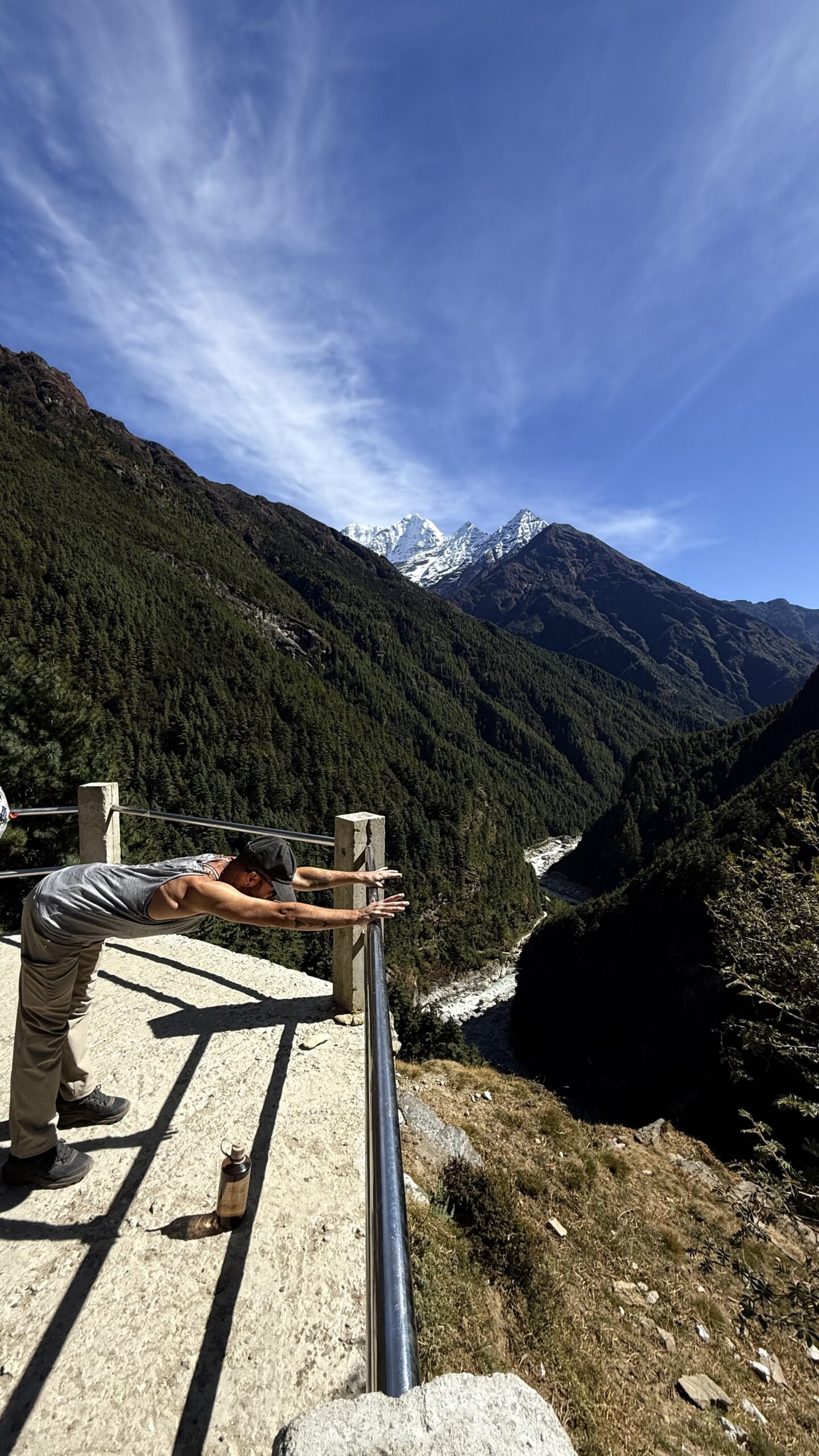
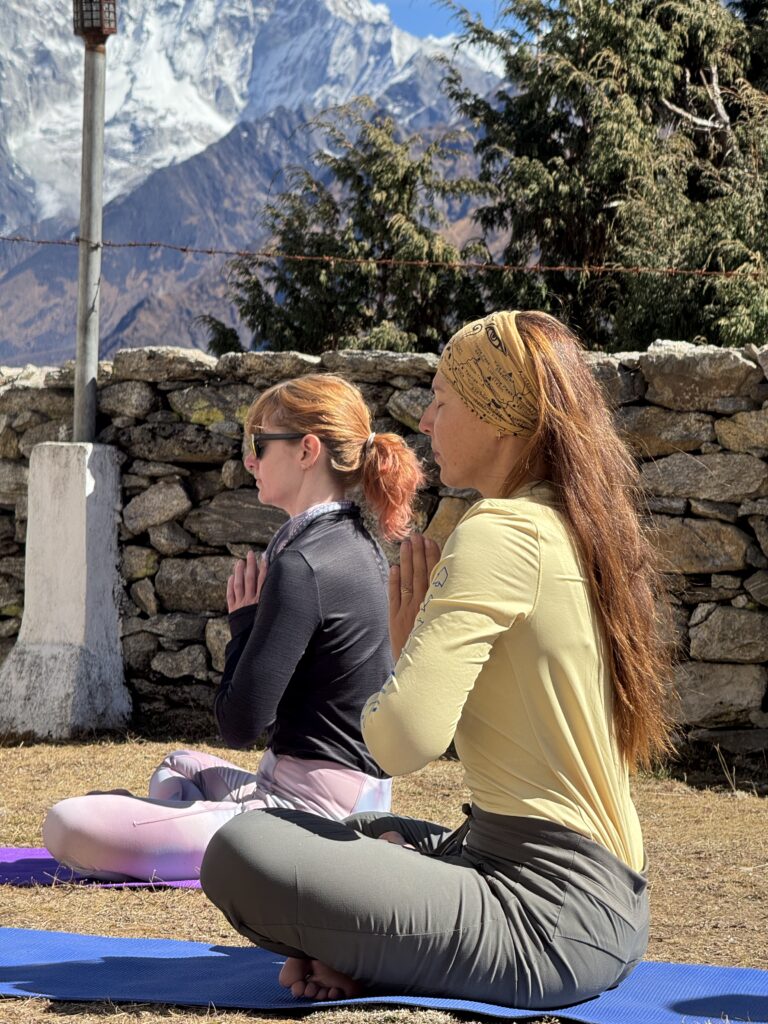
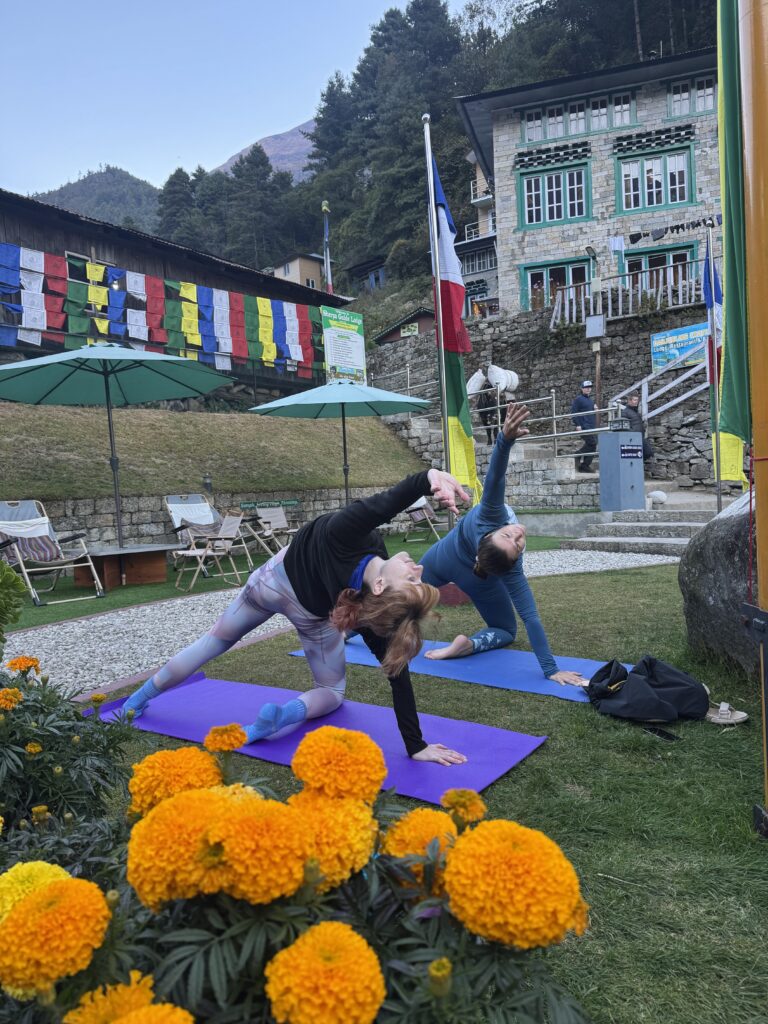
Afternoon Post-Trek Release (At the Teahouse)
Focus on static, grounded postures that decompress the spine and open tight lower-body muscle chains. We usually try to pick a warm sunny spot outside where we can let our toes breathe, but only when weather permits. This is where yin yoga becomes your best friend. Holding poses for 3-5 min on each side can do wonders for your parasympathetic nervous system.
- Supported Downward-Facing Dog (Adho Mukha Svanasana): Use a teahouse bench or the edge of a bed to support your hands if your wrists are tired from trekking poles. Lengthen the spine and gently pedal the heels to stretch hamstrings and calves.
- Reclined Pigeon / Figure-Four Stretch: Lie on your back, cross one ankle over the opposite knee, and draw the thigh toward your chest. This releases the piriformis and glutes, preventing sciatic tension caused by climbing inclines.
- Legs-Up-the-Wall (Viparita Karani): Lie on your sleeping mat with your hips against the wall and legs extended straight up. Hold for 5–10 minutes to drain pooled blood and lymph from the lower extremities and reduce ankle swelling.
Before Trekking: Prime Your Lungs & Warm Up
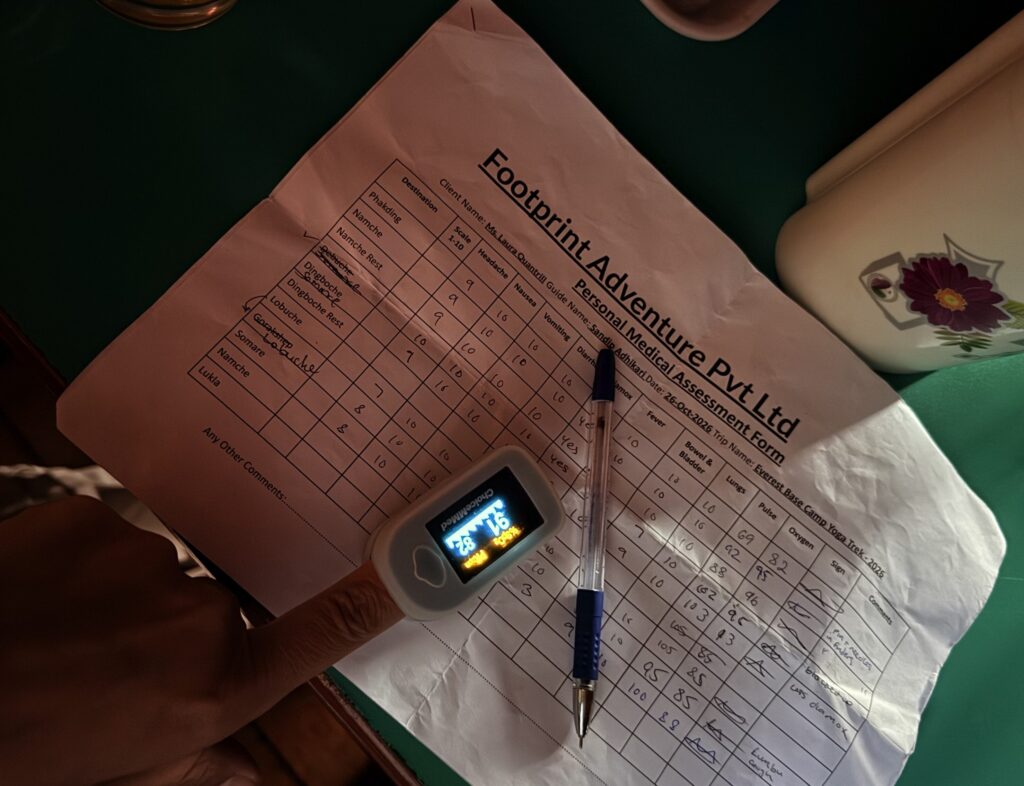
The goal before you start walking is to expand lung capacity, clear out stale air, and energize the mind and body. If you’ve never heard of a neti pod, learn how to use it before your trek and thank me later. Here’s most of the Pranayama exercises we did during our 12 days of hiking in the Everest region. Our guide Sandip, measured our heart rate and oxygen levels daily at dinner and checked if we were experiencing any altitude symptoms.
1. Kapalabhati (Skull Shining Breath)
- Why: Clears mucus, opens up the alveoli in the lungs, increases oxygenation, and generates abdominal heat to wake up your core muscles.
- How to do it:
- Sit comfortably with a straight spine.
- Take a deep inhalation, then forcefully exhale through your nose by pulling your belly inward sharply.
- Let the inhalation happen passively as your belly relaxes.
- Perform 2 to 3 rounds of 20–30 quick exhalations.
- Note: Skip if you have high blood pressure, heart conditions, or are already feeling dizzy at high altitude.
2. Dirga Pranayama (Three-Part / Full Diaphragmatic Breath)
- Why: Trains your lungs to utilize their full capacity (abdomen, ribcage, upper chest) rather than shallow chest-breathing, which is essential when carrying a backpack or climbing inclines.
- How to do it:
- Inhale slowly through your nose, filling the belly first, then expanding the ribs, and finally raising the upper chest slightly.
- Pause briefly at the top.
- Exhale smoothly in reverse: upper chest drops, ribs contract, belly draws in toward the spine.
- Practice for 5–10 slow, deep breath cycles right before setting off.
After Trekking: Cool Down & Muscle Recovery
The goal after trekking is to shift your nervous system from “fight-or-flight” (sympathetic) to “rest-and-digest” (parasympathetic), lower your heart rate, reduce stress hormones, and flush out lactic acid.
1. Nadi Shodhana (Alternate Nostril Breathing)
- Why: Calms the nervous system, balances blood pressure, stabilizes heart rate, and brings mental clarity after physical fatigue.
- How to do it:
- Rest your left hand on your thigh. Place the index and middle fingers of your right hand between your eyebrows, using your thumb to close your right nostril and ring finger for the left.
- Close your right nostril with your thumb, and inhale deeply through the left nostril.
- Close the left nostril with your ring finger, release the thumb, and exhale through the right nostril.
- Inhale through the right, close it, and exhale through the left.
- This completes one cycle. Continue smoothly for 5 to 10 minutes.
2. Bhramari (Humming Bee Breath)
- Why: The low-frequency vibrations stimulate the vagus nerve, instantly relaxing tired muscles and promoting nitric oxide production in the nasal passages, which enhances vascular health and recovery.
- How to do it:
- Sit comfortably, close your eyes, and gently place your index fingers on the tragus (the cartilage flap) of your ears to block outside sound.
- Take a deep breath in through your nose.
- As you exhale slowly, make a smooth, steady humming sound (like a bee) in the back of your throat.
- Perform 5 to 7 rounds.
Bonus Tip for Active Trekking: Box Breathing
If you start feeling winded or stressed while moving uphill, switch to Box Breathing (Inhale 4s – Hold 4s – Exhale 4s – Hold 4s). It restores a steady, calm rhythm to your breath without forcing you to stop walking completely.
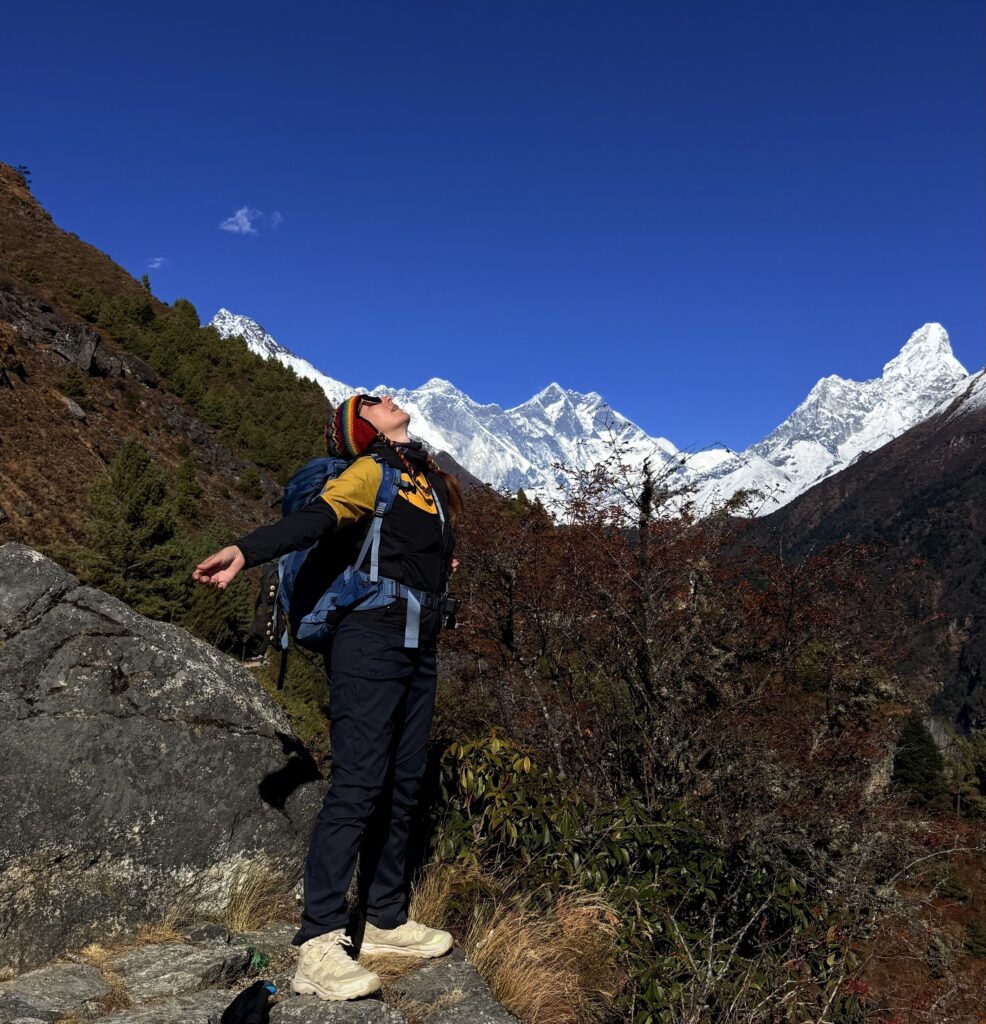
Meditation on the Move: Turning Steps into Practice
Meditation on a trek does not require sitting cross-legged for hours in a freezing room. The trail itself provides a natural rhythm.
- Breath-Step Synchronization: Match your walking rhythm directly to your breathing. On moderate terrain, try taking two paces per inhalation and two paces per exhalation. On steep ground, drop to one step per breath. When your feet and lungs sync, movement becomes frictionless and meditative.
- Sensory Grounding: When fatigue or altitude-induced mood swings strike, practice external anchoring. Notice five textures in the surrounding rocks, four sounds of moving wind or water, and three distinct shades of mountain light. This stops repetitive loops of mental fatigue.
- Evening Teahouse Reflection: Before going to sleep, sit upright in your sleeping bag for 5 minutes or more. Scan your body from head to toe, acknowledging every muscle group that carried you during the day with gratitude rather than judgment.
- Journaling Practice: If you don’t want to carry a journal, write something in your phone every day because by the time you return, you’re likely to skip some of the details. Reflect on what felt easy and effortless, what was the hardest to overcome, and maybe something that surprised you, or something that you learned.
I’ve spent years teaching people to move, breathe and reconnect with themselves. I’ve also spent years discovering that travel can teach us things no classroom ever could, but when we’re in the mountains, nature is the teacher.
The Himalayas have a way of stripping life back to what matters. You learn to slow down. To listen. To accept help. To find joy in simple things. To respect your limits without losing sight of your potential. And perhaps most importantly, you discover that strength isn’t always about pushing harder. Sometimes it’s knowing when to pause, breathe and take the next step.
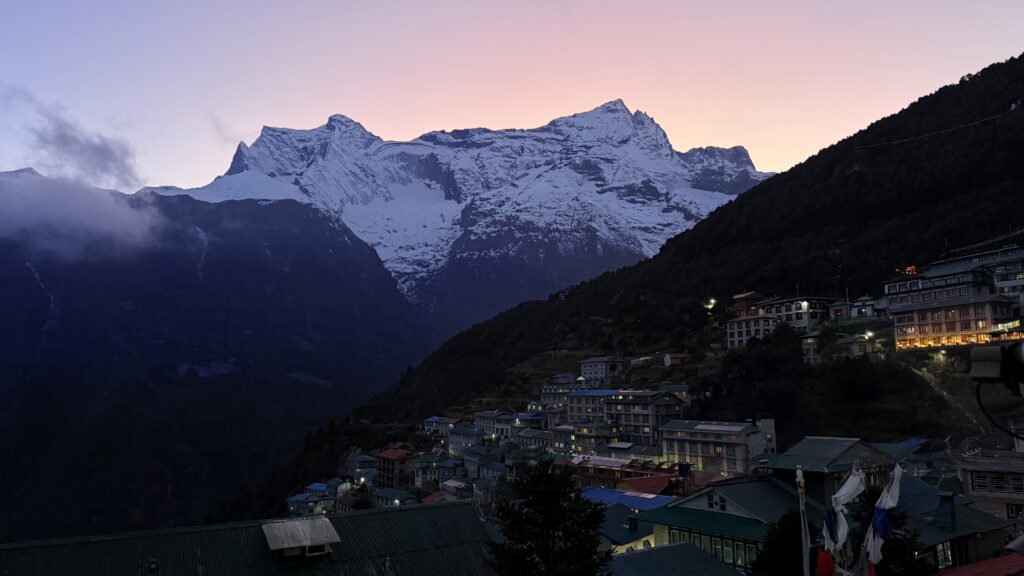
I didn’t go to the mountains to find myself. I went to create space for others to discover a little more of themselves. And this spring, in March 2027, I will be leading another yoga trek in the Himalayas. This time a little bit shorter, and a bit lower in altitude, but just as beautiful and transformative. Come with me and Footprint Adventure on Mardi Himal trek, practice mindfulness, yoga, breathwork, and meet compassion with a pure heart and an open mind.