Why Fear Is a Story: Lessons from the Himalayas on Perception & Flow
What if everything you’re afraid of isn’t happening in the world, but in the story your mind has created about it?
Your brain doesn’t record reality, it constructs it. Every moment, it fills the gaps with memories, expectations, and fears, then presents you with its best guess of what’s real.
I’ll show you how perception, fear, impermanence, and flow shape the stories you believe and the life you choose. And how months trekking through the Himalayas shattered my own illusions about what’s real, and what’s just a story.
Neuroscientists and psychologists have spent decades studying visual illusions. What makes these illusions important is that they reveal something more unsettling and more useful: our perception is not a perfect representation of the world around us.
The brain receives incomplete sensory information, combines it with memory, context and expectation, and produces its best interpretation of what is happening. It fills gaps, anticipates what should come next and corrects itself when new information arrives. In other words, your brain is less like a camera and more like a storyteller.
Your Brain Constructs the Reality You Experience
An influential theory in neuroscience known as predictive processing suggests that the brain continually generates predictions about the world and compares them with incoming sensory information. When reality differs from what it expected, it updates its internal model. This does not mean that reality is imaginary or that facts do not matter. It means that we never experience the world without a filter.
That filter contains everything we have lived through: our memories, beliefs, relationships, culture, physical state and emotional wounds. Two people can encounter the same event and leave with entirely different accounts of what happened.
If a friend does not answer your message. The fact is that no reply has arrived. The story might be, “She is upset with me,” “I am not important to her,” or “I have done something wrong.” A manager may ask to discuss your work. The fact is that a conversation has been requested. The story might be, “I am being criticised,” or “I am about to lose my job.”
The body may react to the story before we have checked whether it is true. The heart accelerates, the stomach tightens and the mind begins preparing for rejection or danger. Fear is real and valid as an experience, but the explanation attached to it is not automatically a fact.
Fear Is a Protector, Not a Prophet
Fear evolved to keep us alive. It directs attention towards possible threats and prepares the body to respond quickly. In genuine danger, this system is essential. But it was built for survival, not for providing a neutral interpretation of every email, silence or uncertain future. When information is incomplete, the mind often fills the space with what it has learned to fear.
Past abandonment can make silence feel like rejection. Previous failure can make opportunity look like danger. A painful relationship can turn uncertainty into suspicion. Once the mind settles on an explanation, it begins noticing details that support it.
Fear shapes bigger decisions too. You’ve dreamed of starting a business, changing careers, or moving to a new city. But the story says: “It’s too risky,” “You’re not ready,” “What if you fail?” So you wait for certainty that will never come. You want to share your art, your writing, your ideas. Fear says: “People will judge you.” So you keep it private. The world never sees what you created. You meet someone who interests you. Fear says: “They’ll reject you” or “You’ll get hurt again.” You don’t reach out. You tell yourself it wasn’t meant to be. You consider a difficult conversation with a family member, a friend, a colleague. Fear says: “It will make things worse.” You stay silent. The resentment grows.
This is why asking, “Is this a fact or a story?” can be so powerful. It creates a small space between perception and reaction.
Try separating the two:
The fact: What could a camera or neutral observer confirm?
The story: What meaning, prediction or judgment have I added?
The possibility: What else might reasonably explain this?
The response: What is the next honest and useful action I can take?
This is not an invitation to dismiss instinct or overlook real danger. It is an invitation to examine whether fear is showing you evidence or repeating an old pattern.
When Impermanence Becomes Impossible to Ignore
The recent catastrophe in Nepal has made the fragility of life painfully visible. In August 2026, a glacial collapse near the Nepal–Tibet border sent ice, rock and mud through the Trishuli River region. Entire communities were devastated, homes and infrastructure were destroyed, and thousands of lives were lost or left unaccounted for. The scale of the disaster continues to unfold. Losses measured not only in billions of dollars, but in families displaced and futures suddenly changed.
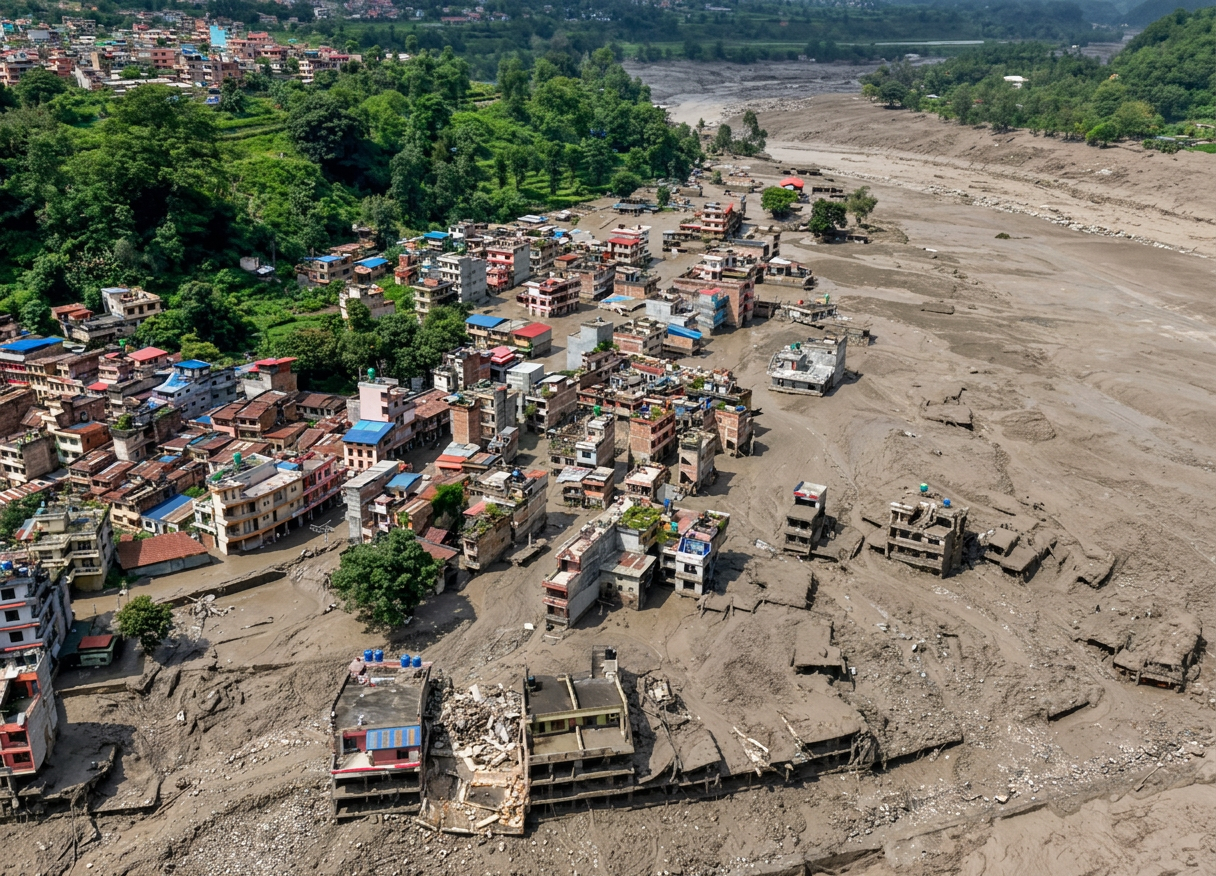
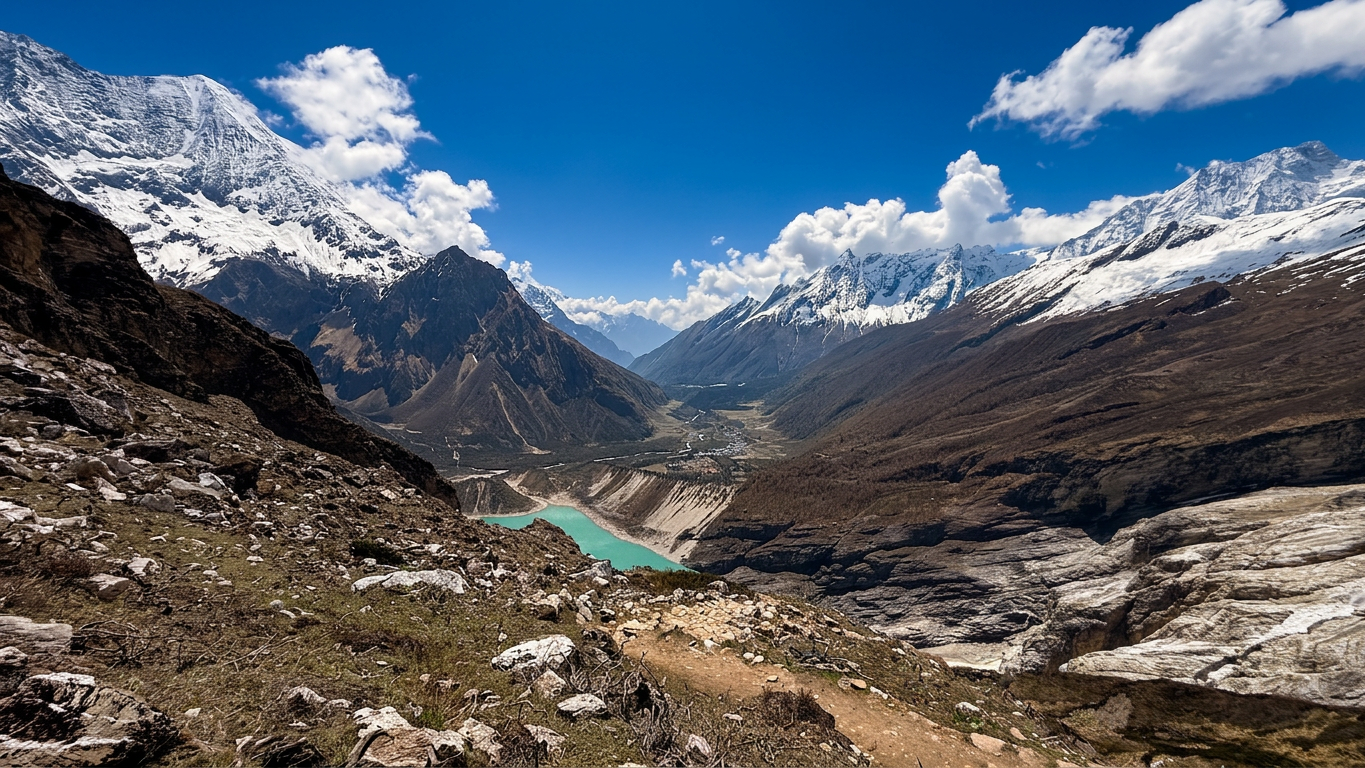
After spending months in the Himalayas, it is difficult for me to regard this as distant news. I think of the guides, porters, teahouse owners, farmers and families whose lives are tied to those mountains. Not to mention the small children in those villages. I think of how quickly a familiar landscape can become unrecognizable.
Nature does not negotiate with our expectations. Mountains rise, glaciers retreat, rivers change course and lives end before we feel ready. We often respond to impermanence by tightening our grip. We postpone what matters while trying to make life predictable enough to begin living. Yet certainty never arrives. Perhaps the answer is not to become fearless, but to stop asking fear for permission.
The Art of Letting Go
Tibetan Buddhist practice offers a different relationship with impermanence. This does not mean that Tibetan people never fear loss. It means that impermanence is consciously contemplated rather than treated as an error that should not exist. For days, monks place grains of colored sand into intricate geometric patterns called mandala. The work requires patience, precision and complete attention. Then, when the mandala is finished, it is deliberately swept away.
During the dissolution ceremony, the colours merge into a small pile of sand, which may then be released into flowing water. The ritual represents the impermanence of all things and the return of form to nature. That destruction is not separate from the mandala’s meaning. It completes it. Because the beauty was never dependent on keeping the creation forever. It was found in creating it, witnessing it and releasing it.
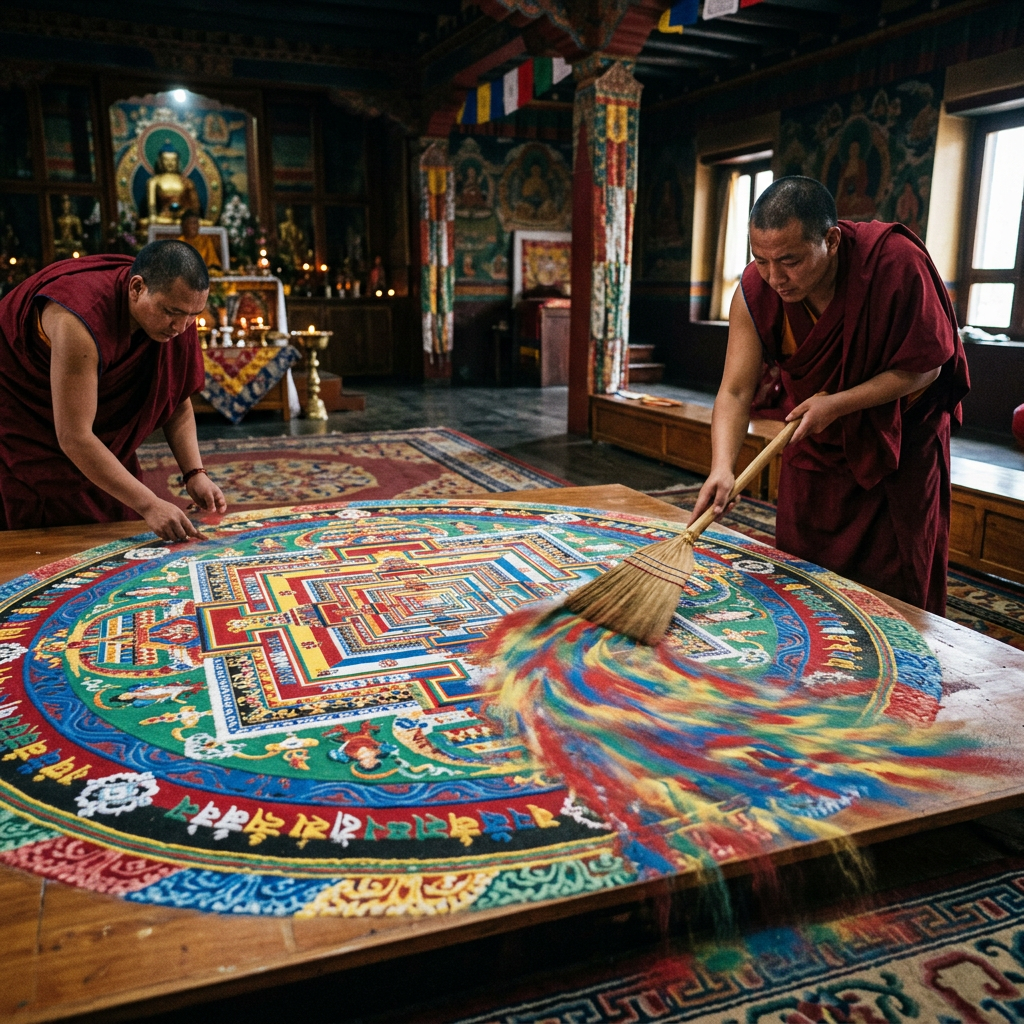
This is a lesson, the Himalayas have been teaching forever. The monks do not value the mandala less because it will disappear. They give it their full attention precisely because it will not remain. What would change if we approached our lives in the same way? Would we love less because a relationship may end? Would we travel less because landscapes are changing? Would we avoid meaningful work because success is uncertain? Or would impermanence make our attention more complete?
Finding Flow. When the Story Falls Silent
Psychologist Mihály Csíkszentmihályi first introduced the term flow in his book Beyond Boredom & Anxiety to describe periods of deep absorption in an activity. In flow, attention becomes so focused that self-conscious thought quiets, time may feel altered and action seems to unfold without constant internal commentary.
Researchers often associate flow with clear goals, immediate feedback and a balance between challenge and skill. Neuroscience is still investigating exactly how it works, but studies describe it as a state of intense engagement with reduced self-referential thinking. The usual mental noise about who we are or what might happen next temporarily loses its hold. Research on the neuroscience of flow suggests that its mechanisms remain complex, but its psychological experience is widely recognized.
Among the many mountaineers who have returned to the heights after accomplishing what most of us can barely imagine, the inspiring stories of Hilaree Nelson and Nirmal “Nimsdai” Purja are examples of how powerful that call toward flow state can be.
Hilaree Nelson had already stood on Everest and Lhotse and completed extraordinary ski descents around the world. Nirmal “Nimsdai” Purja had climbed all 14 of the world’s peaks above 8,000 metres in six months and six days, a record documented in 14 Peaks: Nothing Is Impossible. Neither had anything left to prove, yet both were called to return to the mountains. Hilaree lost her life while descending Manaslu in 2022. Nims died in an avalanche on Broad Peak just recently in 2026.
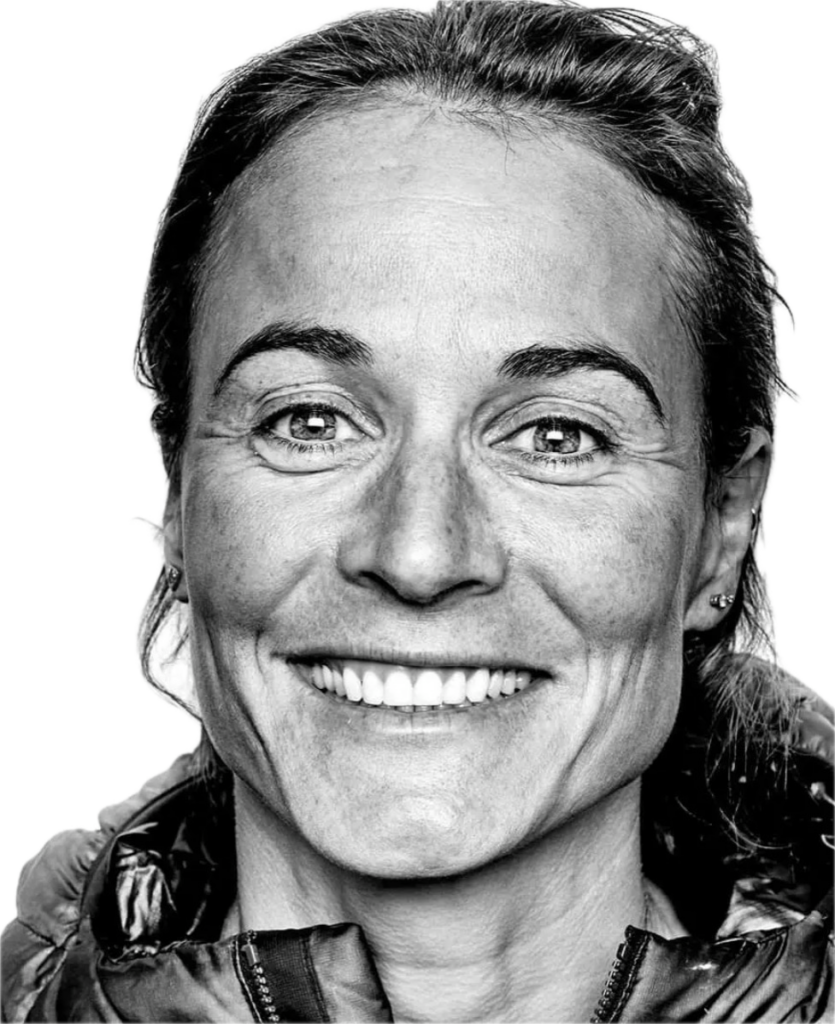
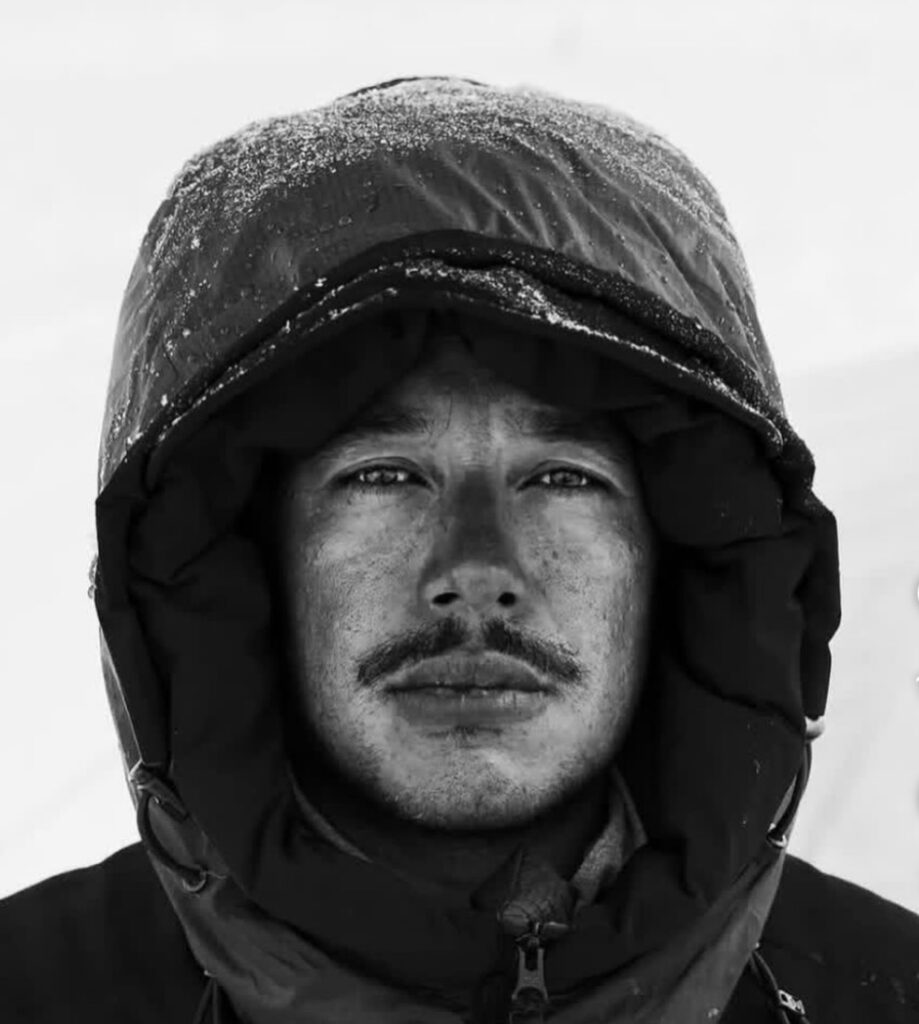
The question many people ask: Why do people who have already reached the top of the world risk everything to go back?
Perhaps they were no longer chasing mountains, fame, or achievement. They were chasing a feeling, a version of themselves that existed most fully up there. I cannot know what they experienced in those final expeditions, but I understand the pull of moments that absorb you so completely that all the noise disappears. There is no past to regret, no future to fear, and no room for pretence. There is only the next breath, the next step, and complete presence in the life unfolding in that very moment.
Psychologists call this state flow. I suspect this is what they were returning to, not to move closer to death, but to feel fully alive.
Most of us will never climb to the summit of Everest, ski down from Manaslu or stand on Broad Peak. But somewhere in every life is a pursuit, a place, or a purpose that makes the noise fall silent. Our mountain may be a dream we keep postponing, a truth we are afraid to speak or a life we have not yet given ourselves permission to live. The question is not whether we are willing to risk everything. It is whether we will walk towards what makes us feel alive before time makes the choice for us.
Do Not Wait for a Perfectly Safe Life
Nepal has taught me that life can be both sacred and uncertain at the same time. The mountains reveal our smallness, but they also show us how vividly we can live when our attention is no longer divided.
I am returning to Nepal in October to lead yoga on the Everest Base Camp Trek. At a time when so many Nepali families depend on tourism for their livelihoods, responsible travel can support local guides, porters, teahouses and communities as they recover. Travel should always follow current local guidance and respect the places directly affected by disaster, but abandoning Nepal entirely would take vital income away from the people who need it most.
If you have ever dreamed of seeing the Himalayas, do not assume there will always be a better time. The landscape is changing, life is impermanent and certainty is not a requirement for meaningful action. Come walk with me. We will move slowly, practice yoga and breathwork, listen to the mountains and experience what happens when the usual noise begins to fall away.
Your fear may have something important to tell you. So listen. Just make sure it is telling you the truth.