The Ultimate Recovery After Ski – Matterhorn Focus Hotel, Zermatt
Ski days in Zermatt ask a lot of the body. Altitude sharpens the breath. Long descents pull deep from the legs. By late afternoon, speed gives way to fatigue, and the scale of the mountains humbles even the most experienced skiers. Zermatt has always understood this balance between effort and recovery. Long before wellness became a travel trend, life here evolved around listening to the mountains and respecting their rhythm.
That philosophy is woven into every curve of the Matterhorn Focus Hotel, where recovery is not an added feature, but the very heart of the experience. From the moment we arrived, everything about the stay felt carefully considered to soften the edges of a demanding ski day and replace exertion with ease.
We were met with a welcome drink of choice – a small gesture that immediately set the tone and offered refreshment after a long journey. The hotel’s complimentary shuttle picked us up from the train station, removing the usual friction of arrival in mountain towns. At the reception, ski passes were available to purchase, sparing us an extra errand and reinforcing the sense that here, your energy is protected from the start.
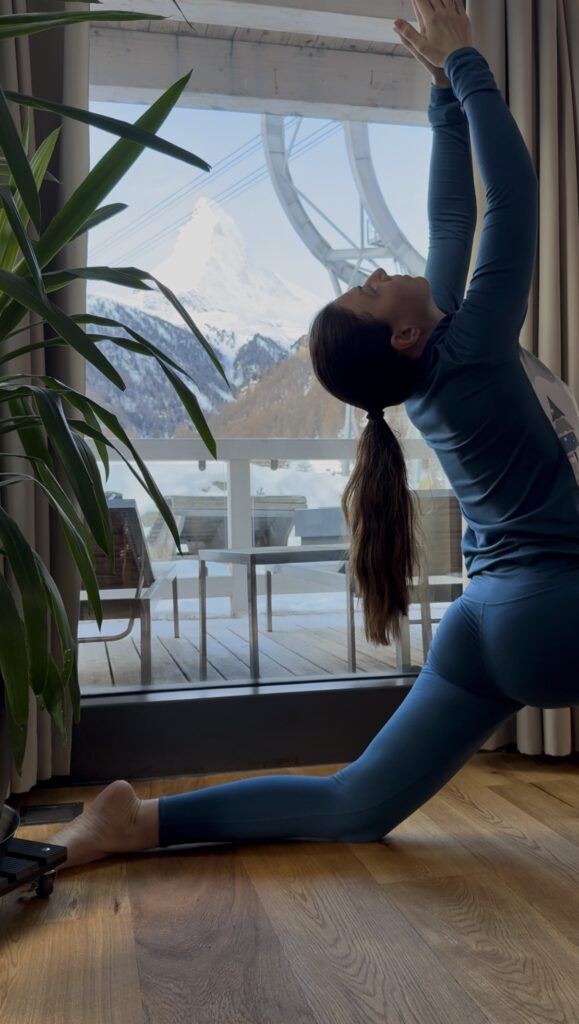
Matterhorn Focus is an intimate hotel with just 30 rooms, and almost all of them have a direct view of the Matterhorn. Each suite is uniquely styled and named after one of the surrounding 4,000-meter peaks. We stayed in the Monte Rosa Suite, a space that felt both expansive and personal. Every detail feels intentional, shaped by the mountain rather than guided by trends. The architecture does not compete with the view; it rather frames it. Light moves gently through the rooms, and the Matterhorn becomes a constant, grounding presence rather than a dramatic backdrop.
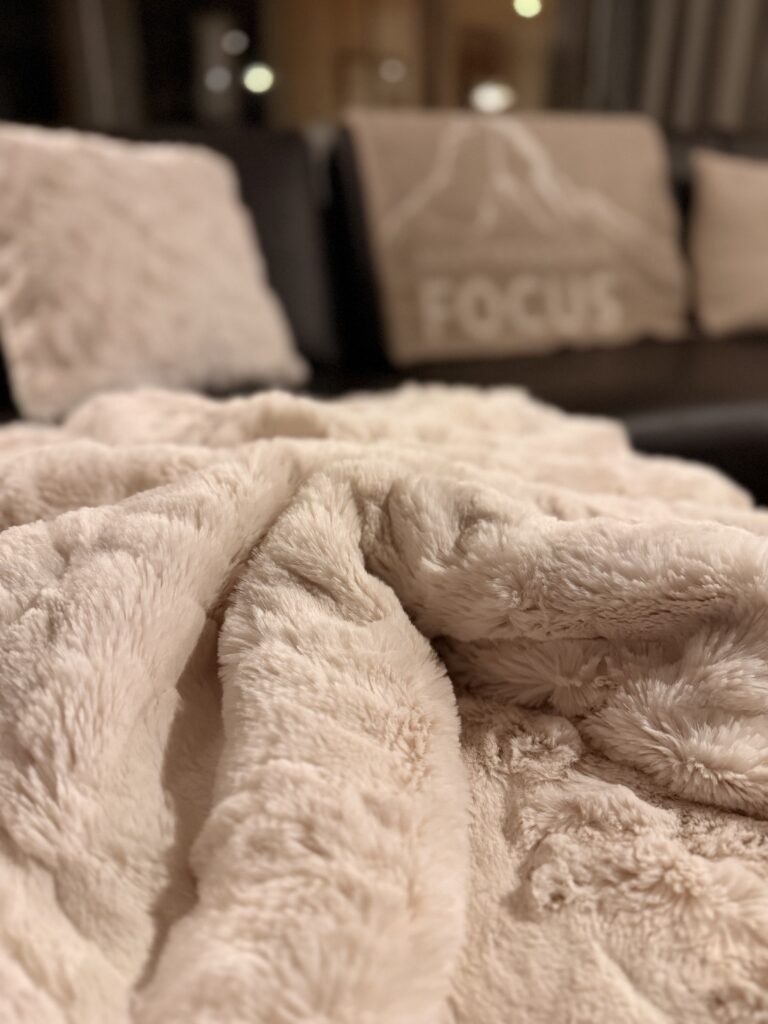
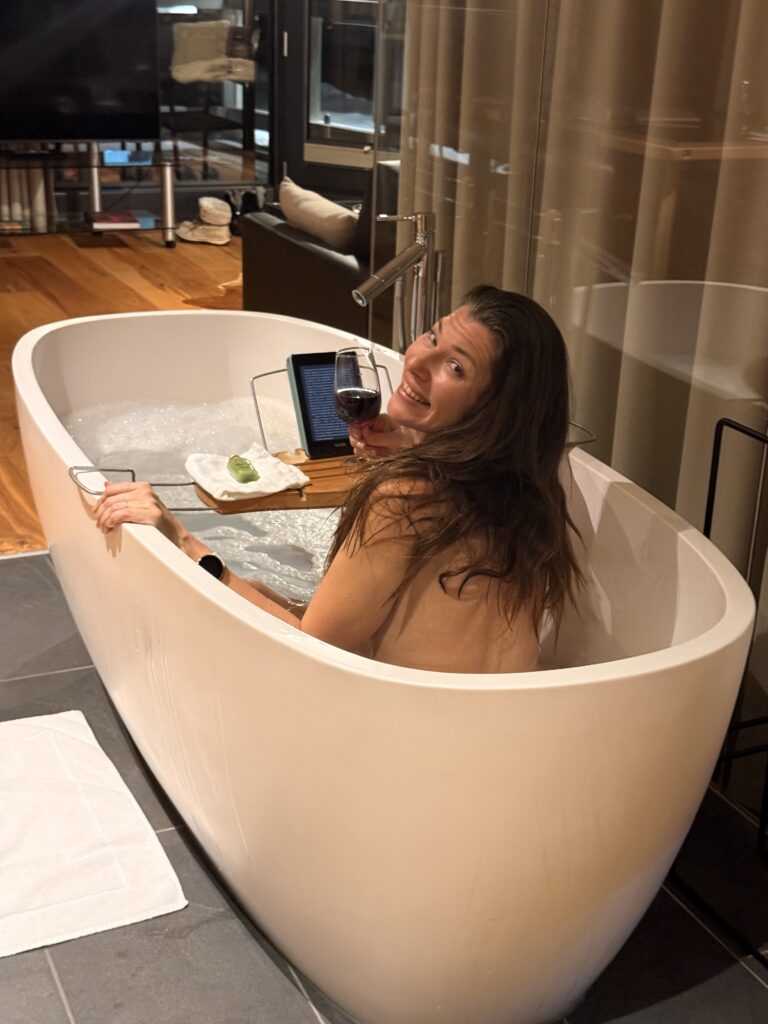
Inside our room, the details revealed themselves slowly, in ways that felt personal rather than staged. Heated bathroom floors – an understated luxury that makes perfect sense during ski season. A cozy bed dressed with your choice of down duvet and a thoughtful selection of pillows, inviting rest without effort. Soft touches throughout, warm blankets that encouraged lingering, not rushing. Candles on the table, paired with matches bearing a subtle romantic note, made small evening moments feel meaningful.
Waiting for us was a personally signed card and a bottle of red wine, along with a small gift of sunblock and lip protection – practical, considerate, and perfectly attuned to alpine life. I was quietly impressed by the thoughtful attention given to our arrival – a reminder that it is often the smallest details that make a stay truly unforgettable.
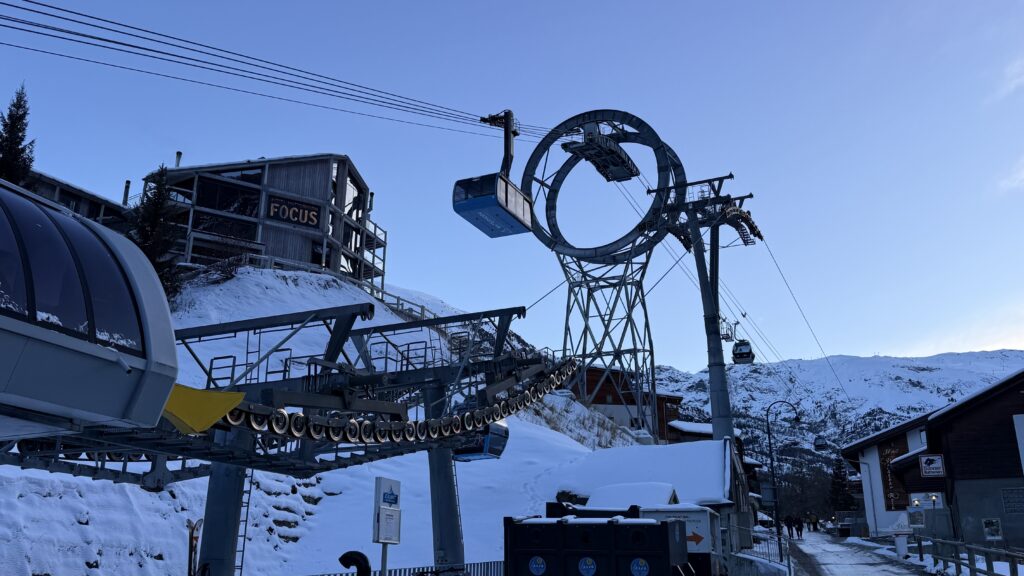
Some of the hotel’s most impressive features can be found below and above ground. A private tunnel beneath the hotel leads directly to individual ski lockers assigned to each room. Warm, dry, and stocked daily with fresh apples. From there, the location does the rest: Matterhorn Focus sits directly beside the Matterhorn Express Gondola and the Matterhorn Glacier Paradise Ride, placing guests on the mountain within minutes.
Throughout the hotel, character is reinforced through art rather than ornament. Sculptural chandeliers by Heinz Julen introduce moments of creativity without disrupting the calm, echoing the hotel’s balance of boldness and restraint.
Spa Etiquette: Enjoy the moment & the silence. Relax body & mind
After full days on the slopes, the spa becomes a natural extension of the mountain experience. In the afternoon, steam replaces snow, silence replaces speed, and recovery becomes a ritual. The spa includes an indoor pool, outdoor jacuzzi, saline bath, caldarium, Finnish sauna, and a quiet relaxation area with heated loungers. A 50 – 90 minute massage will cost you between 135-210 CHF; find a full list of treatments here.
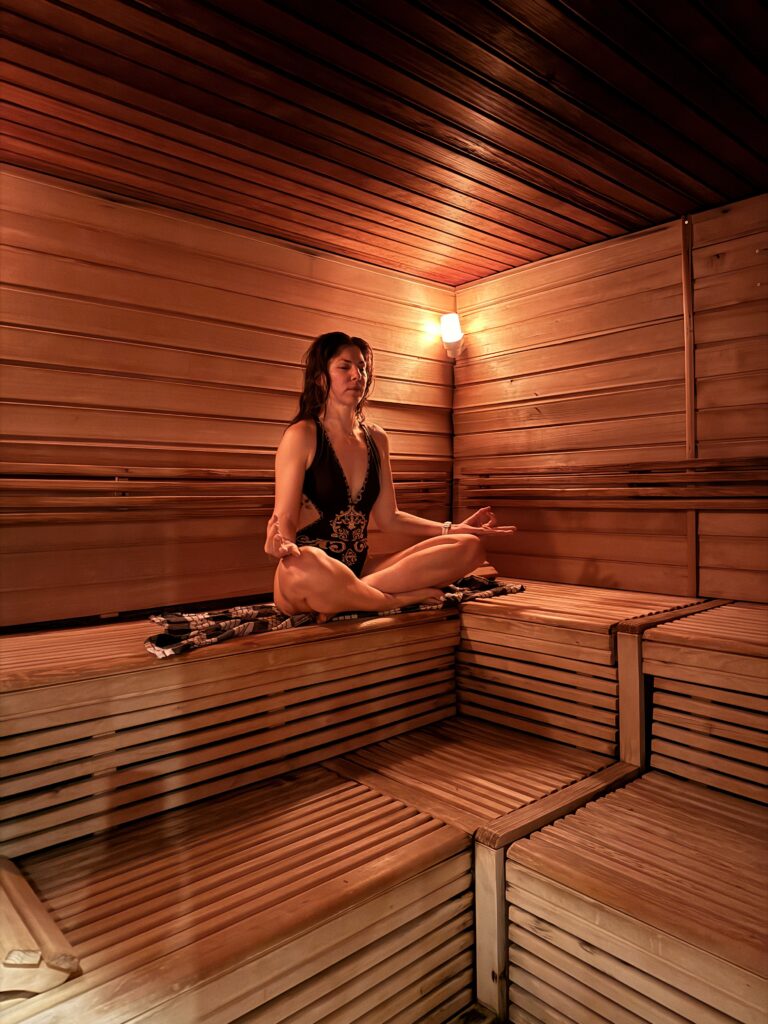
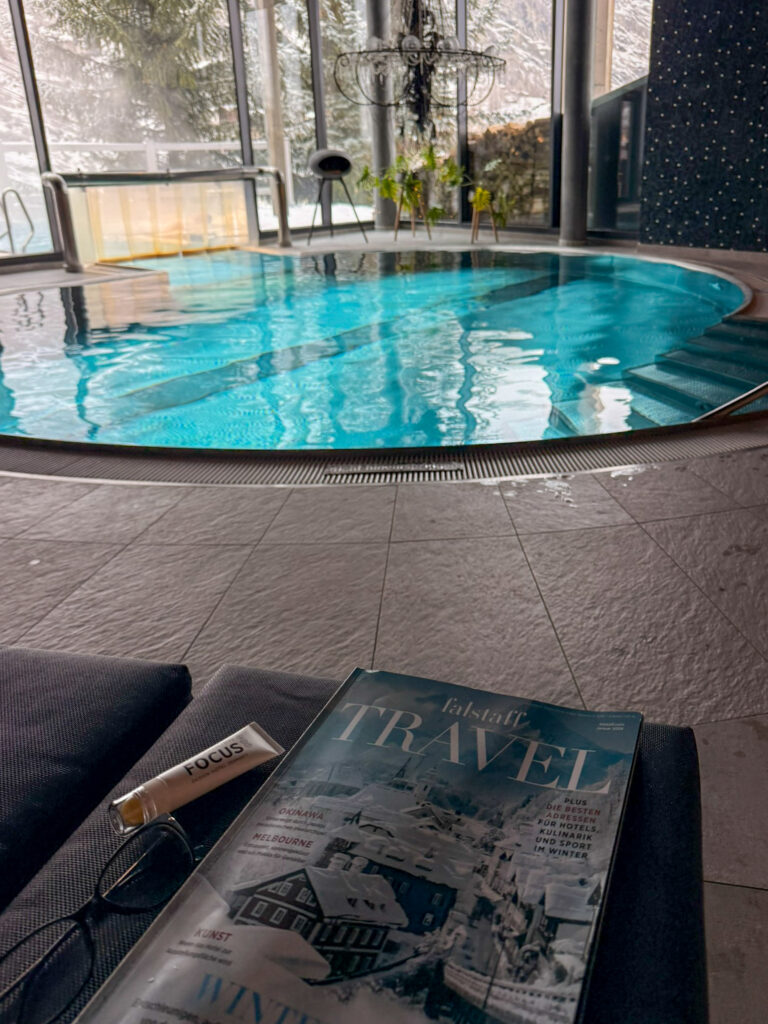
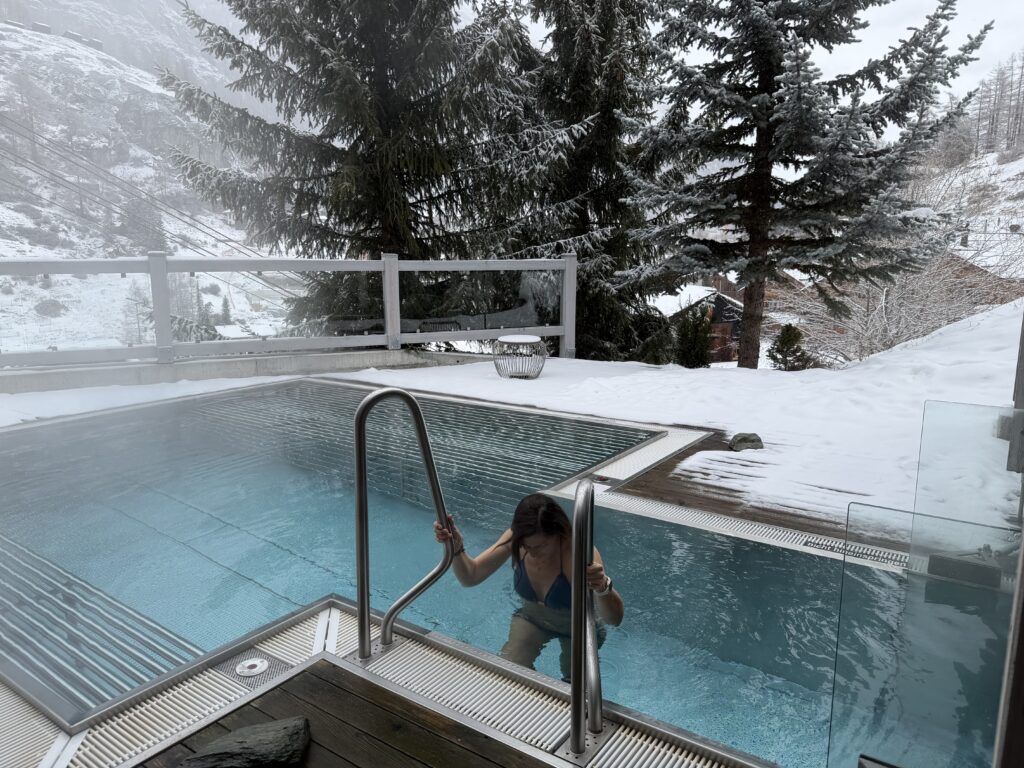
The soft robes and towels make the transition from movement to rest effortless. The spa etiquette of “Enjoy the moment and the silence. Relax body and mind” was reflected in the atmosphere and immediately felt.
Mornings began with a generous breakfast served from 7 to 10:30 AM – an especially welcome window for skiers easing into the day. The spread was abundant and tasty, with excellent vegan options alongside alpine staples. It was the kind of breakfast that fuels a full ski day without weighing you down, reinforcing once again that wellness here is practical, not performative.
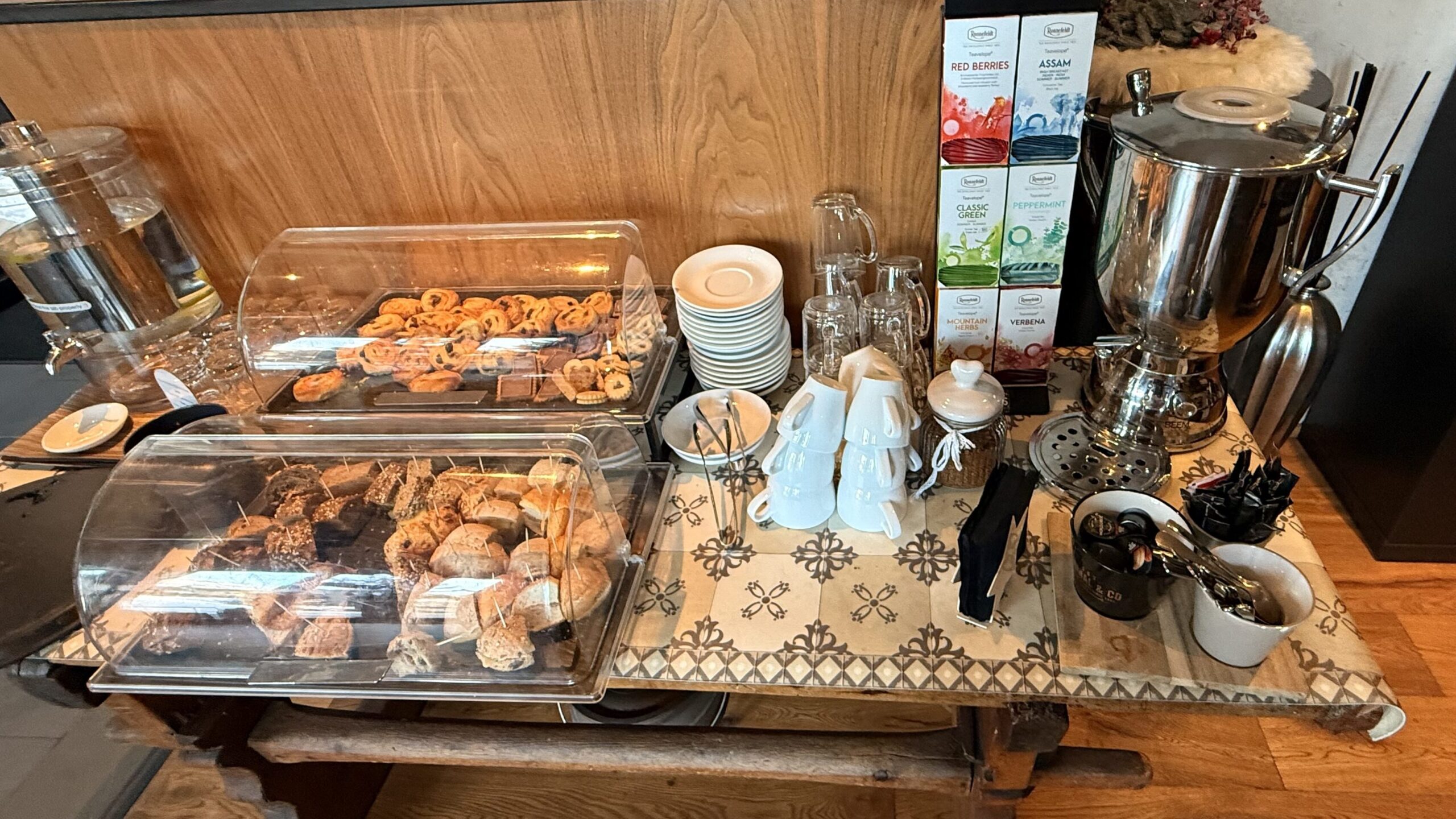
After 3 PM, the lounge becomes a quiet refuge: complimentary snacks, tea, and coffee served by the fire, inviting guests to linger, read, or simply sit without agenda. A curated library of books encouraged slowing down further, reinforcing the sense that rest is not wasted time but an essential part of the alpine experience.
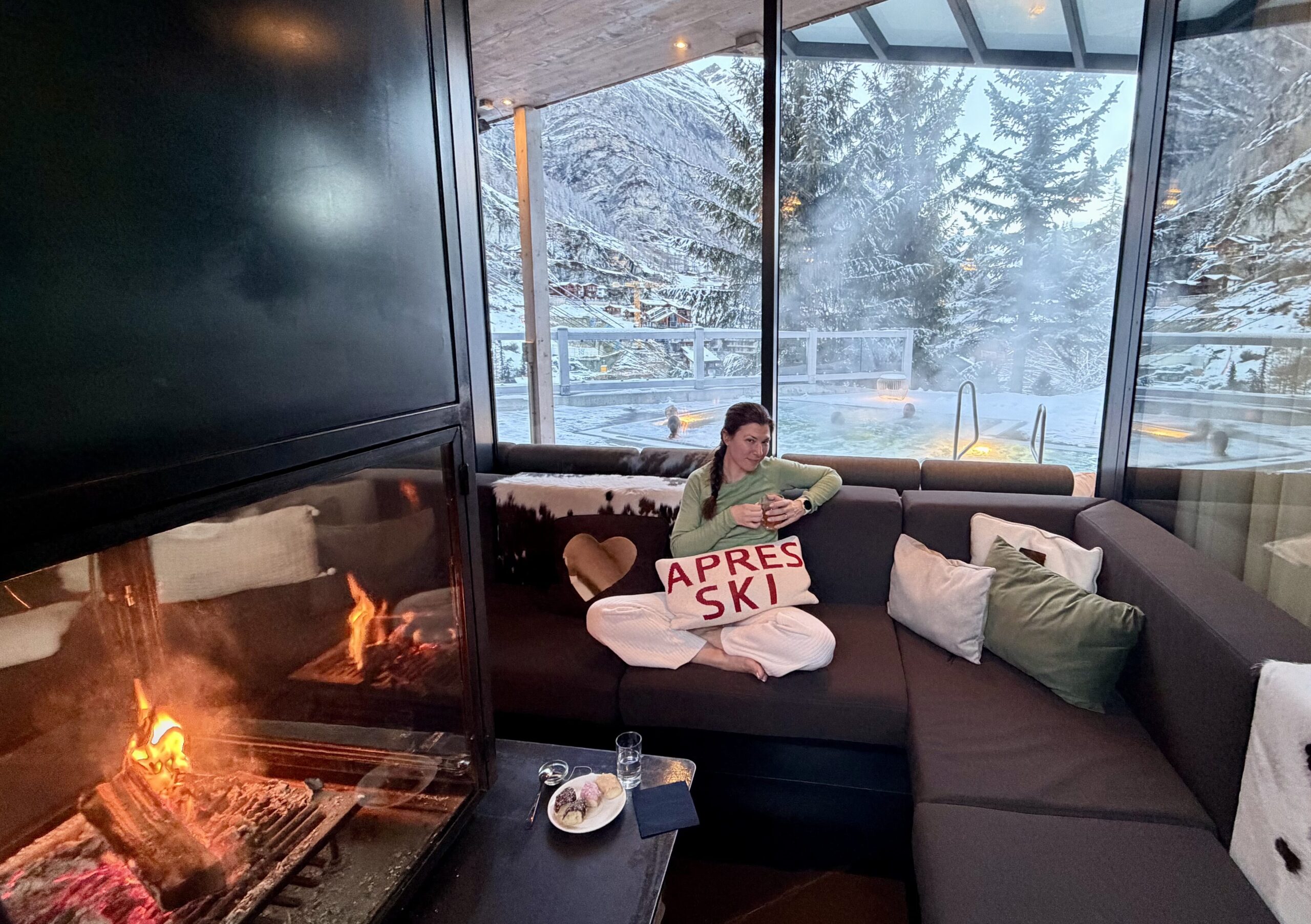
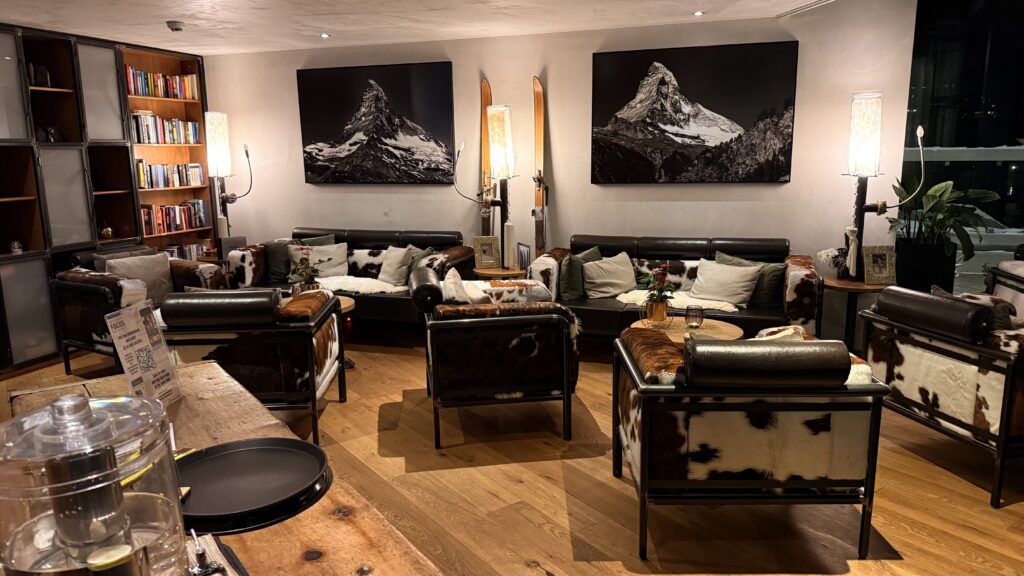
Dinner plans in Zermatt are abundant, but returning to the hotel afterward felt like coming home. The staff greeted us not as guests passing through, but with a familiarity that felt sincere. Their willingness to assist with restaurant recommendations, excursions, transfers, or seasonal activities made planning effortless and personal.
While Matterhorn Focus anchors the stay, Zermatt’s identity is inseparable from the Matterhorn. After the first ascent in 1865, the village evolved from a remote farming community into a world-renowned alpine destination – without losing its sense of proportion. Zermatt remains proudly car-free, movement is human-scaled, and development is measured.
Skiing Or Not, Zermatt Offers Something For Everyone
Zermatt offers one of the most extensive ski areas in the Alps, stretching across Switzerland and Italy. One of its most memorable routes is the descent from Matterhorn Glacier Paradise (3,883 m) down to Valtournenche in Italy – the longest continuous run in the Alps – approximately 22 kilometers (14 miles). Crossing borders mid-run adds a sense of scale and adventure that few resorts can match.
To navigate the 360 km ski area efficiently:
- Start early for quieter slopes and better snow – the groomed terrain feels like your skis are crunching through wafers, but watch out for avalanche restricted areas on powder days.
- Use Matterhorn Express to access higher terrain quickly. On windy days, Matterhorn Glacier Paradise may not be accessible with skis, or it could be completely shut down due to wind. We had two windy, snowy days, and they only allowed pedestrians on the lift.
- Plan cross-border routes with lift closing times in mind – some lifts and shuttles close at 4 PM.
- Use the Zermatt ski app for real-time lift and weather updates, make dinner reservations, book events, check the live cams, track your best runs, and city shuttles.
- Ski in one area for an entire day before exploring the next – if you don’t want to walk and carry your skis for long, and maximize time on snow and reduce transitions.
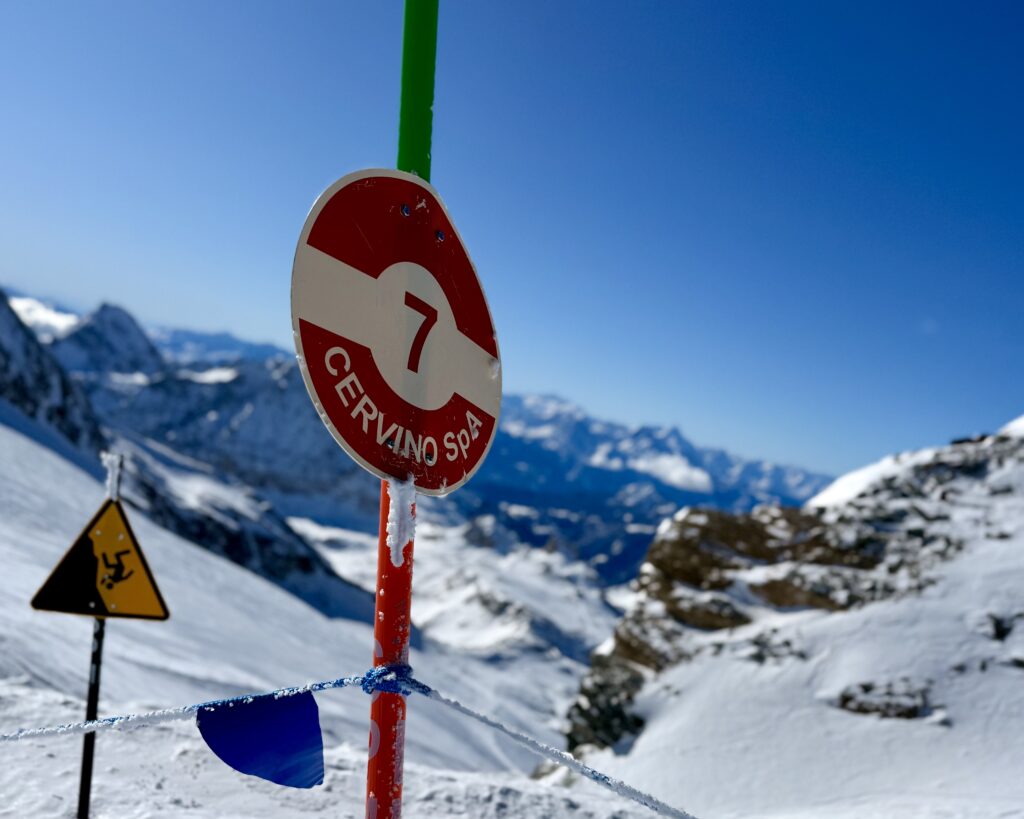
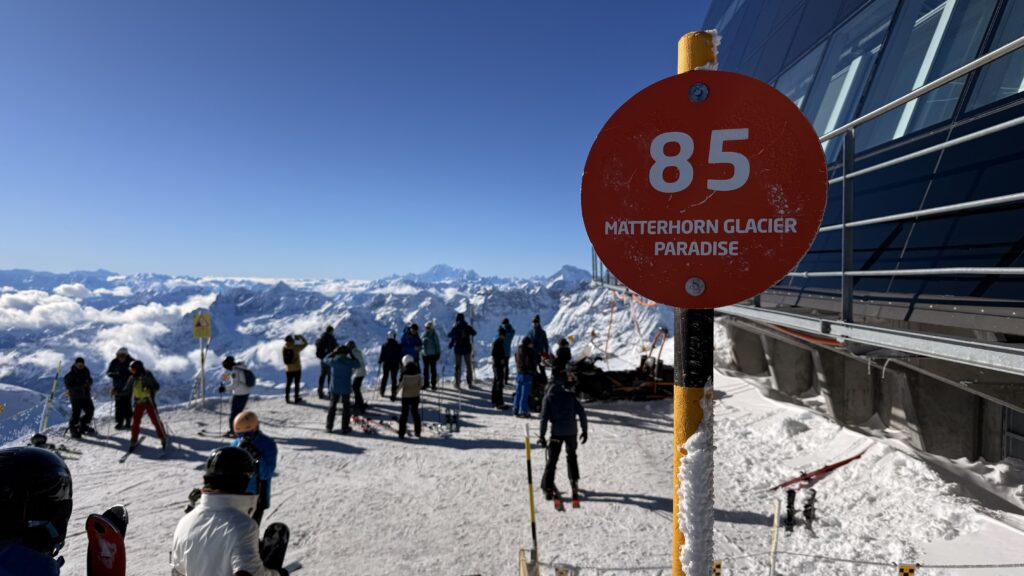
The terrain rewards strong skiers, but pacing and smart planning make the experience far more enjoyable. Snowboarders, stay alert for the flat terrains at the top, where even skiers have to push for a while. The ski pass for the day is 88 CHF, but you can save with a multi-day pass. We chose the flex ski pass for 4 out of 6 days for 383 CHF per person. The Breuil-Cervinia/ Valtournenche (Italy) option is an additional 61 CHF. Kids under 9 ski free, and ages 9-16 use 50% discount – more info here.
Navigating the village is easy thanks to two free electric bus lines – the red and green routes – which connect hotels, lifts, and key areas. Walking remains the most immersive way to explore, but the buses are invaluable after long ski days.
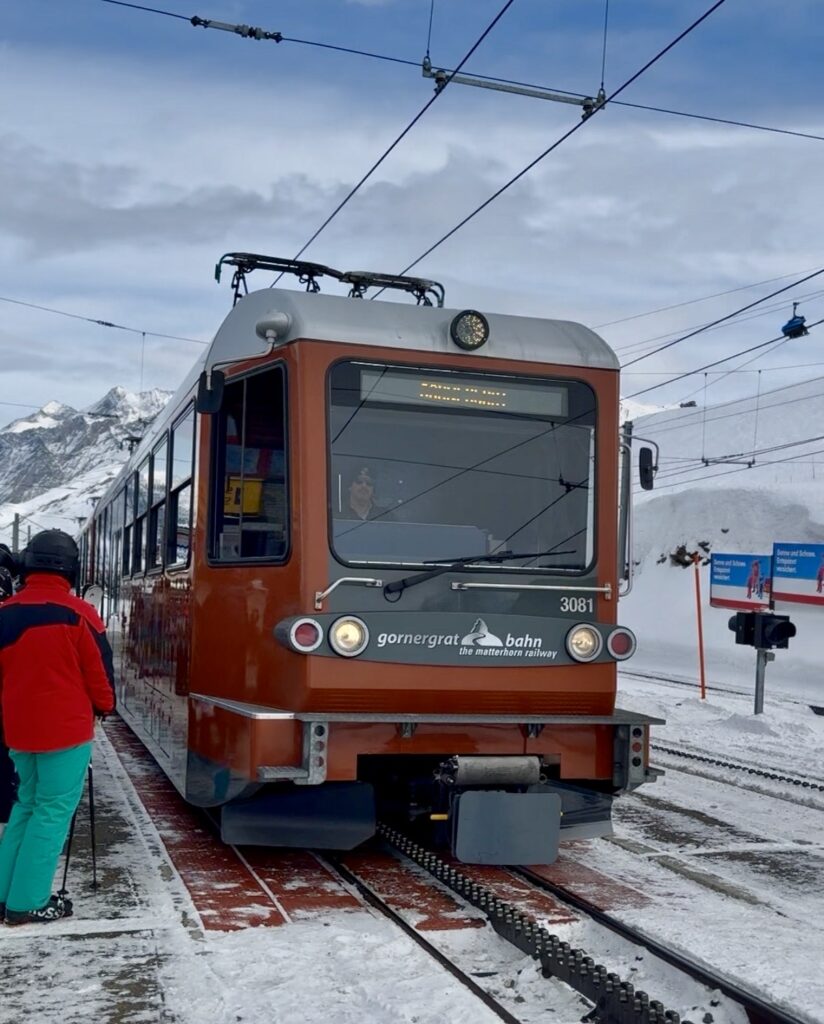
One of the most memorable experiences in any season is the journey aboard the Gornergrat Railway, operating since 1898. The cogwheel train climbs above the tree line, revealing glaciers and sweeping views of the surrounding 4,000-meter peaks. In winter, it supports ski connections; in summer, it becomes one of the most accessible ways to experience high alpine terrain without technical demands. The best part – it’s included with your ski pass, and dogs are always welcome to ride for free.
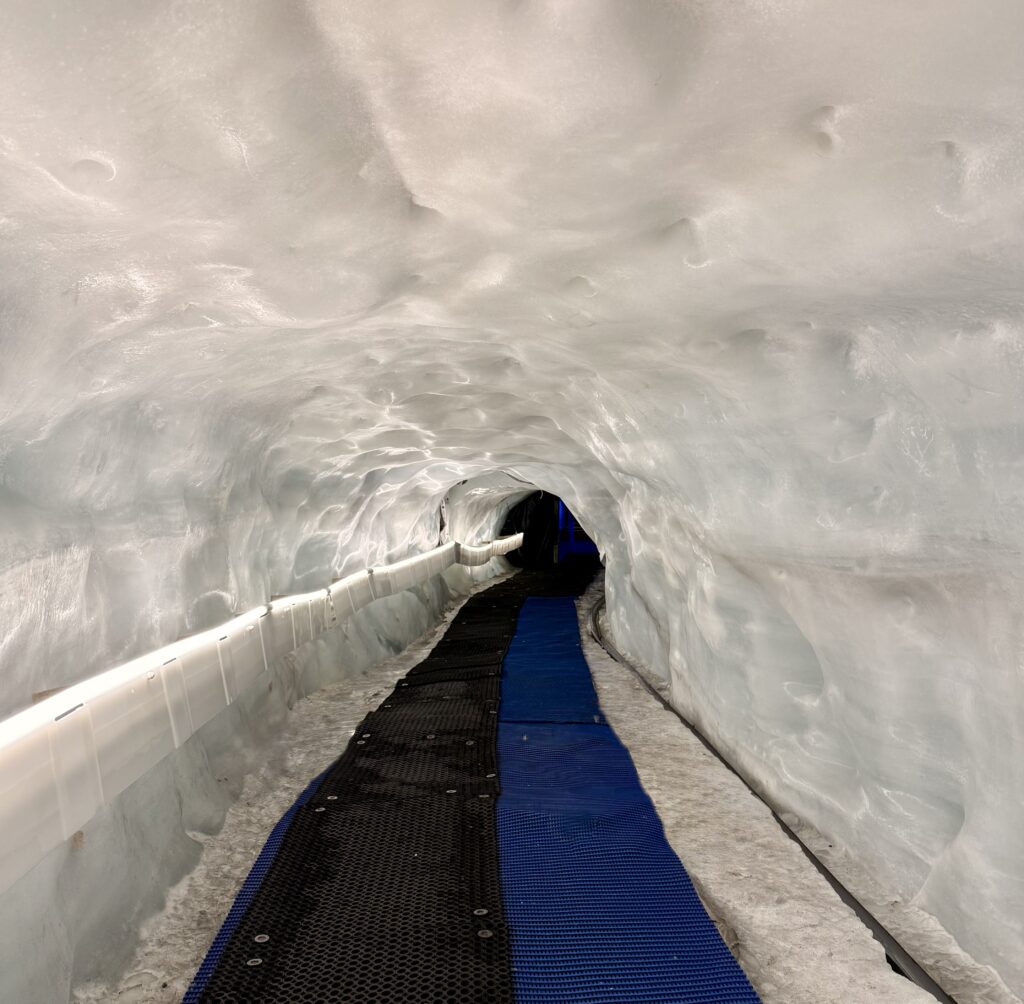
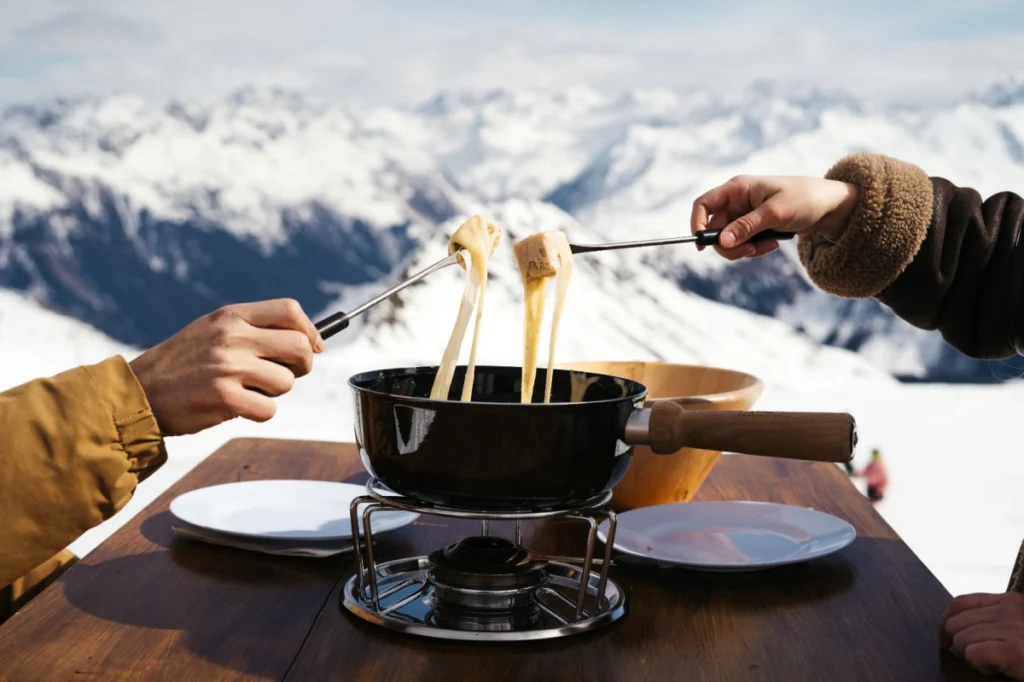
Options for non-skiers on the mountain are plentiful. Sledging is the perfect winter fun for the whole family. The ice skating rink offers enthusiasts excellent conditions to practice their skating skills or play a match of hockey. Paragliding over the Zermatt mountains offers impressive panoramas, whether you’re in a flight school or simply sightseeing. At Glacier Palace, you can travel through ice tunnels 15 meters deep inside a glacier to slide down and enjoy dazzling ice sculptures. From Gornergrat, you can ski/walk down to Iglu-Dorf and stop by for a warm drink at the bar, or try their fondue between 12 – 2 PM.
Zermatt leaves its mark on the body. How that mark feels depends on where – and how you come home at the end of the day. At Matterhorn Focus Hotel, recovery is not something you schedule or seek out. It unfolds naturally, through warmth, quiet, thoughtful details, and a constant relationship with the mountain itself. After long days shaped by altitude, snow, and effort, returning here felt less like checking into a hotel and more like being restored into balance.
There are stays that meet expectations, and then there are those that quietly exceed them. This one marked a special moment for me – not because of a single grand gesture, but because everything worked together to make me feel held, seen, and at ease. In a place defined by scale and effort, it offered something rarer: the space to soften, to rest fully, and to let the days unfold without resistance. Leaving, I realized how uncommon it is to depart somewhere already knowing you’ll return – not out of habit, but out of gratitude.