Tsum Valley + Manaslu Circuit + Annapurna: 300km Himalaya Trek Guide
When I arrived in Nepal, I planned a 27-day itinerary for trekking in the Himalayas.
Twenty-three days later, I returned from the mountains having skipped rest days, combined hiking stages, crossed three high-altitude regions, and learned that the most meaningful experiences rarely happen according to plan. What I found in the Himalayas wasn’t just spectacular scenery. It was a different relationship with time, discomfort, uncertainty, and myself.
I started and ended in Pokhara, traveling first by local bus to Machha Khola. The bus was loud, crowded, dusty, and unforgettable. It was the kind of introduction Nepal gives you when it wants to remind you that comfort is not something to seek at high altitude. My guide, Dharma, made sure I got the front seat so my knees wouldn’t be jammed against the seat in front of me. Passengers climbed on and off wherever they pleased. There were no formal stops. At one point, a man jumped on as the bus was moving carrying a stringed instrument and began singing for tips.
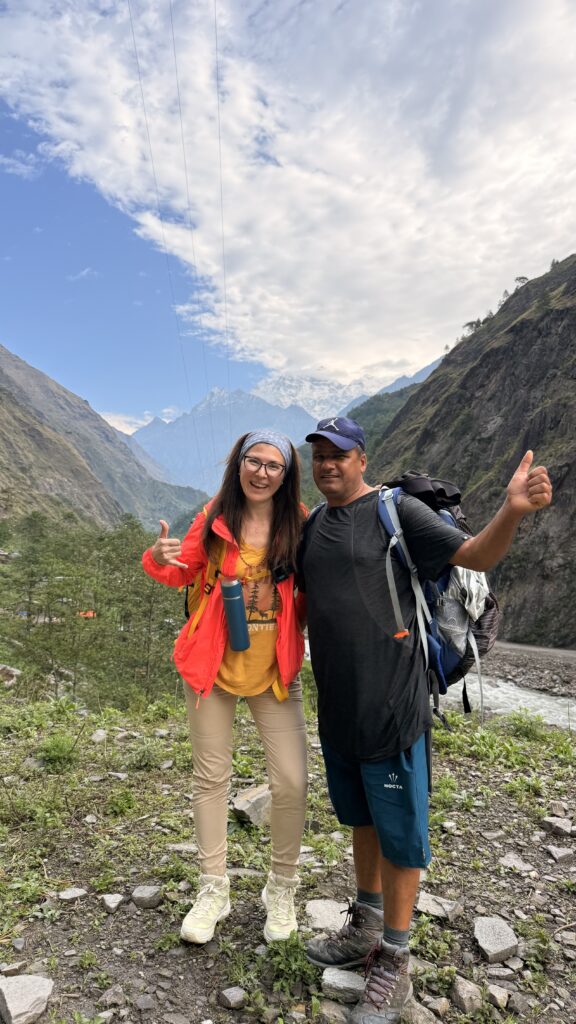
Day one of trekking took us 20 kilometers to Jagat. Day two stretched 22 km. to Lokpa, the gateway to Tsum Valley. My Garmin watch counts miles, and my Strava app is in kilometers. Nobody is counting really, but I go with local customs, always. I was carrying around 12 kilos on my back at the start – food, gear, layers, and a few comforts I would slowly finish along the way. My guide kindly carried my sleeping bag and crampons, which made the load more manageable.
I had no porter.
That was partly budget, partly preference, and partly curiosity. I wanted to know what it felt like to move through these landscapes with only what I could reasonably carry. I wanted freedom – the ability to stay an extra day somewhere if the weather shifted, to skip a night if my body felt strong, to follow instinct when the mountains opened a window. And more importantly, I didn’t want to make anyone waith for me if I felt calleld to sit on a rock and meditate for a while in the middle of the day.
Tsum Valley & Mu Gompa
On the second day of trekking, I met Rachel and her sister Ayla, along with their Israeli friends from the army who would become my trail family for the next 17 days. We had not planned to walk together. That is one of the subtle elements of long treks: strangers become familiar through shared meals, shared weather, shared exhaustion, and shared soap during laundry. That was also the day I decided to do another trek in Upper Mustang next month. Just for a week this time.
That is what Nepal does. Before one journey ends, another quietly begins inside you.
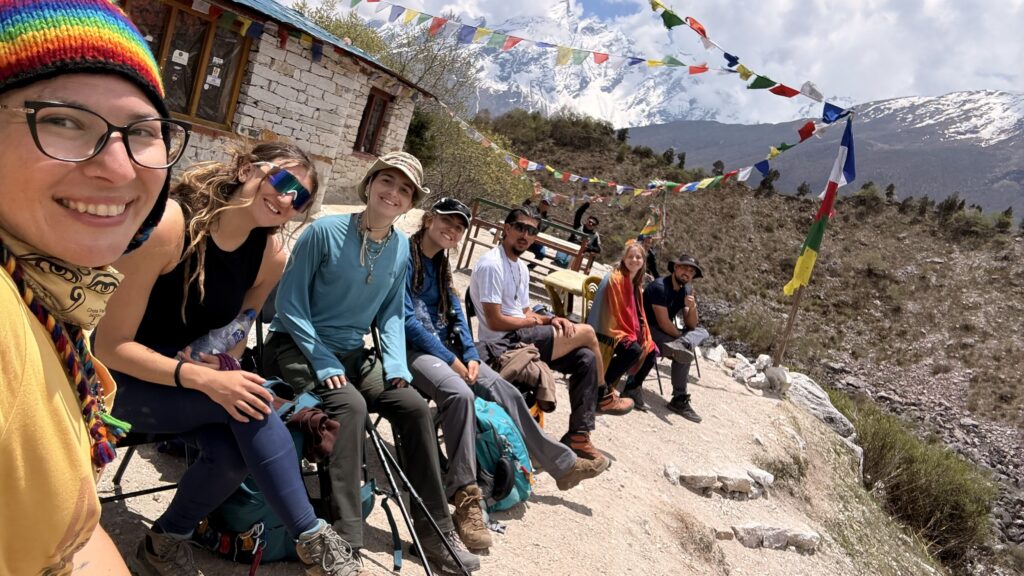
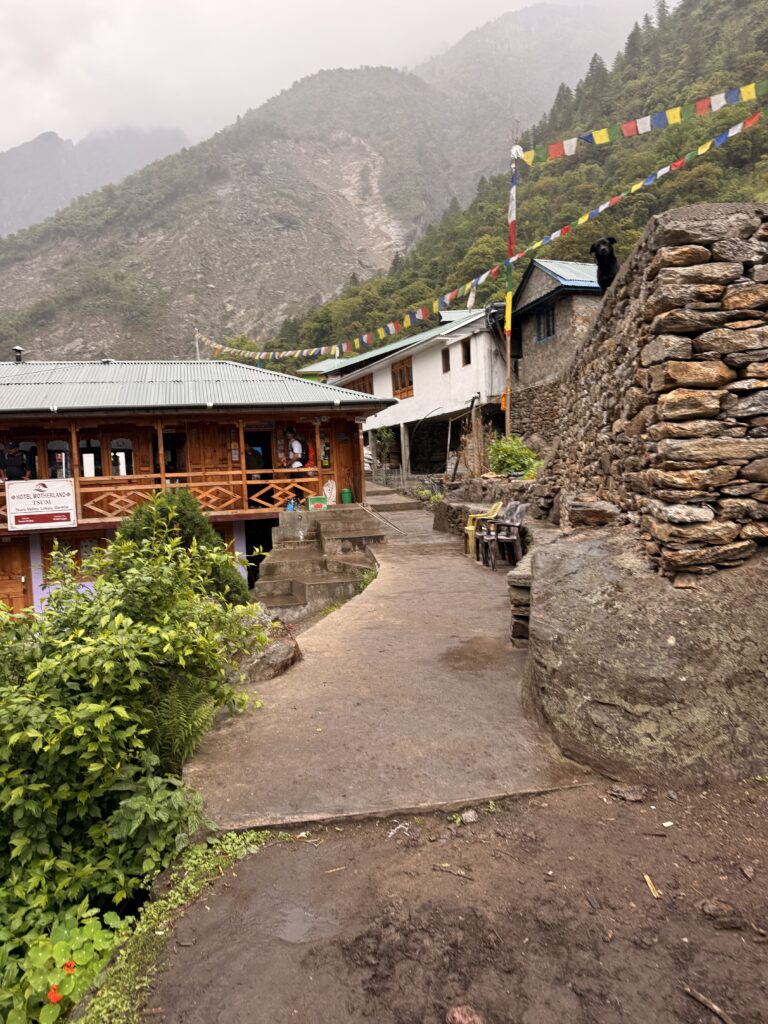
Tsum Valley felt remote, spiritual, and largely untouched by modern tourism.
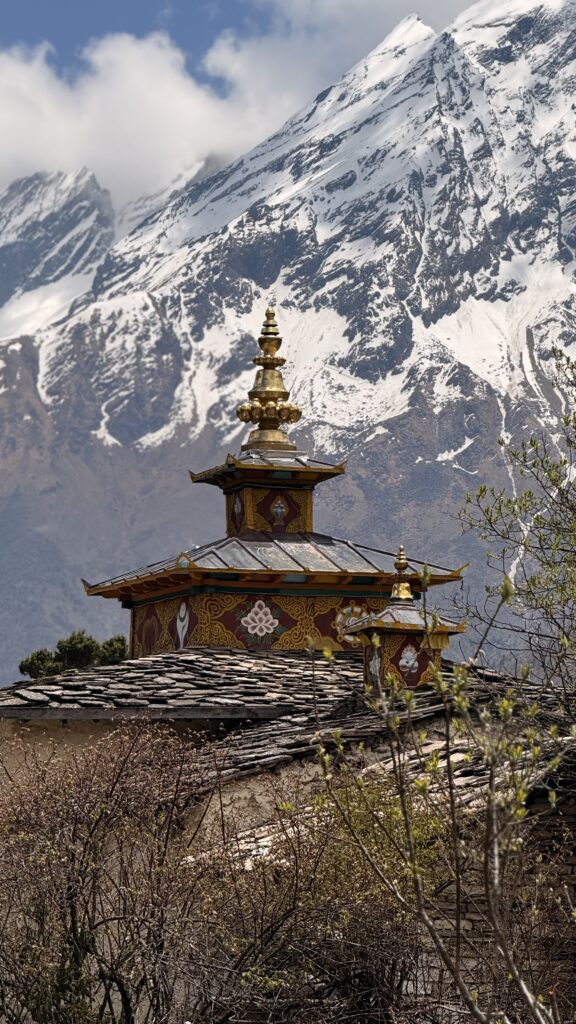
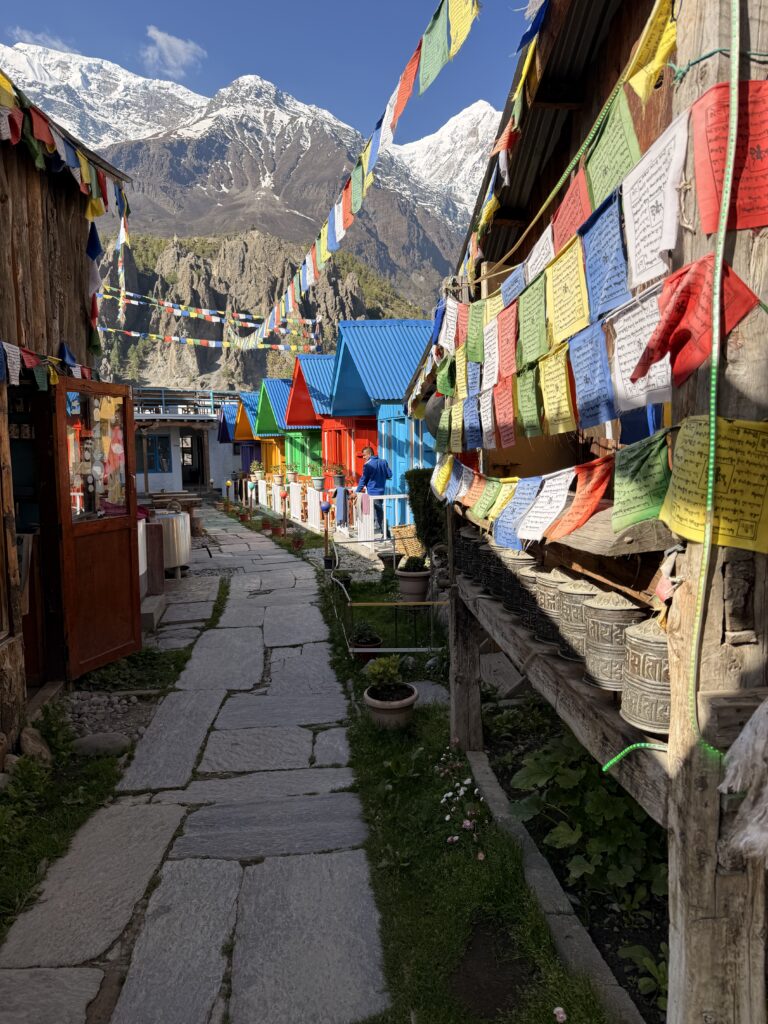
Beyond Lokpa, the landscape seemed to exhale. The trail narrowed and the crowds disappeared. Prayer flags dancing in the mountain wind, and stone houses blended into the rugged terrain. Children watched from wooden doorways, and blue sheep moved silently through rain-soaked slopes, so perfectly camouflaged they seemed like part of the mountain itself.
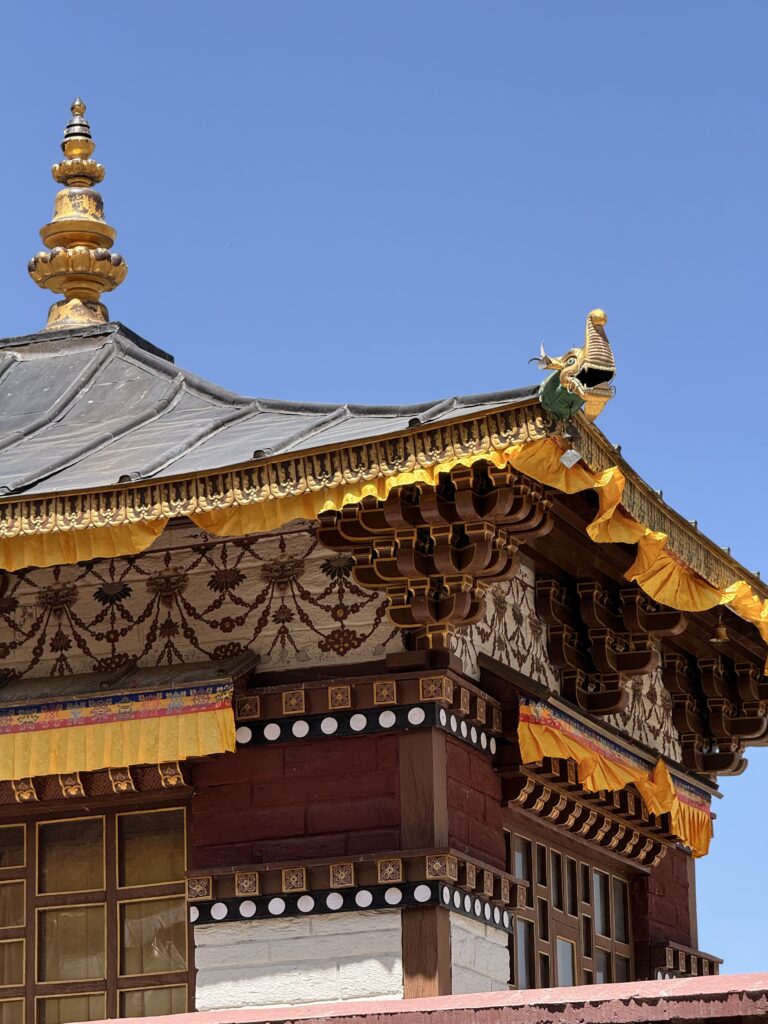
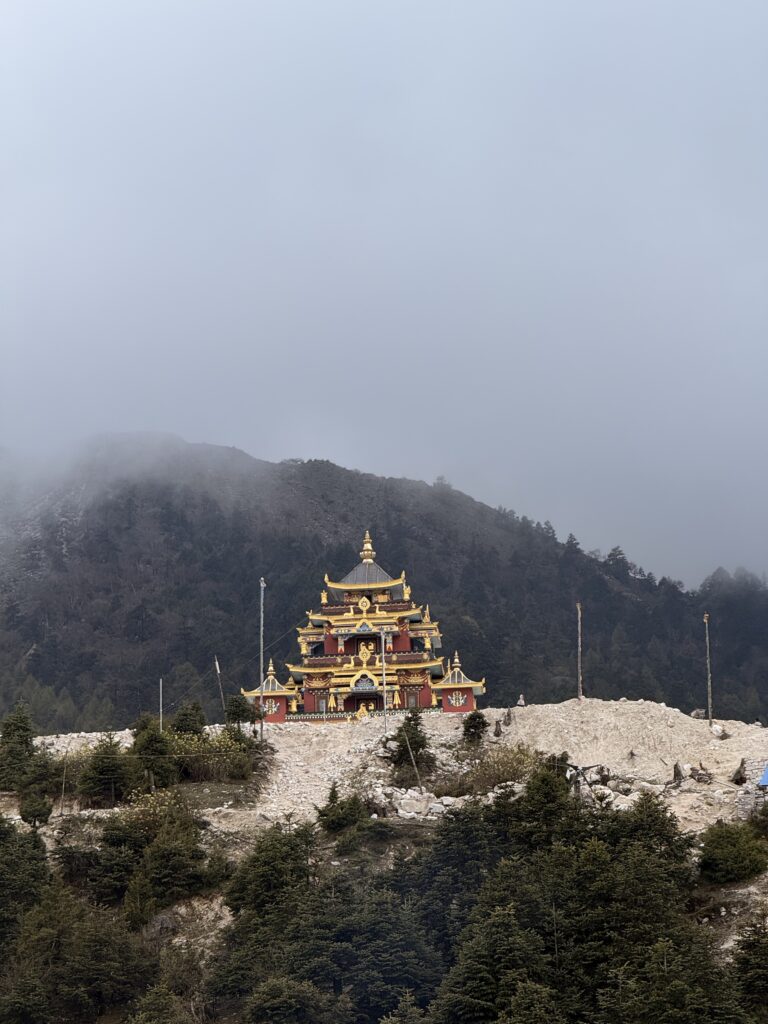
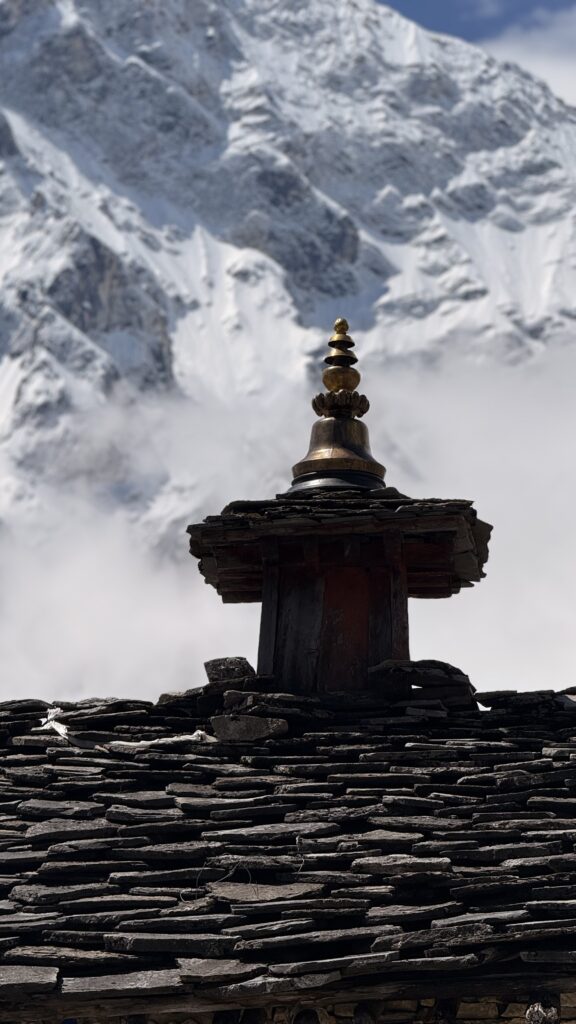
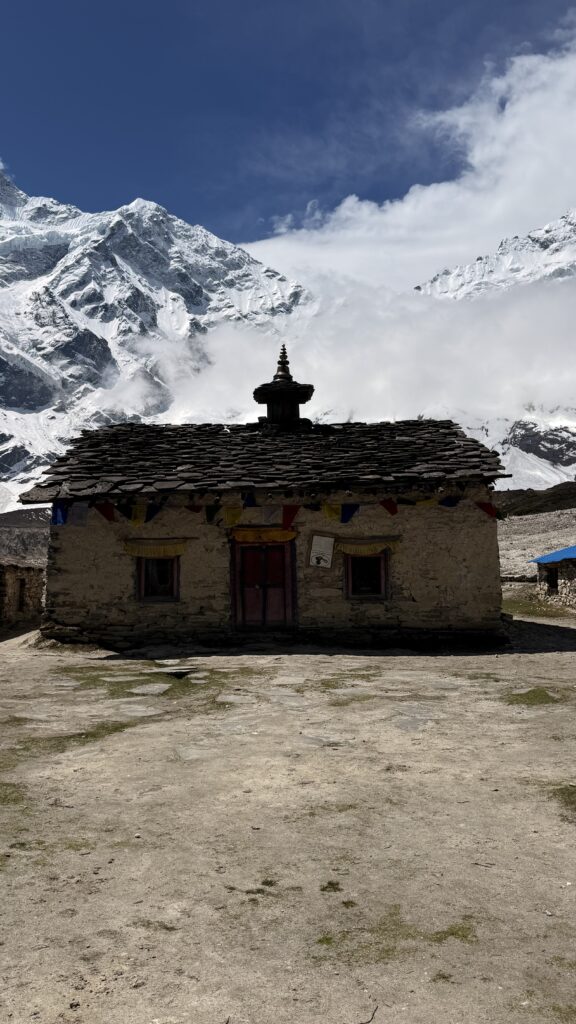
The high point of our Tsum Valley section was Mu Gompa, one of the most important spiritual centers in the region. Located just a few hours from the Tibetan border, it has served for generations as a place of Buddhist study, meditation, and pilgrimage for the people of Tsum Valley. Reaching it felt significant not because of the altitude, but because it offered a deeper understanding of the culture that has shaped this remote Himalayan valley long before trekkers began arriving with backpacks and cameras.
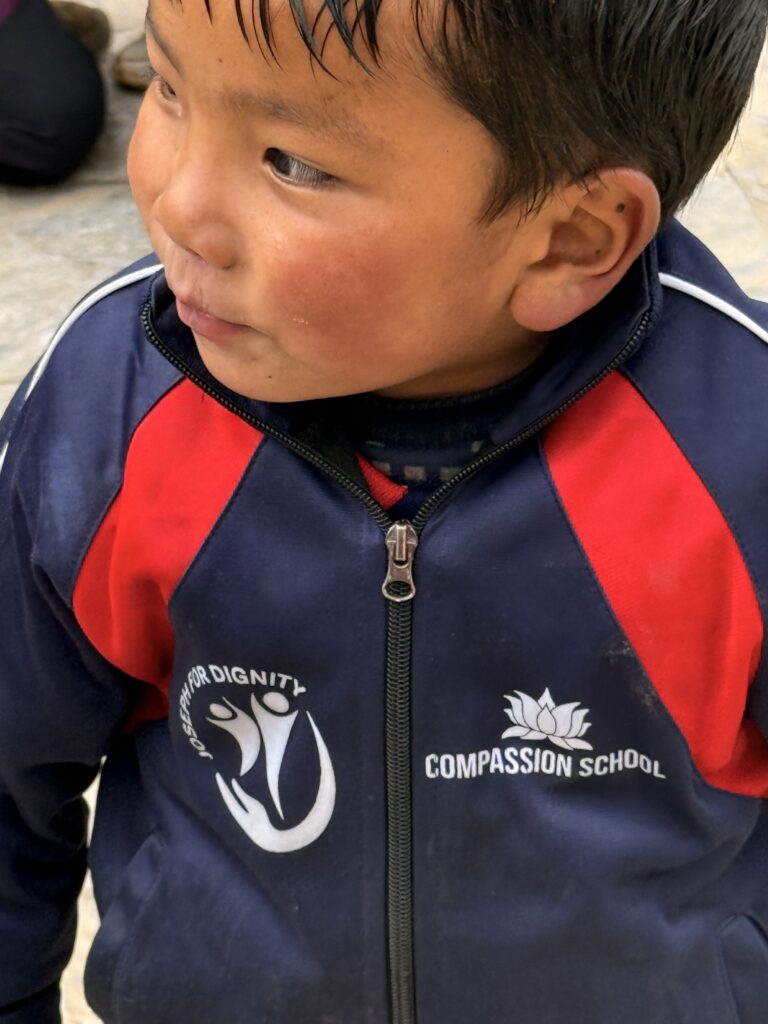
We also had a special private visit to the only boarding school in Tsum Valley, a reminder that these valleys are not museum pieces or backdrops for foreign adventure. They are living communities, with children, teachers, families, and futures unfolding far from the conveniences most of us take for granted. One of the most memorable nights was in Renzam, at Ganesh Himal Guesthouse. There, a child named Sree Lama danced like a diva with the kind of confidence adults spend years trying to recover.
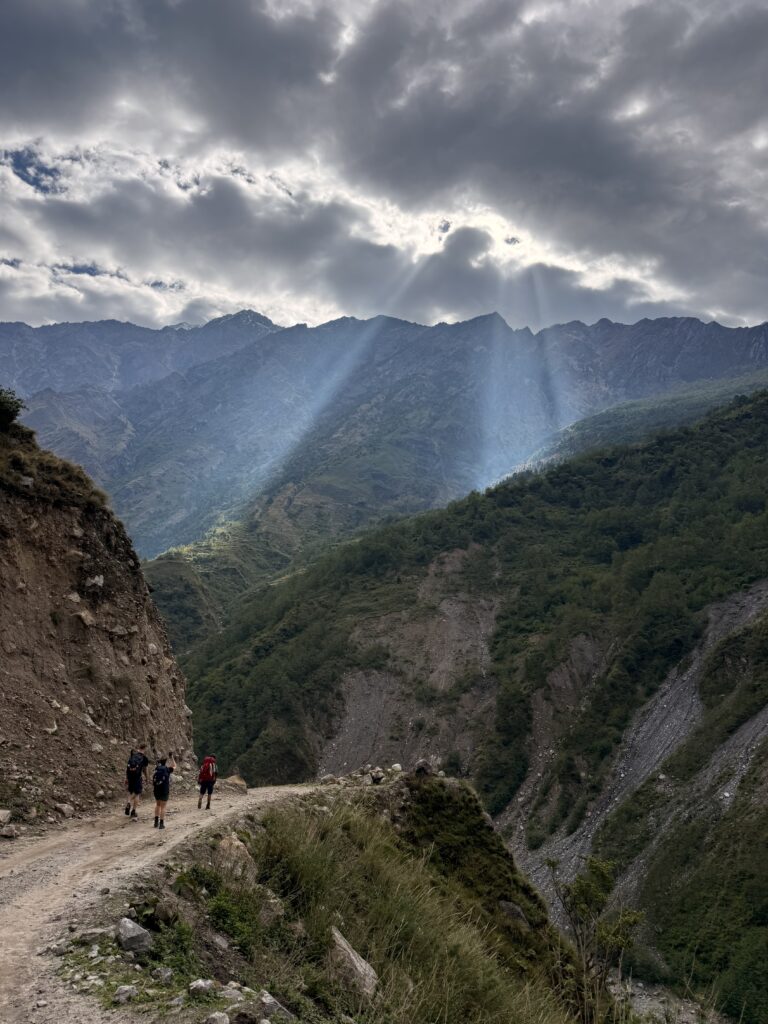
The deeper we ventured into the valley, the more I understood why wisdom traditions have flourished in the Himalayas for thousands of years. There is something about these mountains that invites contemplation. The hike to Mu Gompa for lunch, surrounded by landscapes that seemed suspended outside of time, simply removed enough distractions that I could finally hear my own thoughts in the wind.
After seven nights and eight days in the clouds of Tsum Valley, we returned to Lokpa, where we had left some luggage behind, and rejoined the main Manaslu Circuit route.
Manaslu: Clear Skies, Hard Choices
From Lokpa, we hiked toward Bihi with a lunch stop in Deng, then continued to Syala and Samagaun.
Manaslu gave us the clearest views of the entire journey. First light hitting the mountain felt almost theatrical, as if the summit had waited all night for the sun to embrace it. We had waited almost 10 days to see the snow covered peaks outside of the clouds. The landscape grew wider, colder, more dramatic. The villages felt more exposed. The mountains began to dominate everything.
On day 13, we woke up at 4:30AM in Samagaun. The plan was simple: hike to Manaslu Base Camp, but as soon as we all gathered for breakfast we made a decicion to abandon the mission as low clouds had swallowed the route. It was a rest day, with a short trek to Birendra Lake, where we listened to the nerby glaciers cracking. The next morning everyone was preparing to leave for Samdo. At breakfast, I overheard another group of trekkers talking about going to base camp.
The sky was clear.
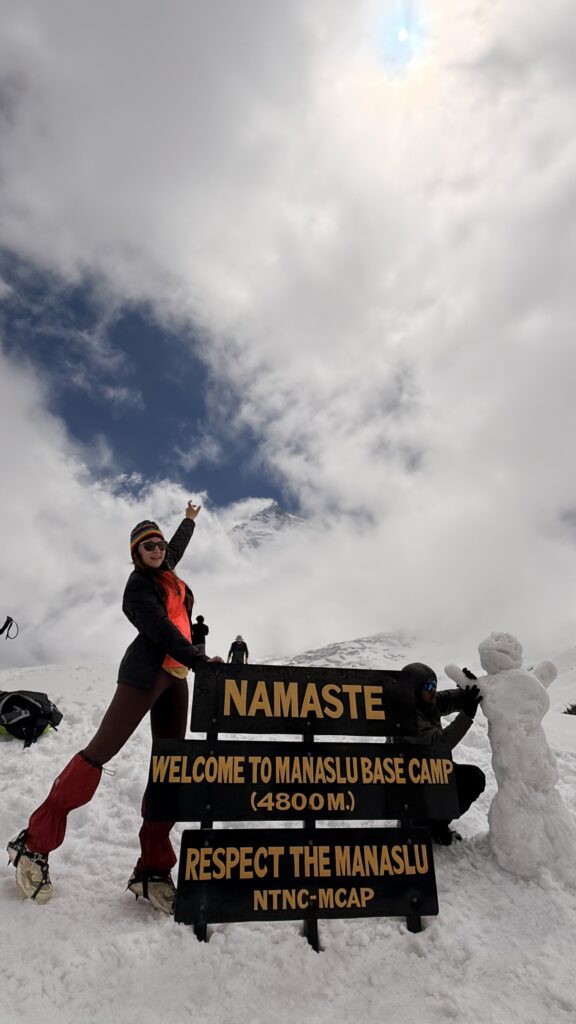
The Israeli group continued to Samdo. I stayed behind with Dharma and hiked toward Manaslu Base Camp (4,800 m / 15,748 ft). The trail rose into clouds. Just as I turned back to see Birendra Lake behind me, it had dissappeared into the clouds, and for much of the way up and down it felt uncertain whether there would be any view at all. Then, when we reached the top, the clouds broke just long enough for Manaslu to peek through.
Only for a minute.
I had a headache climbing up to base camp. The only real altitude symptom of the entire trek. Then we descended back to Samagaun and spent an extra night there. On the way down, one of the waterfalls we crossed had become so big and strong that Dharma had to trow some big rocks to make a path for us to cross it again. The next morning, I asked if we could skip sleeping in Samdo. Instead, we would stop there for lunch, and continue all the way to Dharmasala to catch my friends before pass day.
He told me he had never done that before.
In 25 years of guiding, he had never guided this exact combination: Tsum Valley, Manaslu, Tilicho Lake, and Thorong La in one continuous push. When he told other guides about our plan, they raised their eyebrows at me with a look that lived somewhere between admiration and “You’re crazy?”
From Samagaun to Samdo took about 1h. 45 minutes with short breaks. After lunch, we continued from Samdo to Dharmasala in about 2h. 45 minutes. By 3 PM, I had rejoined my Israeli friends. That night felt like a small victory – not loud, not triumphant, just deeply satisfying. The kind that comes when a risky plan works out because the weather, body, and trail all briefly agree.
Larkya La: Recklessness, Rocks, and Relief
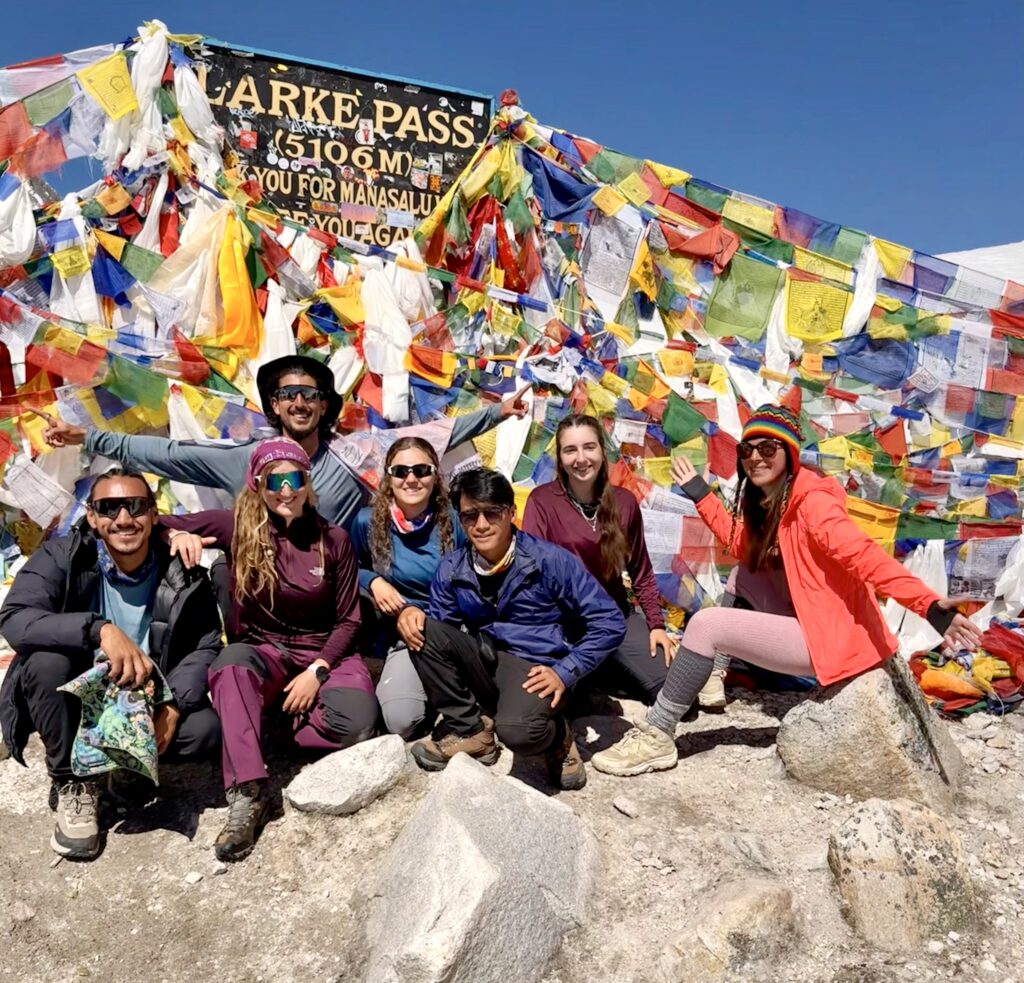
Crossing Larkya La (Larke Pass/ “La” in Tibetan means Pass) was hard, but manageable with good crampons. By the time we reached it, much of the snow had melted. The rocks were large, the terrain uneven, and the day demanded focus, but it did not feel endless in the way Tilicho later would. The danger came on the descent. At one point, I tried to pass a couple of people and move around them. Ayla, one of my new friends, started following behind me.
“Please don’t follow me,” I told her. “I am only responsible for my own recklessness.”
Thankfully, she listened and stayed on the trail.
A moment later, I slipped and fell.
Yuval was close enough to pull me up, but Dharma’s face had “heart attack” written on it. My shin turned yellow, purple, blue, and green over the following days – a souvenir no one asks for but many trekkers receive.
What I enjoyed most after crossing Larkya La was how dramatically the landscape changed.
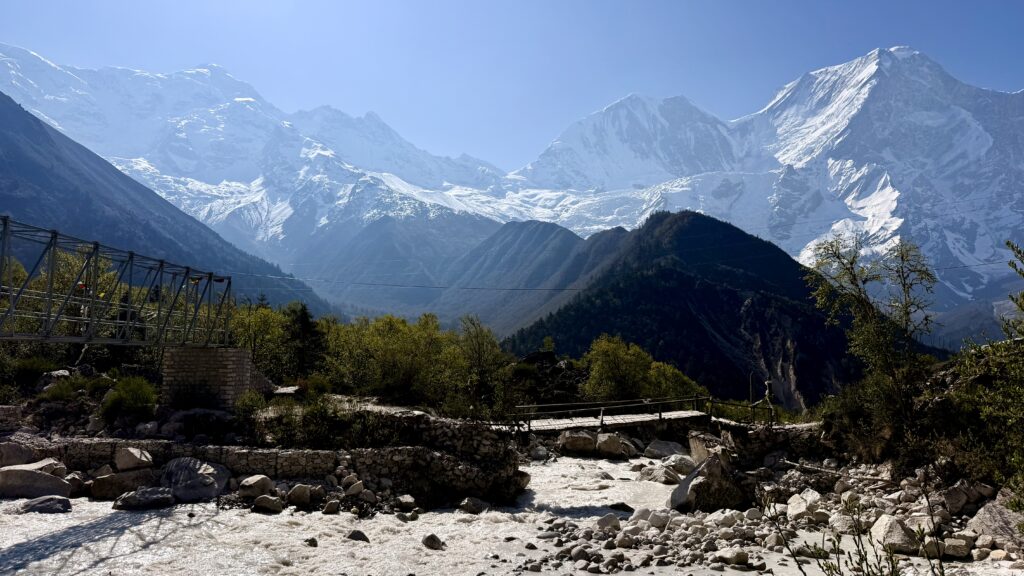
The following morning we left Bimthang and the stark alpine terrain of Manaslu for something entirely different. As we entered the Annapurna region, the trail wound through dense forests where moss draped every stone, tree trunk, and wooden bridge. After days of walking through rock, ice, and high mountain passes, the vibrant green felt almost magical. It was one of the most beautiful transitions of the entire trek and a reminder of how quickly the Himalayas can transform from one ecosystem to another.
From Gowa and Tilche, we took a jeep to Manang, where i was supposed to have a rest day, but instead I asked Dharma to go on.
Manang and the Turn Toward Tilicho
By the time we reached Manang, I still had energy, so we pushed on toward Tilicho Base Camp on the morning of day 20.
This is where the trek began to shift emotionally. It wasn’t until my new friends were gone that I realized how much they had become part of the journey. For 17 days, the climbs had been shared with conversations, laughter, and the quiet comfort of knowing familiar faces were somewhere ahead or behind. Now, I felt more alone, and the solitude of Tsum and the spaciousness of Manaslu gave way to the more trafficked route of Annapurna Circuit. Dharma was tired. I was tired. Small frictions grew larger.
And then came the climb to Tilicho Lake (4,919 m./16,138 ft.) – the highest glacial lake in the world.
On paper, Tilicho Lake should have been manageable. For someone on day three or day five of a trek, it might feel like a hard but beautiful objective. For me, on day 20, after nearly three weeks of trekking for 5-7 hours a day, altitude, weather, buses, passes, and changing terrain, it was torture.
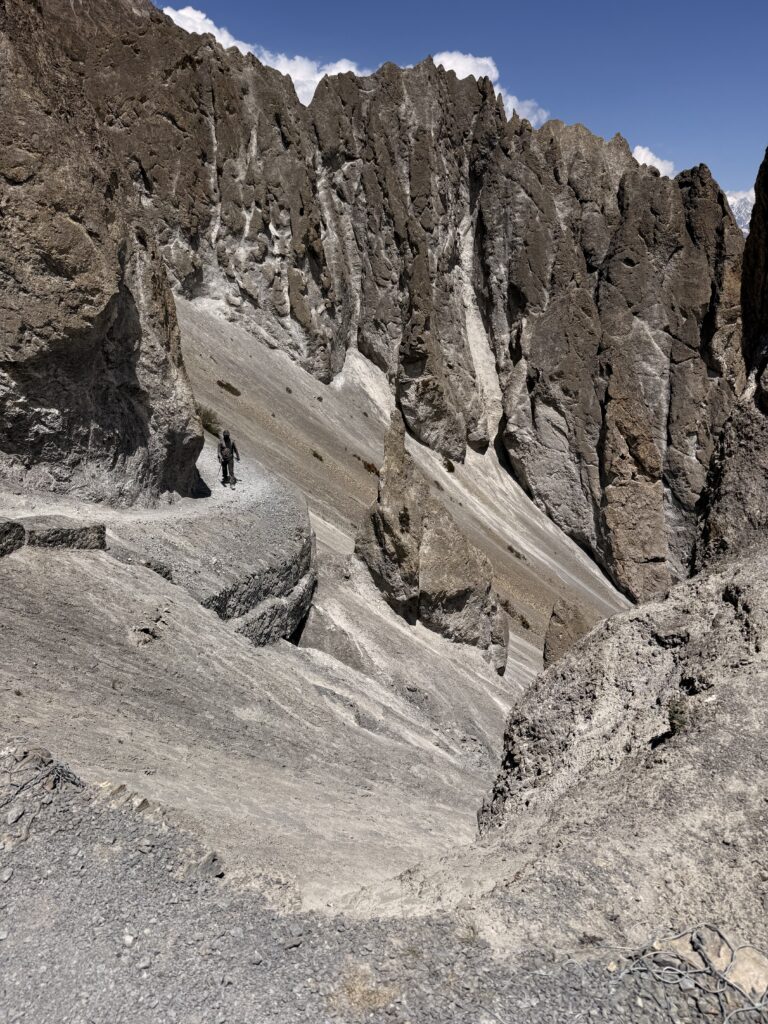
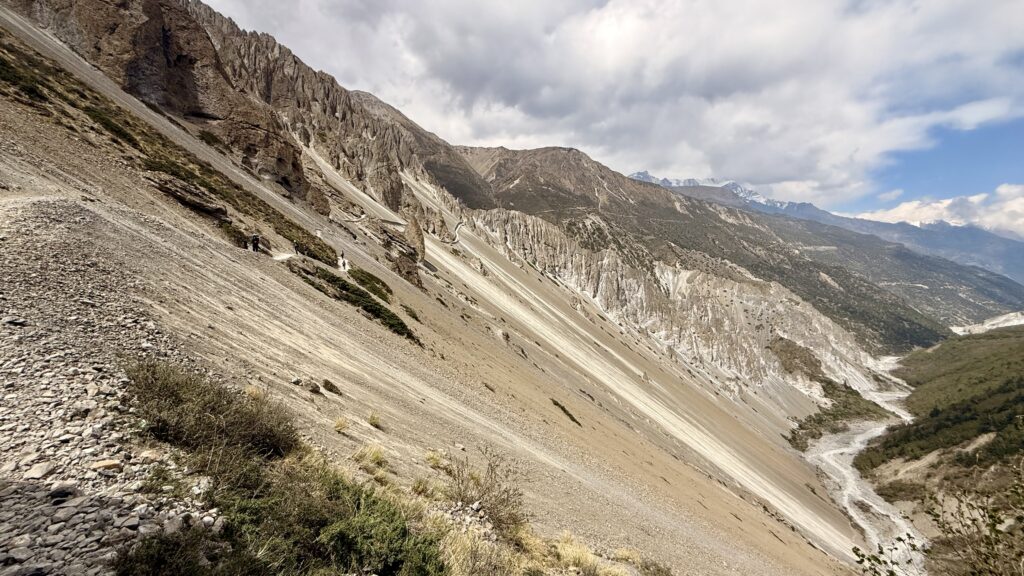
The long landslide section wasn’t even the hardest part. On the way back, the wind made it worse. Unlike the pass, where the rocks were larger and the rough sections came in waves, Tilicho felt like hours of loose, exposed, unstable ground. Just before the landslide, a rock fell on me and scratched my arm. The hardest section though, was the twenty-two turns on a steep high-alpine terrain where you’re dodging donkey shit for approximately 3km. right before you reach the top. Surprisingly, mostly the locals use mules on the way up to Tilicho. When we finally reached the lake, I felt disappointed.
It was frozen.
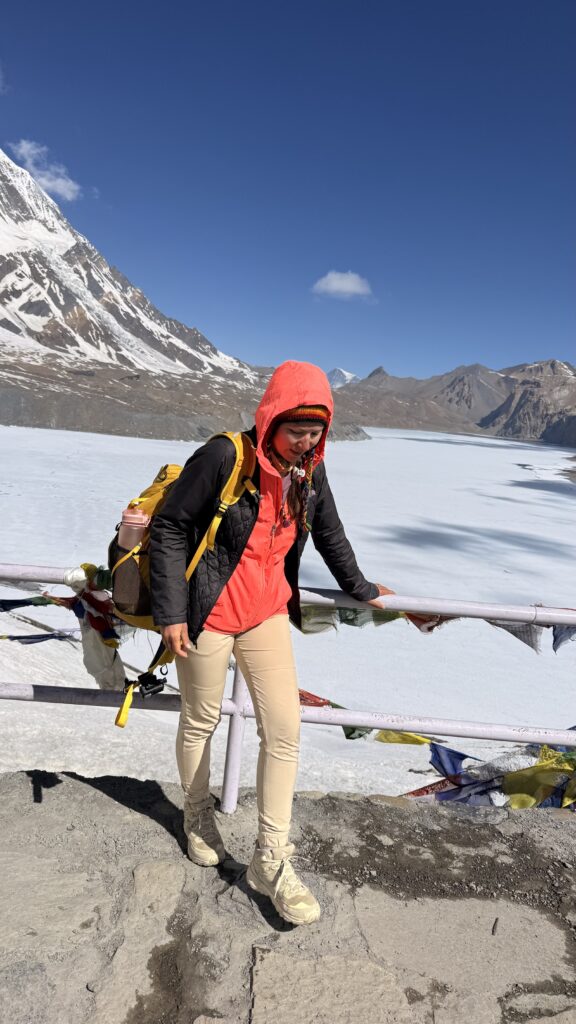
During a yoga immersion in India a couple of months earlier, I had spent weeks studying a verse that teaches: “You have a right to your actions, but never to the fruits of your actions.” In other words: do your work, but don’t become attached to the outcome. It’s a beautiful philosophy from the Bhagavad Gita when you’re discussing it in a classroom. It’s much harder when you’ve spent hours climbing a mountain hoping for a specific view.
Yet, that frozen lake became one of the most meaningful moments of the trek.
The mountains were reminding me that not everything exists for my enjoyment. Sometimes the lesson isn’t in receiving what you hoped for. Sometimes it’s in showing up anyway. Tilicho didn’t give me the photograph I wanted. It gave me a chance to practice a lesson I thought I had already learned.
And looking back, that was far more valuable.
Not every mountain moment is transcendent. Some are uncomfortable. Some are frustrating. Some make you question your choices. But sometimes those are the moments that stay with you longest, because they reveal how thin the line can be between disappointment and wisdom when you’re willing to keep your heart open.
Thorong La and the Long Way Back
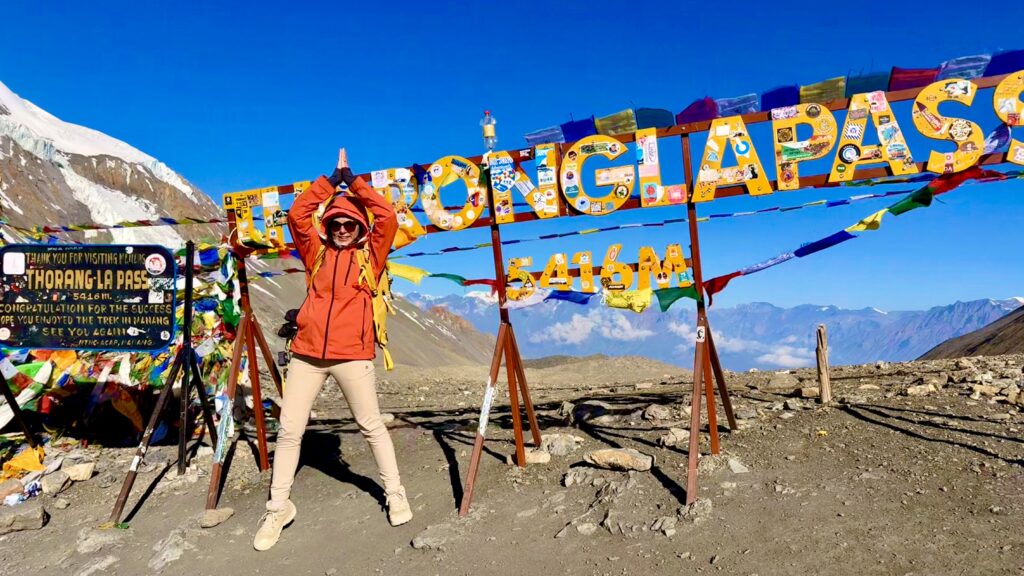
After Tilicho, the route continued toward Thorong La Pass – the highest point of the entire journey. By then, I understood my body was capable of far more than I had given it credit for. I never needed the knee brace. I rarely needed trekking poles, though I will admit they are nice to have on long downhills. The injuries were minor: the fall after Larke Pass, the scratched arm near after the bridge in Tilicho, the bruised shin that changed colors like a mood ring. There were no major altitude problems. No serious stomach issues. No moment where I felt I could not continue. I adapted with every step on that mountain.
Plans changed constantly. Weather shifted. People entered and left the story. Trails were blocked, crowded, exposed, or empty. At one point, the only real fear I felt was not on the trek itself, but on the drive back to Pokhara, when a landslide trapped traffic and reminded us that in Nepal the journey is not over until you are actually back.
Safety, Solitude, and the People Who Carried the Journey
I felt safe on the trek, but not always because of my guide. Dharma was experienced, and he helped with logistics, but early on he made comments about how Nepali guides get tourist girlfriends that made me get the hiccups. He was married, and he said this on day one, on the local bus, and I shut it down immediately. Later when I met the guide and porter of my Israeli friends the communication with them was much easier.
Solo female travel is often romanticized or flattened into fear. The reality is more layered. I was supported, but not only by the person officially responsible for supporting me. I was supported by the people I met, by my Israeli friends who folded me into their group, by Yuval pulling me up after my fall, by lodge owners, other trekker’s guides, strangers, and trail communities that formed and dissolved along the way.
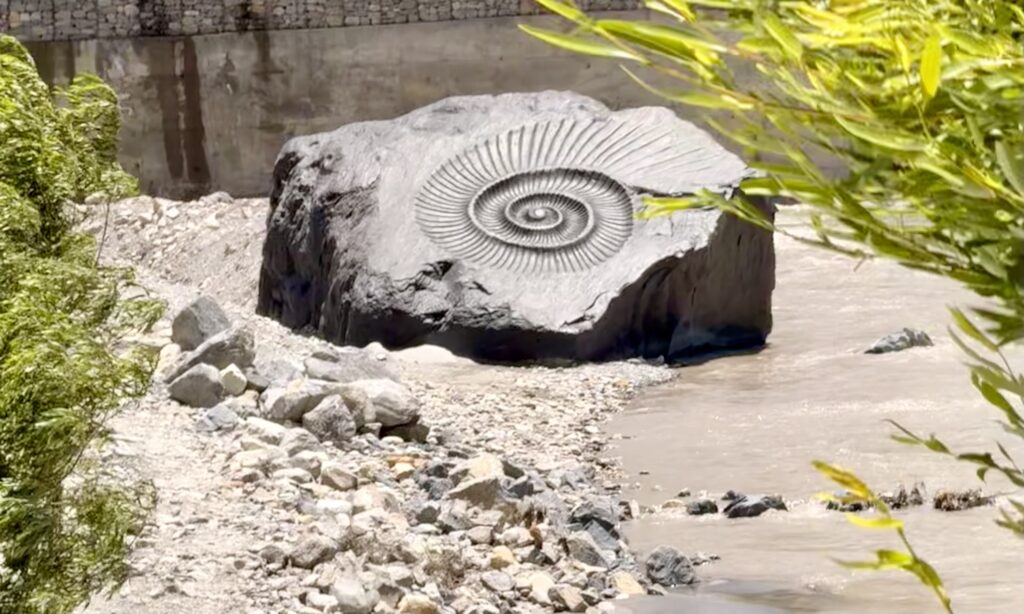
Shaligram (शालिग्राम)
A fossilized stone or ammonite found only in the Kali Gandaki River of Nepal
We saw it briefly outside the window of our jeep as was we were passing Jomsom, right before we got stuck in landslide traffik on the way back to Pokhara from Muktinath. In Hinduism many people see them as a direct, self-manifested representation of Lord Vishnu, they are usually smaller in size and are kept and worshipped in homes and temples to attract peace, prosperity, and protection.
My guide gave me structure, but with a lot of miscommunication. The trail gave me shared companionship. And I had warned Dharma from the beginning that I wanted quiet time. I wanted solitude. I did not come to the mountains to be entertained. I came to listen.
Some of the most meaningful moments happened alone: meditating on rocks near lakes, sitting beside quiet streams, watching clouds move over ridgelines, feeling the body settle into silence after hours of walking. The mountains did not make me fearless. They made me more comfortable with uncertainty.
What It Cost & How To Budget
This trek was not luxurious, in fact I was on a very tight budget. It took a ton of research because there are so many companies that offer guide/prter services. Sometimes group treks are the most budget friendly, and some treks, like Annapurna Circuit do not require a guide, however I decided to keep mine with me for the entire time. I didn’t hire a guide until I arrived in Nepal and I also discovered that companies in Kathmandu ask for a daily rate of $20-$35 for a guide, and in Pokhara the daily rate for a guide starts at $35
I carried about $400 in Nepali rupees for expenses while trekking. I pre-paid around $1,000 of which, $20 per day were for my guide and $15 per day covered accommodation and one meal a day. Permits were around $65. Before starting, I spent roughly $200 on equipment in Kathmandu and Pokhara. I also carried some food, which helped me avoid buying expensive snacks along the route. Chocolate was my luxury item. My biggest mistake was not bringing more candy for the children we met along the way.
Would I recommend going without a porter? For me, yes. For everyone else, not necessarily. A guide is required to trek in the Manaslu Concervation Area, and I reccommend it for your first visit to Nepal. Next time – I might go alone.
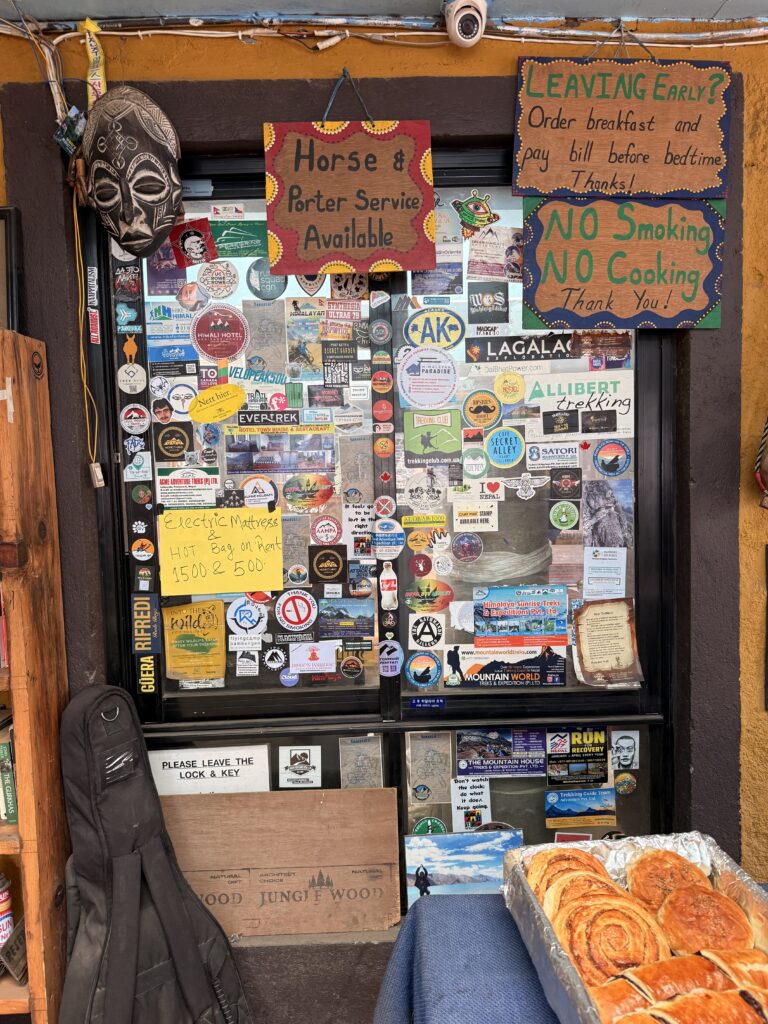
I do not recommend bringing too much. I also do not think a porter is necessary if you are fit, experienced, and realistic about your load. Carrying less gives you freedom. Carrying your own pack teaches you quickly what trult matters and what does not. But the bigger recommendation is this: do not confuse independence with isolation. Even when you carry your own weight, you are still moving through a web of people, landscapes, labor, culture, and care, so move consciously.
Why Manaslu Stayed With Me
If I had to choose only one region for trekking, I would choose Manaslu.
Tsum Valley was the most culturally intimate. Tilicho was the hardest. The Annapurna side showed me a dramatic shift in terrain and trekking culture. But Manaslu held the clearest mountain views, the strongest sense of scale, and the perfect balance between difficulty, beauty, remoteness, and human connection. Manaslu Circuit is still less known to tourists, but they’re building a road and it will soon be as busy as Annapurna.
It also gave me the defining moment of the journey: staying behind in Samagaun, hiking into clouds toward base camp, and receiving a one-minute glimpse of the summit. That minute changed the structure of the trek.
It separated me from the group, forced me to make a bold adjustment, and eventually led to one of the strongest days of the entire journey: Samagaun – Samdo – and straight on to Dharmasala to reunite with my friends before the pass. Sometimes the best decisions on a long trek are not the ones that look logical from the outside. They are the ones that feel aligned in the body before the mind has time to make a spreadsheet.
Practical Tips For Trekking Nepal
A few things I’d definitely bring again:
- Tea bags for mornings or evenings in teahouses.
- A thermos that you can heat up on the fire, or an aluminum cup.
- Small chocolates to share with children in remote villages.
- A lightweight candle to make cold teahouse rooms feel cozy.
- Good crampons, dpending on the season.
- Electrolytes. The more the better – buy them outside of Nepal. (their flavor is not the best)
- A lightweight pair of binoculars. (optional but I wish I had them so many times)
- Tape to cover any blisters, or to secure a power plug to the outlet.
And one thing I wouldn’t bring?
Too many expectation
Whispers From The Mountains
By the end of the trek, I found myself returning to the same question again and again:
What are you afraid of losing when nothing in this world truly belongs to you? The mountains have a way of exposing our attachments. They remind us how small we are. How temporary everything is. And strangely, that realization feels freeing rather than frightening. One thought stayed with me throughout the journey:
Both fear and faith ask you to believe in something you don’t see.
You choose which one to follow. The Himalayas don’t give answers. They give perspective.
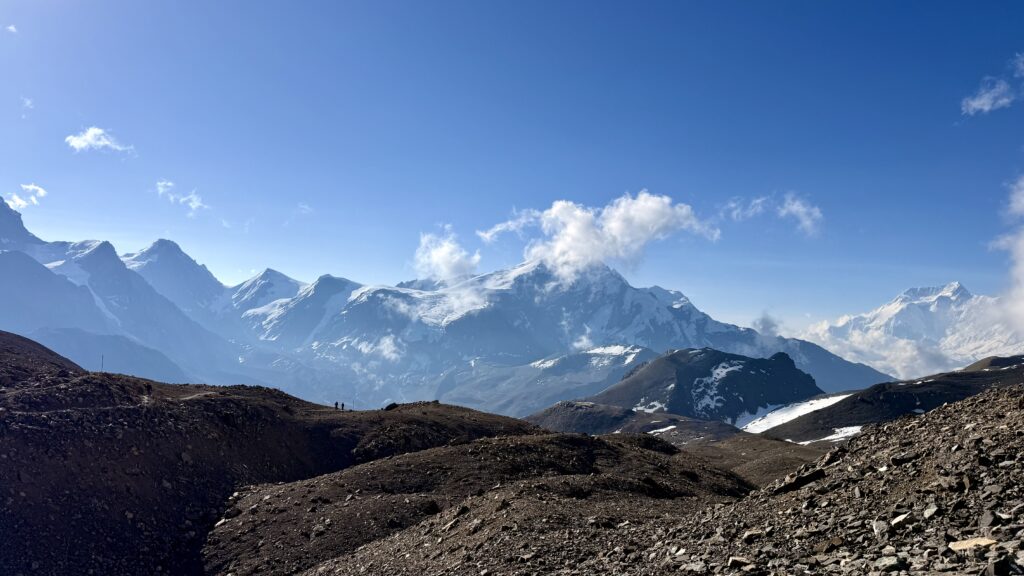
If you’re considering a trek, go for the mountains in Nepal. Stay for what happens inside you while you’re walking among them.