Who Made .JPG The Standard For Photography
On Halloween, I walked into my old office at Ventures In Video – a place that feels like home after working for there between 2007 – 2014. It was at Ventures where I learned about media, editing, reporting, photography, videography, and management. We were small but mighty: dusty boxes stacked high, real reels of film, old tape players, cameras everywhere, and lots and lots of cables snaking through the room. It was in that space that I met some of the most inspiring people in my life. But today’s meeting would top them all.
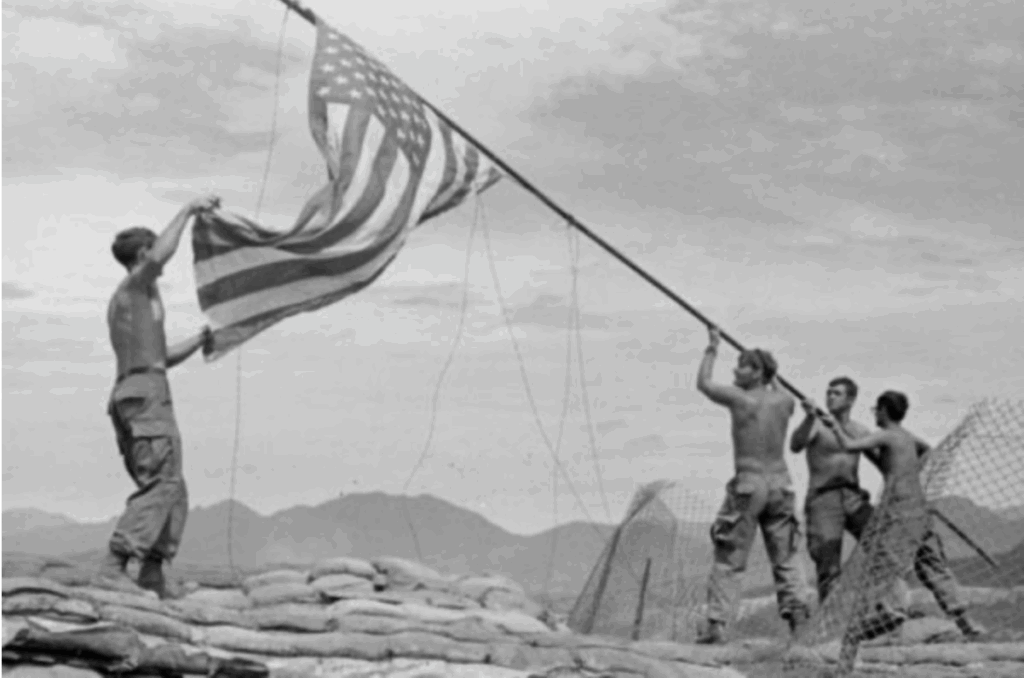
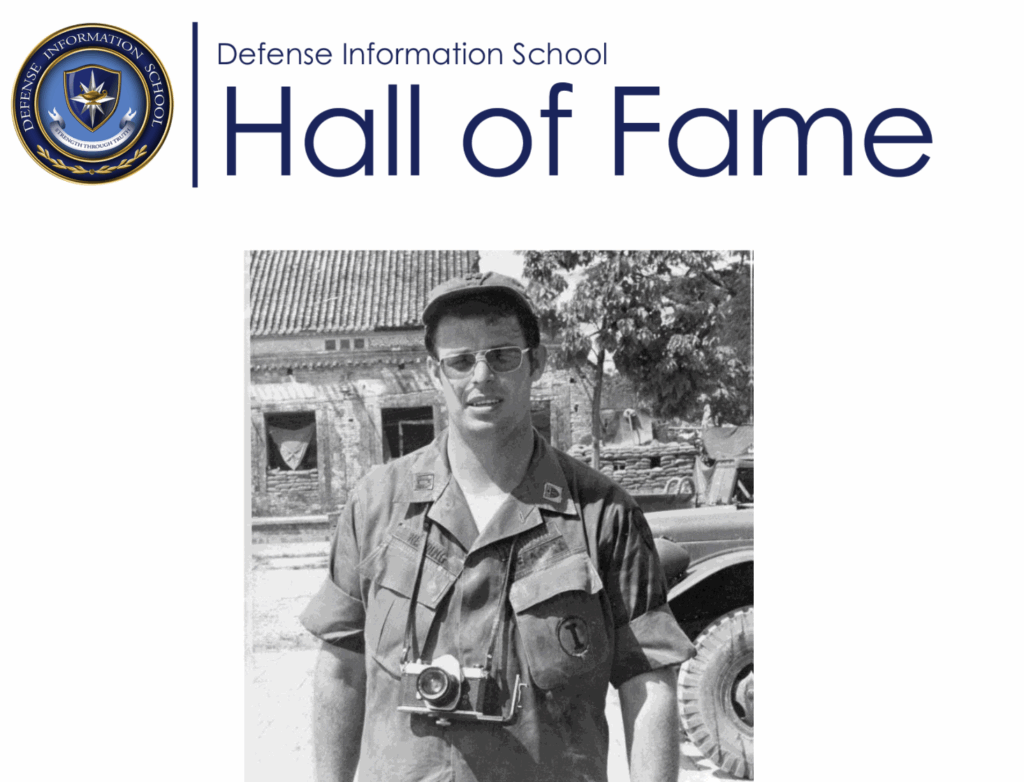
Into that familiar office walked LTC (Ret.) G. A. Redding. He carried with him a large, well-preserved book of media clippings: newspapers from around the world, photographs, press reports, etc., that he took to the Army museum. You could feel the weight of the history he carried. Redding had served in Vietnam as a Public Information Officer and Army combat photographer; in fact, during the final U.S. ground-force drawdown, he accompanied a CBS news crew during the extraction of the 3rd Battalion, 21st Infantry at Fire Base Hill 260 near Da Nang. It’s documented that when he stepped onto the Huey that afternoon, he was effectively the last U.S. soldier to leave a U.S. firebase in the Republic of Vietnam. (source)
As he turned the pages of the book, he told us about his subsequent assignments: after Vietnam he was the Chief Broadcast Instructor at the Defense Information School at Fort Benjamin Harrison (1975-78), then at the Office of the Secretary of Defense in the American Forces Information Service (AFIS) (1978-82) initiating the American Forces Radio and Television Service Satellite Network (AFRTS SATNET), and as Executive Officer of the U.S. Army Audiovisual Center at the Pentagon (1983-85), then returning to AFIS as Chief Audiovisual Policy and Products from 1985-1990.
His career bridged combat zones and the evolution of media: from journaling and photography in war, to broadcast radio and television. Later his involvement in analog technology led us to the DVD era and industry standardization efforts for digital imagery (including JPEG). It felt astonishing that I was meeting someone who had touched so many pivotal moments in media history – from black-and-white film canisters in Vietnam to digital video and JPEG standards.
In that moment, the contrasts collided beautifully: me, the 21 y.o. media-rookie in a small family shop, digitizing old tapes to DVD; Redding, the soldier-photographer witnessed the end of one era of war-time media and helped carry it into the age of broadcast and digital standards. That little white house on Pennsylvania Avenue (the time capsule of Falls Church, VA) was the in-between place: old formats and new, analog reels to digital bits, the raw footage of war to the polished files of everyday media.
As I watched him walk through the narrow office hallway, past boxes of old reels and tape players, I told Mike, “Here I saw a walking legend history today”. I thought about how far media has come, and how much of its story passes through people like him, and through places like Ventures In Video, where you can find and transfer almost every type of media there is.
It was a chance meeting, yes – on Halloween of all days – but one that felt deeply significant: that seriousness of purpose, that evolution of craft, that link from soldier to storyteller to digital pioneer. I had so many questions I wanted to ask, so we arranged a meeting for an interview.
A sneak peek into the raw transcript of this interview
Q: Where did you grow up, and what early experiences or influences first sparked your curiosity about storytelling or technology?
A: "I'm a military brat. We moved a lot and I lived in Vietnam, Japan. I have lived in Alaska, Fort Meade, Maryland, over here. I started in television when I was in high school. There was a Junior Achievement program that would teach students a trade. And so they offered me a job in 1964. I come in in the morning and then you can go to your senior high school in the afternoon. And so I would go down to the NBC studio in Omaha in the morning, and I would cue the local newsman, and it was Tom Brokaw."
Q: Looking back now, decades later, what do you feel was the most important story or image you captured?
A: Well, the closure of the last U.S. firebase in Vietnam is historically significant. Then a decade later the counter to that event was when I was in Sinai when the Egyptian flag was raised, returning Sinai from Israel to Egypt. I documented that as well. I’ve photographed the ending of war, and the beginning of peace.
Q: You were involved in the development of the DVD and standardization of the JPEG format – could you share what those early discussions or challenges were like in bringing these technologies to life?
A: Well, in the late 80s, it was very clear that analog video was on its way out. The digital video was coming. And since the U.S. military is the largest producer of imagery, period. From 1986 to 1990, I was Chief, Policy and Products, Defense Audiovisual Products (DAP), American Forces Information Service (AFIS), Office of the Secretary of Defense, Public Affairs.  My job involved evaluating audiovisual (AV) products/services for the DoD and publishing DoD Directives and Instructions on their management. My industry contacts were investigating digital imagery, and DoD as the largest single visual media consumer/producer needed to get involved in potential industry standards.

Unfortunately, there is precious little published documentation on the digitization effort - who did it, why, and how.  I think I can fill in those elements.  I was able to convince my HQ to transfer $200,000 (a considerable sum) to the National Institute of Standards and Technology (NIST).

Luckily, I was able to get this done before the Pentagon budget office swept up my $$ to feed the first Gulf War (3 Aug 1990). I met with Allen Hankinson, Chief, Systems and Software, NIST.
Al reached out to major players in the audiovisual community and others in data processing.   Collectively, the Joint Photographic Experts Group (JPEG) was assembled.  From 1990-92 approximately six formal meetings were convened. Note, online meetings we take for granted today were non-existent, and research was a chore (no texting or collaboration software & no Google until 1998).  As a funder ($$), I was an honorary "expert" and only attended as a NIST guest, as I'd retired from the Army in July '90.

At those events, SMEs proposed code.  If another SME, representing his company thought the proposed code was proprietary it was quickly called out. It is impossible to describe the quibbling.  Ultimately consensus was achieved.

In the last meeting I attended Al Hankinson addressed the attendees and turned to me for comments.  I thanked the Group for its efforts, then said 'since the DoD funded this effort, the .jpg product will be in the public domain. There was silence. Some had hoped for a commercial product a la Adobe's .pdf they could market. Al then presented a document that all signed, agreeing to NIST's conditions.

There is very little documentation on this .jpeg effort, mostly since vendors weren't sharing much.  Hankinson may have kept records. I didn't as my initial documents stayed at my Defense Audiovisual Policy office.

Remember, jpeg was an entity that was disbanded, and .jpg is the product that thrives.
Today, we honor the veteran who brought us into the Digital Age. My hat’s off to you, sir!
G A Redding, LTC US Army, Retired

P.S. If you happen to come across a piece of old media in your attic while looking for your Christmas decorations, and you have no clue how to see what’s on it, chances are Ventures In Video Inc. can digitize and transfer it to your computer or phone, so you can enjoy old memories with your loved ones.