The Side Of Singapore That Will Surprize You
There is a version of Singapore that exists in most people’s imaginations before they arrive — a gleaming, rule-following city-state famous for being spotlessly clean, borderline futuristic, and perhaps a little… predictable. I had that version in my head too. What I found instead was something far more layered, alive, and honestly, deeply moving. We arrived in late January 2025, right in the heart of Chinese New Year festivities, and Singapore proceeded to astonish us at every turn. This is the Singapore that doesn’t always make the highlight reels — the one that rewards slow walkers, curious minds, and people who believe that travel is one of the most profound wellness practices available to us.
Before You Arrive: The Mindset Shift
Singapore is only 733 square kilometres — smaller than many cities you may have already visited. First-time travellers often underestimate it, cramming impossible lists into short itineraries. My advice? Resist the urge. This is a place that opens up when you slow down. Choose depth over breadth, and you’ll leave with something that feels more like transformation than tourism.
The city is also remarkably walkable between neighbourhoods, and the MRT (Mass Rapid Transit) system is one of the best in the world — clean, efficient, and nearly stress-free. You won’t need a car. You won’t need to stress about logistics. That mental space? Use it to be present.
Where to Stay: A Base That Feeds the Soul
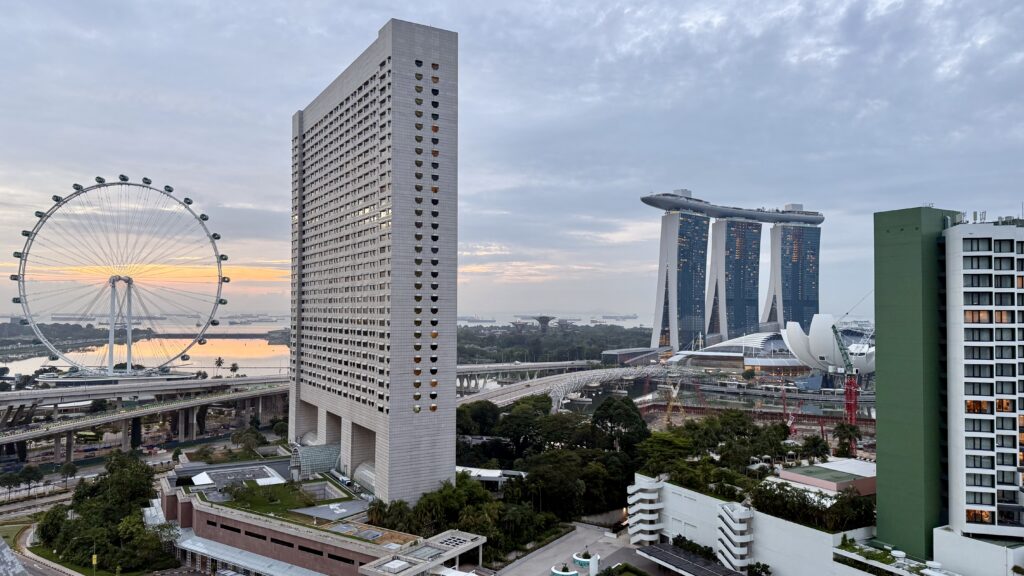
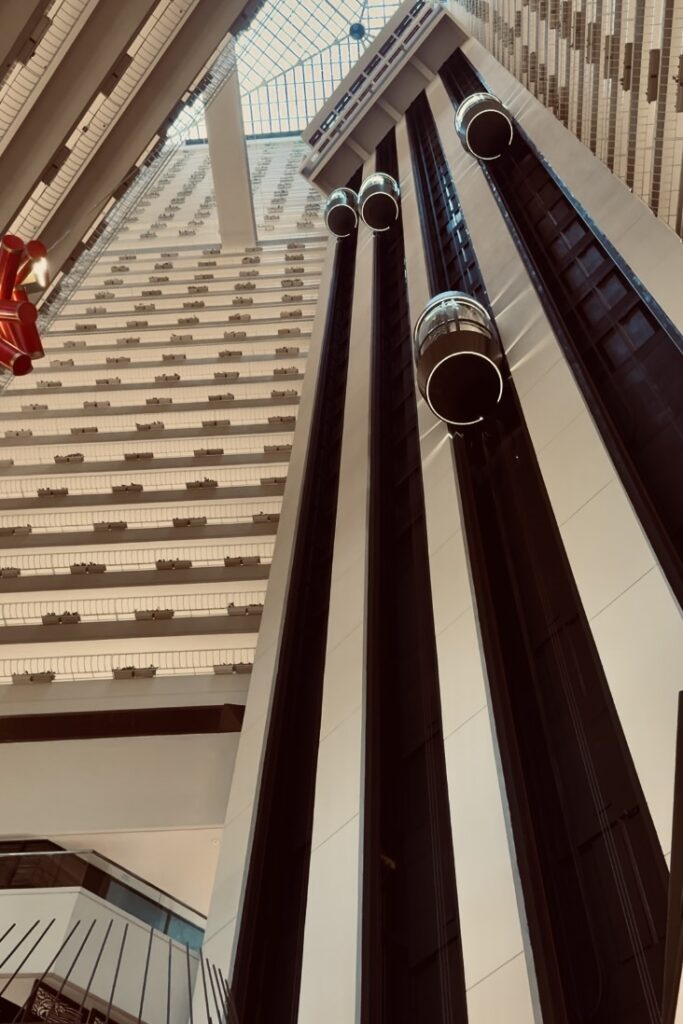
We stayed at the Pan Pacific Singapore, right in the heart of the Marina Bay district, and it set the tone for everything that followed. Here’s something most guests don’t know: when the hotel opened in 1986, it was one of the pioneering luxury properties in the entire Marina Bay area — built as part of Singapore’s bold vision to transform a stretch of reclaimed land into a world-class waterfront precinct. The architect was the legendary John Portman Jr., who designed it around a breathtaking 38-storey grand atrium with a glass ceiling that floods the interior with natural light. Glass capsule elevators scale the building’s walls, giving you a cinematic view of the city as you ascend.
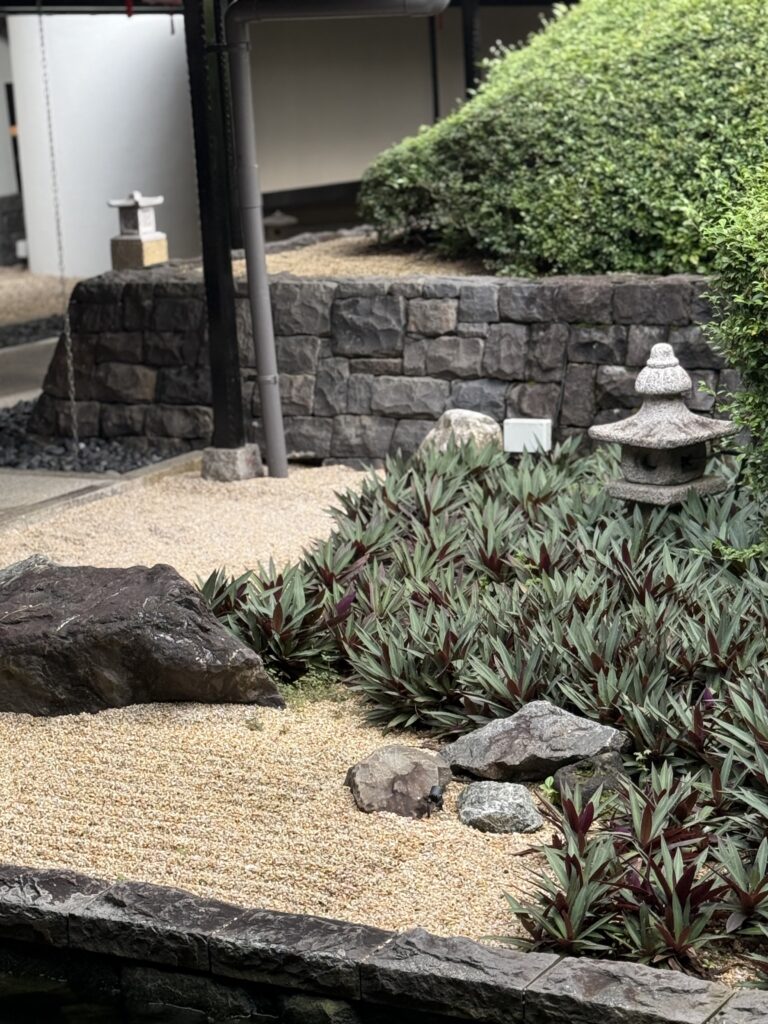
But what stopped us in our tracks wasn’t the soaring atrium. It was the zen garden. Tucked within the hotel grounds, it is a genuine pocket of stillness in a city moving at full speed. Water features murmur quietly, and large, luminous koi fish drift through the ponds with an unhurried grace that feels meditative. We found ourselves returning to that garden more than once — morning tea before the day unfolded, a quiet moment of re-centering after an afternoon of exploring. It reminded me that wellness isn’t just about what you do. It’s about where you allow yourself to simply be.
The location is exceptional for a first-time visitor. You’re steps from the Marina Bay waterfront, Gardens by the Bay, and the ArtScience Museum. Clarke Quay, Chinatown, and the colonial civic district are all within easy reach. Downtown Singapore is your neighbourhood — and it is extraordinary.
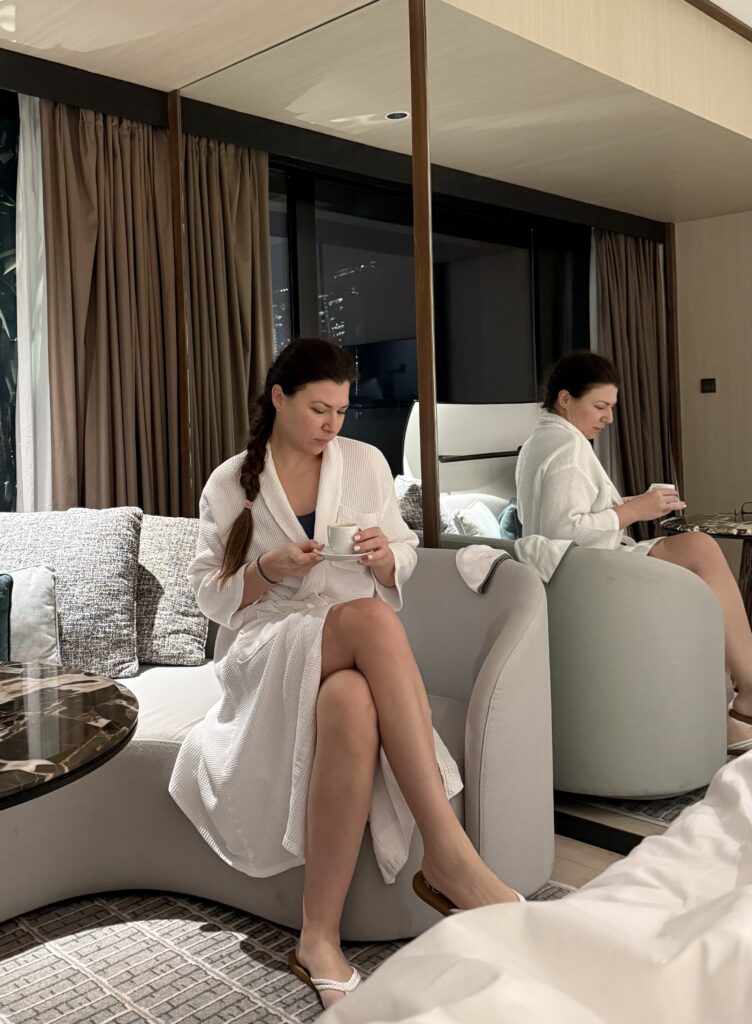
Practical note: The hotel has several outstanding dining options including Keyaki for Japanese fine dining and Hai Tien Lo for Cantonese cuisine — but don’t stay in the hotel bubble entirely. The real Singapore is waiting just beyond the lobby.
Arrive, Breathe, and Let Chinatown Dazzle You
If you’re lucky enough to visit during Chinese New Year (celebrated across fifteen days, typically in late January or early February), Chinatown will stop you in your tracks. In January 2025, the streets were draped in a spectacular canopy of snake lanterns — glowing, undulating, mythic. The Year of the Snake was announced in light, and the energy was electric without ever feeling chaotic. Families, elders, children, tourists, and locals all moved through it together in something that felt genuinely communal.
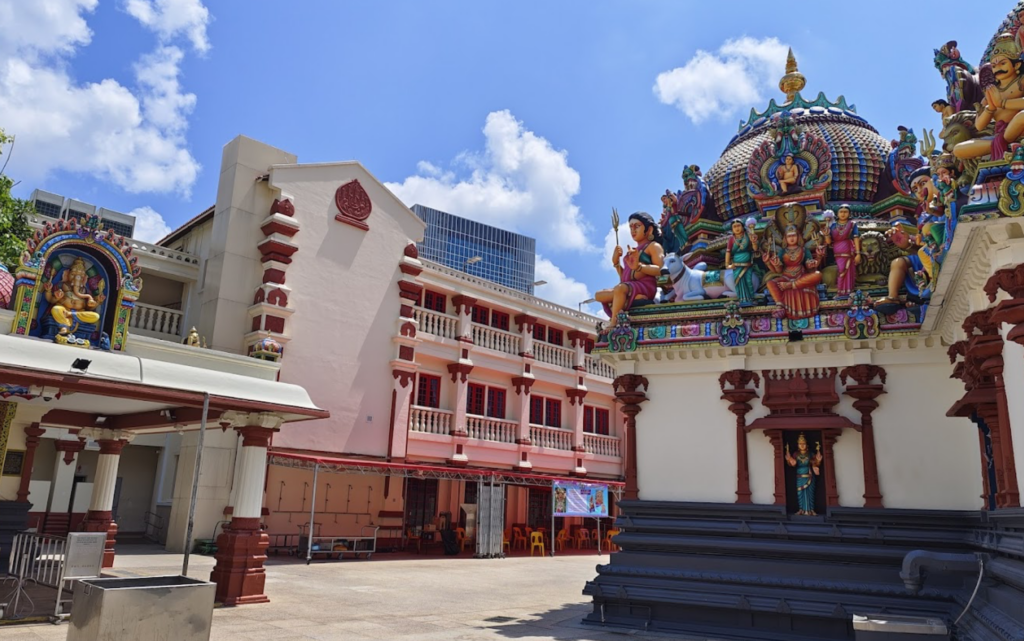
Even outside of the festival period, Chinatown rewards the curious. The Sri Mariamman Temple — Singapore’s oldest Hindu temple — sits here, its gopuram (tower) a cascade of vivid sculpted deities. Step inside, remove your shoes, and take a moment. Heritage streets like Pagoda Street and Trengganu Street offer independent stalls selling traditional snacks, paper goods, and textiles. Skip the souvenir shops with their mass-produced trinkets and look for the stalls run by older generations — those are the ones with stories.
For your first proper hawker centre meal, Maxwell Food Centre is right here and is one of the most beloved in the city. Go for the Hainanese chicken rice — it is deceptively simple and absolutely perfect. Notice how every table is full of locals. That’s always the best sign.
Where Nature Meets the Extraordinary: Gardens by the Bay
Wake early for this one. Gardens by the Bay belongs to a different, more magical world in the hour after dawn — before the crowds arrive and before the equatorial heat builds. Walk along the waterfront from the hotel toward the gardens and feel the city breathe around you.
The Supertree Grove — those iconic vertical gardens reaching up to 16 stories high — is genuinely extraordinary in person. They are not just architecture; they are living ecosystems, draped in ferns, orchids, and tropical climbers. At night, they light up in a sound-and-light show called Garden Rhapsody that is worth staying out late for. But the morning belongs to runners, tai chi practitioners, and people who simply want to feel small in the best possible way.
Inside the climate-controlled domes, the Cloud Forest is not to be missed — a mountain of living plants rises inside a cooled glass structure, with a 35-metre waterfall at its heart. Walk slowly through it. The air is cool and moist, and there is something primally restorative about being surrounded by that much green life. Don’t skip it.
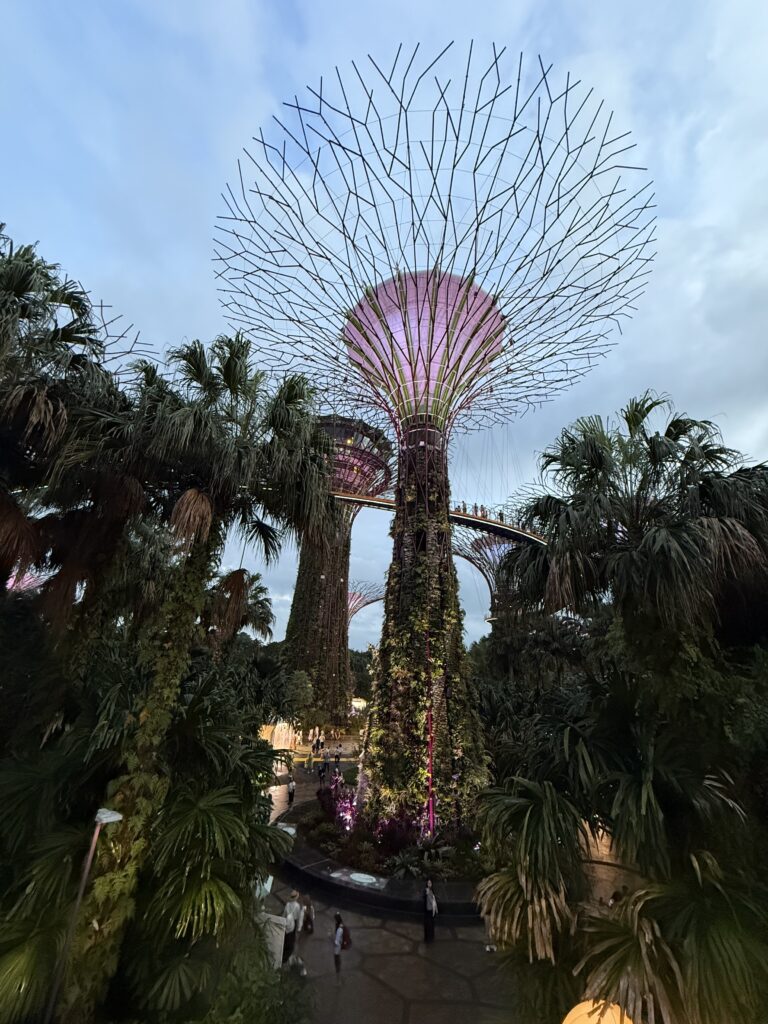
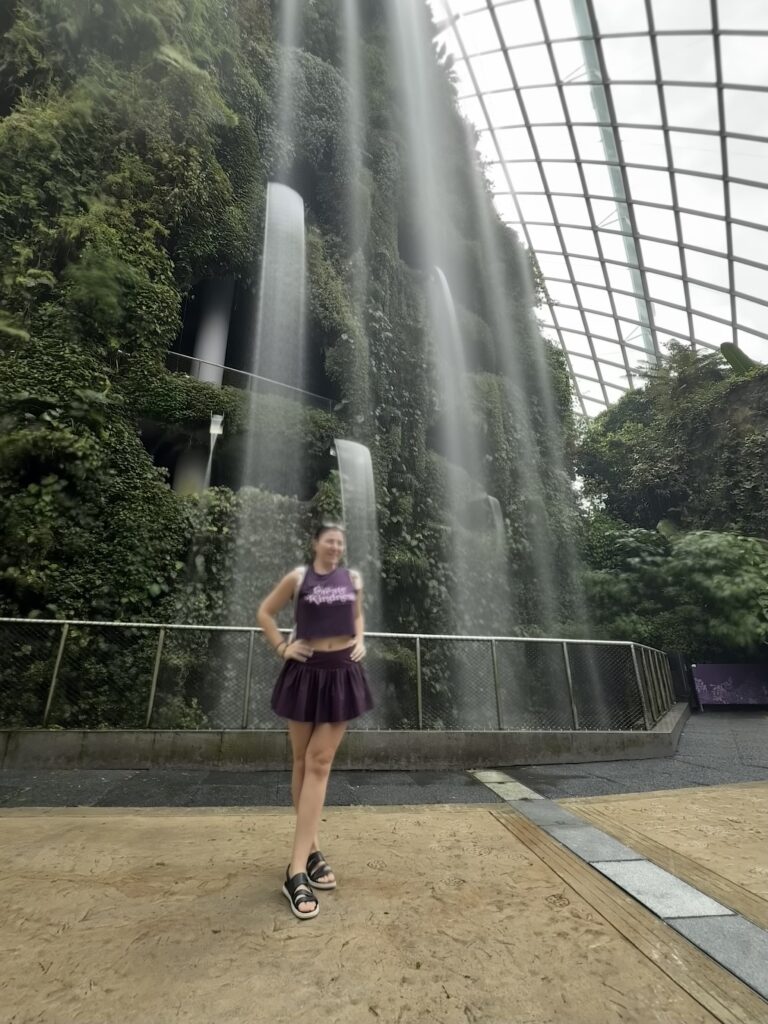
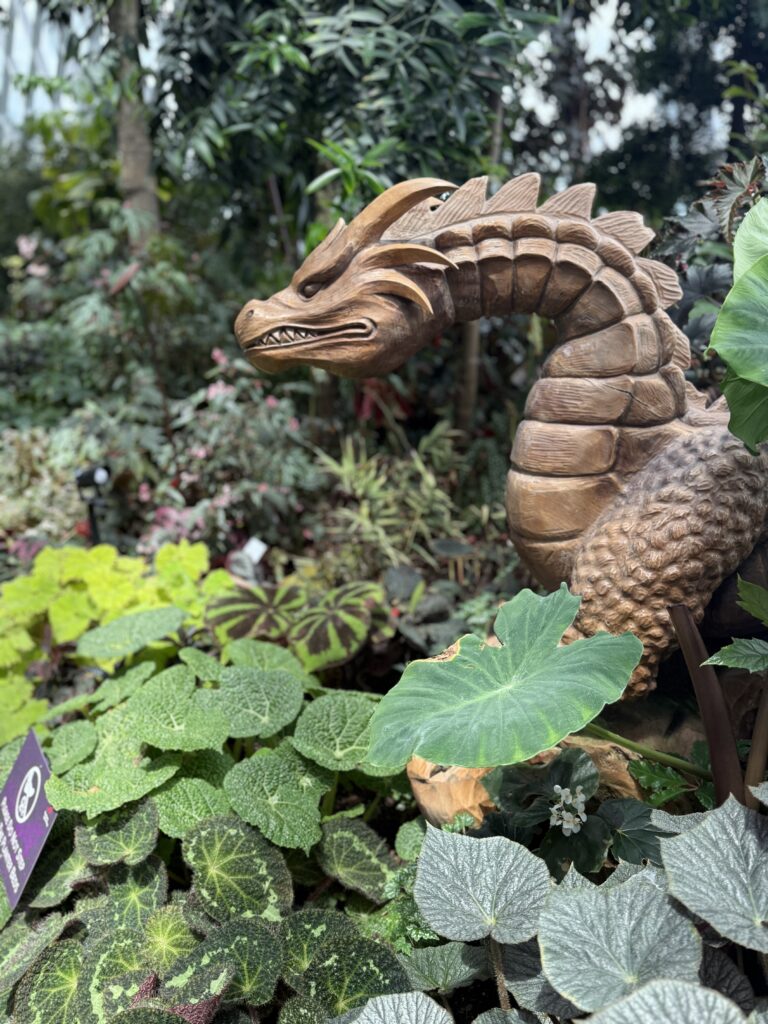
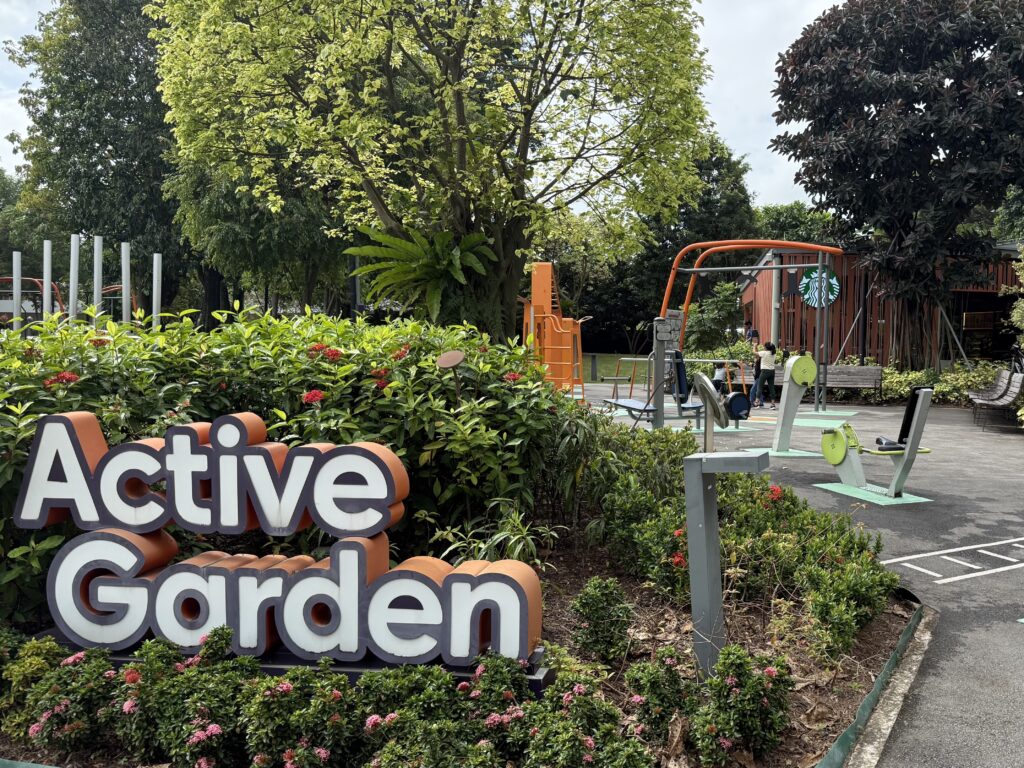
And then there is the Active Garden — one of Gardens by the Bay’s lesser-known gems, and one that spoke directly to everything Fitness Voyages stands for. This outdoor interactive garden is designed around movement and the human body, with installations that invite you to stretch, balance, and engage physically with the landscape. It is playful, educational, and quietly revolutionary — a public space that treats movement as joyful rather than obligatory.
Art, Wonder, and Monet on the Water
The ArtScience Museum, with its iconic lotus-inspired architecture right on the Marina Bay waterfront, is one of those rare cultural spaces that earns every superlative thrown at it. We were there for the Monet exhibit, and it was one of the most affecting artistic experiences I have had on any trip, anywhere. The immersive format — large-scale projections of his paintings wrapping the walls, floor, and ceiling around you, with light shifting as though you are standing inside the water lily pond at Giverny — dissolves the boundary between observer and artwork entirely.
For wellness travellers especially, there is something quietly profound about experiencing Impressionism this way. Monet painted nature as feeling rather than fact — the shimmer of light on water, the weight of morning mist, the way a garden transforms from hour to hour. Standing inside that work is a reminder that slowness and attention are the original radical acts.
Allow at least two hours here. The museum’s permanent collection is equally thoughtful, with rotating exhibitions that draw from science, art, and culture in ways that never feel arbitrary.
Getting Lost: Kampong Glam, Little India, and the Heritage Neighbourhoods
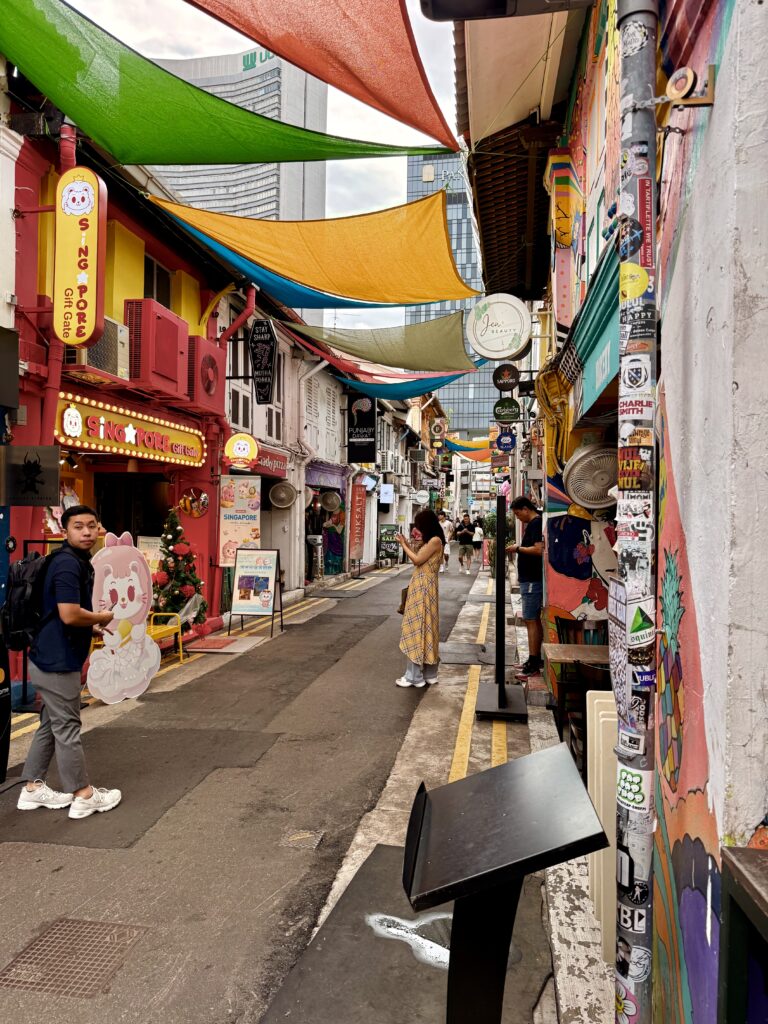
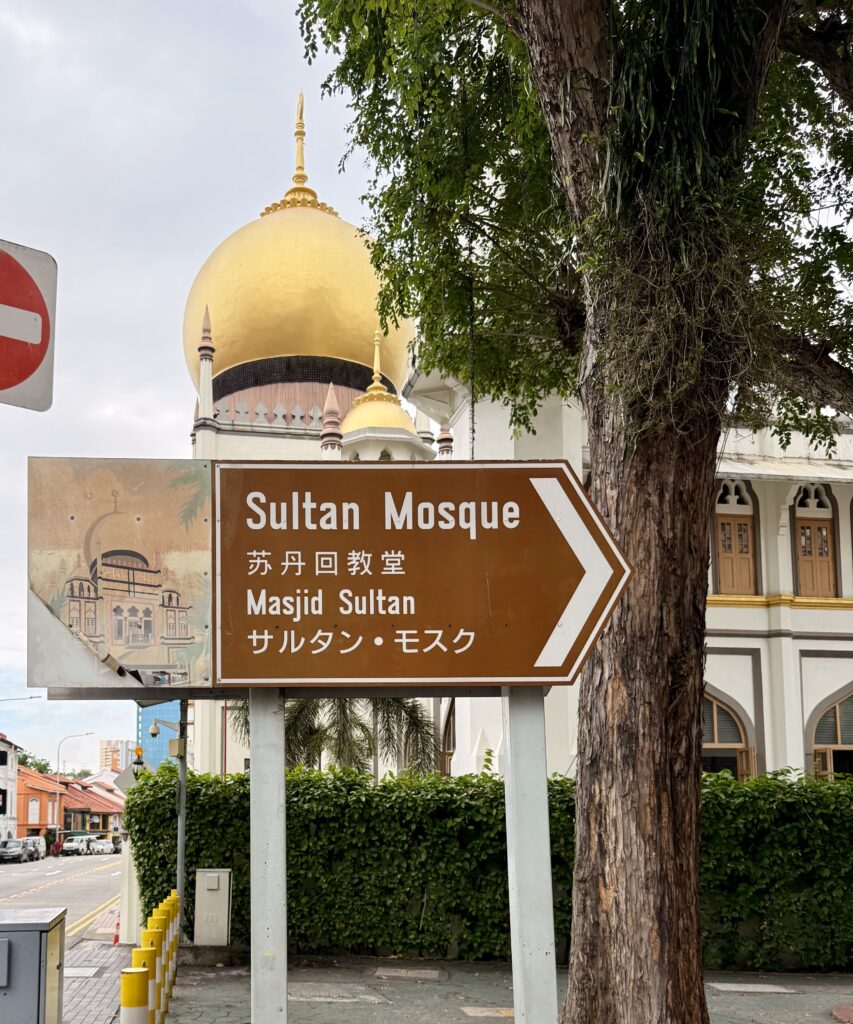
Kampong Glam centred around the Sultan Mosque and Arab Street is Singapore’s most bohemian and culturally rich area. The mosque’s golden dome is breathtaking, and the kampong (village) around it pulses with independent boutiques, Middle Eastern restaurants, and the wonderfully eclectic Haji Lane, a narrow alley lined with street art and creative shops. Come here in the late morning, have a long slow lunch of mezze or a fragrant biryani, and allow yourself to wander without a plan.
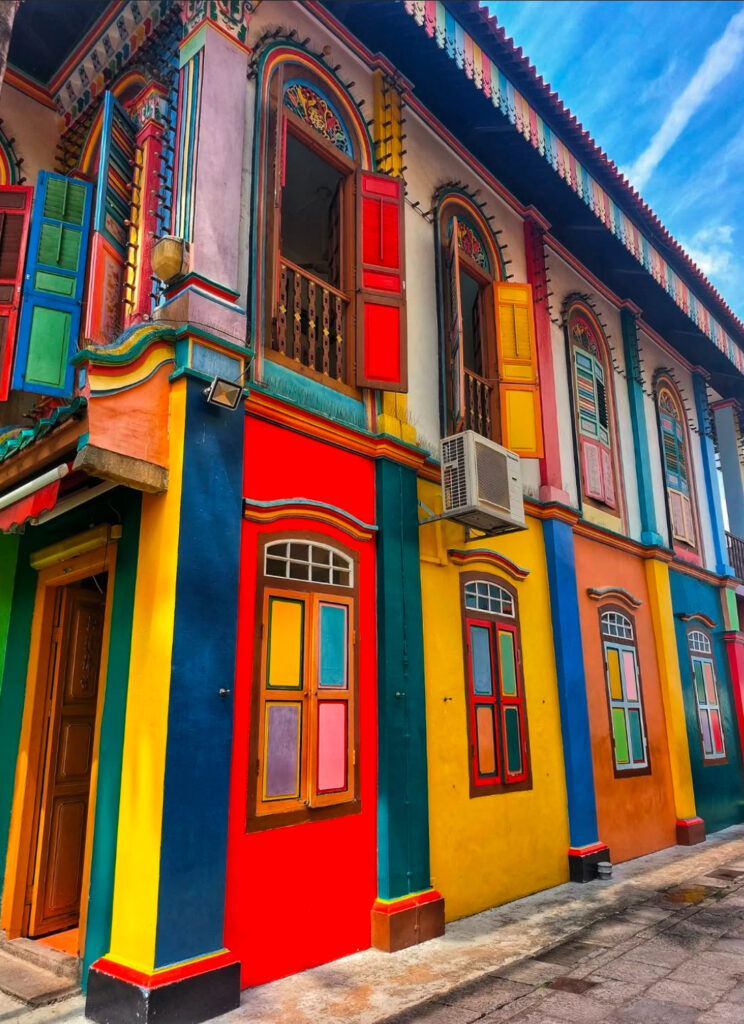
A short MRT ride brings you to Little India, which may be the most sensory neighbourhood in the entire city. The smell of jasmine garlands, incense, and spices announces you’ve arrived before you’ve even step off the train. Serangoon Road is the main artery, but the soul is in the side streets. Spend time at Sri Veeramakaliamman Temple, where devotion is real and palpable. The wet market nearby is a lesson in the food systems that sustain communities — far more educational than any museum exhibit.
End the evening along the waterfront at Clarke Quay — not for the nightlife, but for the golden light at dusk reflected on the Singapore River, and the sense of a city that has managed to honour its past while building something entirely new.
Slow Down: The Botanic Gardens and the Colonial District
The Singapore Botanic Gardens are the city’s oldest green space, designated a UNESCO World Heritage Site, and they deserve a slow, unhurried visit. Bring a journal, or simply your open attention. The National Orchid Garden within houses over 1,000 species and 2,000 hybrids. Wander through the Ginger Garden and the Evolution Garden. Sit by the swan lake. Watch local families picnic in the shade of century-old trees. This is the Singapore that exists independently of Instagram — unhurried, quietly magnificent, and deeply alive.
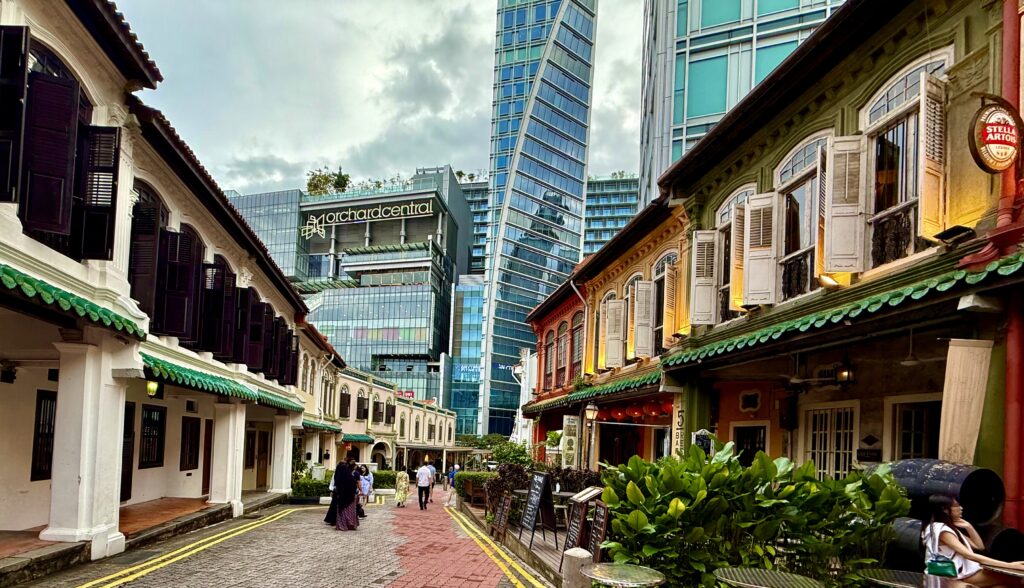
Nearby, the Colonial Civic District tells the complicated, fascinating story of how a small fishing village became one of the wealthiest and most liveable cities on earth in under two centuries. The Padang, Victoria Concert Hall, and the old Supreme Court building — now the magnificent National Gallery — are all here. The National Gallery holds the world’s largest collection of modern Southeast Asian art, and it is genuinely world-class.
For a meal that will stay with you, find Lau Pa Sat — a Victorian cast-iron market turned food hall — and eat something you’ve never tried before. Laksa, perhaps, or char kway teow. Eat slowly. Look around. UNESCO has recognised Singapore’s hawker culture as Intangible Cultural Heritage of Humanity — and you are sitting inside it.
The Singapore Nobody Warns You About
No one tells you that Singapore will quietly dismantle your definition of a modern city. That steel and glass can coexist with orchid mist. That efficiency can feel poetic. That you might stand beneath a digital Monet and forget where technology ends and wonder begins. That a botanic garden can still your breath. That watching koi circle at dawn in a hotel courtyard can feel like meditation in motion.
You arrive expecting innovation. You leave reconsidering what progress is supposed to feel like.
This is not a city you consume. It is a city that, if you approach it with curiosity and patience, will teach you something — about diversity, about the intersection of nature and urbanism, about food as culture, and about the quiet radical act of building a society that actually works. For wellness travellers especially, there is something deeply instructive here: Singapore takes care of its commons. What we tend toward as individuals — health, intention, balance, beauty — this city has pursued at a civic scale.
Come for as long as you can. Walk slowly. Eat everything. And let yourself be surprised.
Have you been to Singapore, or is it on your travel list? I’d love to hear what called you there — leave a comment below or find me on Instagram. Conscious travel is always better when we share the map.
— @tanqitravels
Practical Travel Notes for First-Time Visitors
Getting there: Singapore’s Changi Airport is consistently rated the world’s best — your arrival will set a high bar for the rest of the trip. Direct flights are available from most major hubs.
Best time to visit: November to January (cooler, drier months). Chinese New Year (late Jan/early Feb) adds extraordinary cultural richness if you can time it right.
Getting around: The MRT is excellent and affordable. Grab (Southeast Asia’s answer to Uber) fills the gaps. You’ll rarely need more.
Currency: Singapore Dollar (SGD). Cashless payment is widely accepted, though having some cash for hawker centres is useful.
Health & wellness tip: The heat and humidity are real — hydrate constantly, wear light breathable fabrics, and build rest into your itinerary. The city rewards slow mornings.
Visa: Citizens of most Western countries receive visa-free entry for 30–90 days. Check current requirements for your passport.